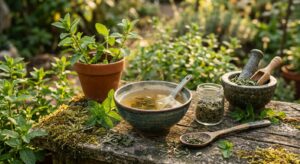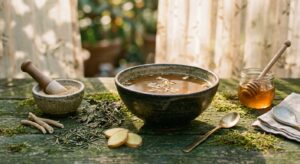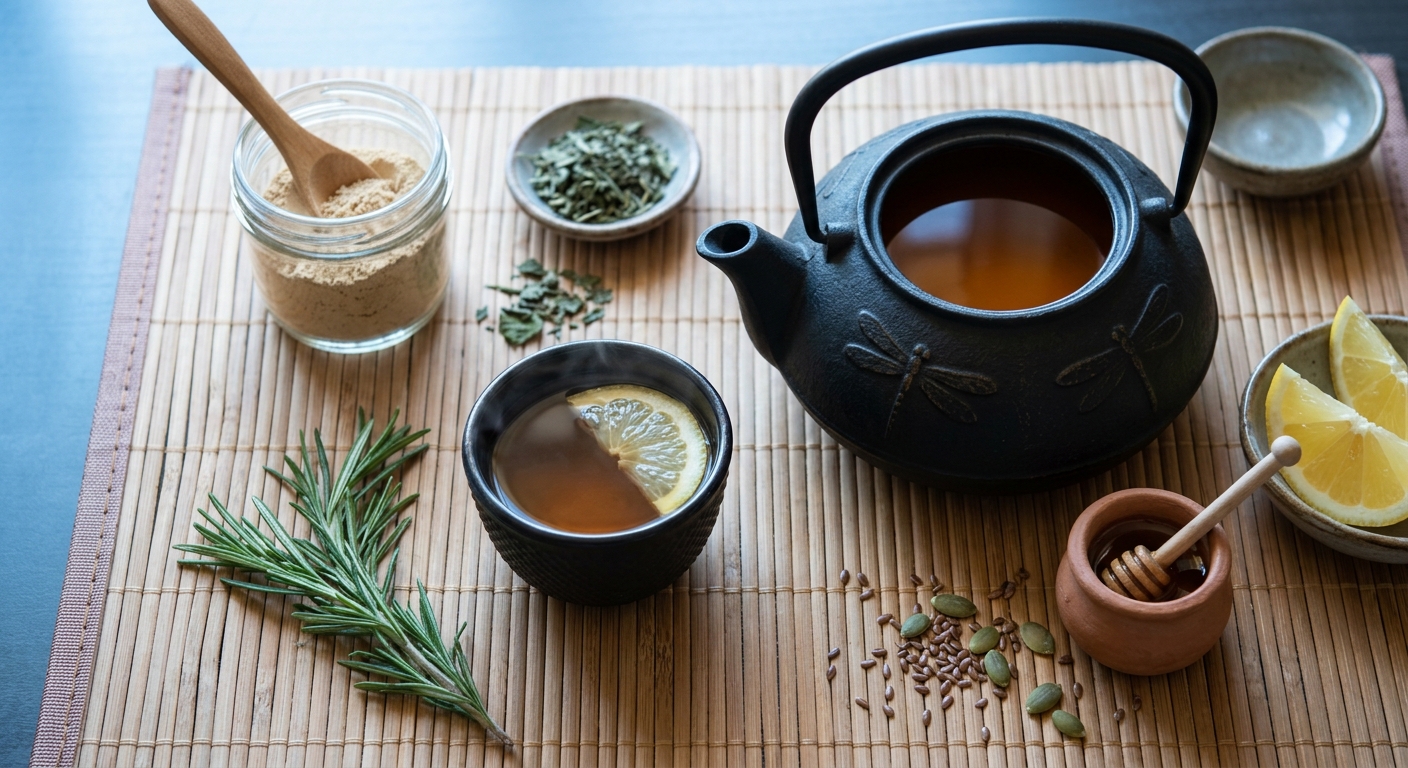
Acetylcholine is one of the brain’s most vital neurotransmitters, governing memory formation, learning speed, attention span, and the fluid recall of information. Unlike dopamine or serotonin, which get most of the popular attention, acetylcholine works quietly in the background, stitching together new neural pathways and keeping the mind sharp across decades of life. When acetylcholine levels are low or its signaling becomes sluggish, the result is often a frustrating mental fog, word-retrieval difficulty, and a sense that the mind is working harder than it should for diminishing returns. Traditional plant medicine systems across Asia, India, and the Mediterranean have long identified herbs that seem to brighten this inner fire, and modern neuroscience is now beginning to explain why.
This blend draws on three botanically distinct and scientifically compelling herbs. Lion’s mane mushroom (Hericium erinaceus) has been revered in Traditional Chinese Medicine for over a thousand years as a tonic for the brain and stomach, prized by Buddhist monks who brewed it as a tea to sharpen meditation and scholarly focus. Gotu kola (Centella asiatica) has an equally ancient reputation in Ayurvedic and Thai medicine as a brain herb, so consistently associated with mental longevity that it earned the nickname the herb of enlightenment in certain Southeast Asian traditions. Rosemary (Salvia rosmarinus) was famously carried by ancient Greek scholars during examinations and was strewn in libraries and places of study throughout medieval Europe as a memory aid, a tradition that turns out to have real biochemical grounding.
Brewed together, these three botanicals produce a tea that is earthy, faintly piney, and grounding, with a complexity that rewards slow sipping. This is not a tea for distracted multitasking. It is a tea you make when you want to sit down, clear the mental clutter, and do your best thinking. Whether you are heading into a long writing session, a demanding study block, or simply want to support your cognitive health over the long term, this acetylcholine-supporting blend offers a thoughtful, evidence-informed way to tend to your most important organ.
2
cups
Ingredients
- 2 tspdried lion’s mane mushroom powder or finely sliced dried pieces
- 1 tspdried gotu kola leaf
- 1 tspfresh or dried rosemary sprigs
- 500 mlwater (90 to 95°C / 194 to 203°F)
- —raw honey or maple syrup to taste (optional)
- —a squeeze of lemon juice to brighten flavor (optional)
How to Brew
Click on an item below to shop for the recommended items for this recipe on Amazon.
As an Amazon Associate, we earn from qualifying purchases.
- Bring 500 ml of filtered water to 90 to 95°C (194 to 203°F). Avoid a full rolling boil, as excessive heat can degrade the delicate terpenoid compounds in rosemary and gotu kola. If you do not have a temperature-controlled kettle, bring water to a boil and let it rest for 2 minutes.
- Add the lion’s mane mushroom powder or sliced pieces to your infuser or teapot first, as these require the longest contact time with hot water. Layer the dried gotu kola leaf and rosemary on top.
- Pour the heated water slowly over the herbs, making sure all plant material is fully saturated. Cover the teapot or mug with a lid or small plate to trap the volatile aromatic compounds from the rosemary during steeping.
- Steep for 12 to 15 minutes. Check at 12 minutes for a milder, more floral result. At 15 minutes the brew deepens in both color and earthy complexity, and the lion’s mane character becomes more pronounced.
- Remove the infuser and gently press the spent herbs against the side of the strainer with a spoon to extract the last of the liquid. Sweeten with raw honey if desired, and add a squeeze of lemon to lift the savory notes. Sip slowly while warm.
- Measure out the full ingredient quantities into a clean glass jar. If using lion’s mane powder, add it directly to the water rather than to a tea ball, as fine powder extracts more effectively when freely suspended in cold water.
- Add 600 ml of cold, filtered water to the jar. The slightly higher water volume compensates for the slower, less complete extraction that occurs at cold temperatures compared to hot brewing.
- Stir briefly to combine and ensure no powder is clumping on the surface. Place a small piece of muslin cloth or a loose-fitting lid over the jar and let it sit at room temperature for 1 hour to begin extraction before the cold slows the process.
- Transfer the jar to the refrigerator and let it steep for 10 to 14 hours, ideally overnight. A longer steep within this range yields a fuller-bodied result with more pronounced lion’s mane earthiness.
- In the morning, pour the cold brew through a fine mesh strainer or cheesecloth into a glass, pressing gently to extract all liquid. Serve over ice or enjoy straight from the refrigerator. Sweeten lightly if desired. The cold brew keeps in the refrigerator for up to 24 hours.
- Add 600 ml of filtered water and the lion’s mane mushroom pieces or powder directly to a small stainless steel or ceramic saucepan. Do not use an infuser here. The mushroom material needs full, unobstructed contact with the water throughout the cooking process.
- Bring the water and mushroom to a gentle boil over medium heat, then immediately reduce to a steady simmer at approximately 85 to 90°C (185 to 194°F). You should see small, consistent bubbles rising from the bottom of the pan but not a vigorous rolling boil.
- Simmer the lion’s mane for 15 minutes before adding the gotu kola and rosemary. These leafy, aromatic herbs are added late to prevent the prolonged heat from destroying their volatile compounds and delicate flavonoids.
- Once gotu kola and rosemary are added, continue simmering gently for a further 8 to 10 minutes. The liquid will reduce and deepen in color to a rich amber brown. Keep the pan loosely covered to reduce evaporation while still allowing steam to escape.
- Remove from heat and allow to rest uncovered for 3 minutes. Strain through a fine mesh sieve into mugs, pressing the spent plant material firmly to capture every drop of the concentrated liquid. If the decoction tastes very intense, dilute with a small splash of hot water. Add honey and lemon to taste. This decoction is particularly effective sipped hot in the morning before focused work.
Health Benefits
Rosmarinic acid in rosemary inhibits acetylcholinesterase, the enzyme that degrades acetylcholine after it is released into the synapse, meaning more acetylcholine remains available to bind to receptors involved in memory and attention. This mechanism is similar in principle to the action of pharmaceutical acetylcholinesterase inhibitors used in cognitive decline management, though far milder in effect.
Lion’s mane mushroom is one of the only known natural food sources of hericenones and erinacines, compounds that stimulate the brain’s own production of Nerve Growth Factor. NGF is essential for the maintenance and regeneration of cholinergic neurons, the nerve cells that both produce acetylcholine and depend on it to function, making lion’s mane uniquely positioned to support the long-term health of the acetylcholine system.
Gotu kola’s triterpenoid compounds, particularly asiaticoside and madecassoside, have been shown in both animal studies and small human trials to increase dendritic spine density in the hippocampus, the brain structure most central to encoding and retrieving memories. Improved synaptic connectivity in this region translates to faster and more reliable recall.
The combination of adaptogenic gotu kola and neuroprotective rosemary compounds has been associated in human studies with reduced mental fatigue scores during prolonged cognitive tasks. Unlike caffeine, which masks fatigue by blocking adenosine receptors, these herbs appear to support the underlying metabolic and neurological processes that sustain attention over time.
All three herbs in this blend are rich in antioxidant phenolic compounds, including carnosic acid and carnosol from rosemary, which have demonstrated a particular affinity for protecting neuronal membranes from oxidative stress. Chronic oxidative damage to neurons is one of the primary mechanisms behind age-related cognitive decline and degraded neurotransmitter signaling.
🧪 Key Bioactive Compounds
The Science Behind Lion’S Mane Mushroom
The connection between this herbal blend and acetylcholine function operates through several distinct but complementary mechanisms. The most structurally unique contribution comes from lion’s mane mushroom, which is the only known dietary source of hericenones and erinacines, a family of compounds that stimulate endogenous Nerve Growth Factor synthesis in the central nervous system. NGF is not a neurotransmitter itself but rather a signaling protein that regulates the survival, differentiation, and maintenance of cholinergic neurons, the nerve cells that produce acetylcholine and carry its signals throughout the brain. A 2009 double-blind, placebo-controlled trial published in Phytotherapy Research found that Japanese adults aged 50 to 80 who consumed lion’s mane daily for 16 weeks showed significantly higher scores on cognitive function scales than the placebo group, with scores declining again after supplementation ended. This suggests that lion’s mane supports cognitive function through an ongoing, maintenance-dependent mechanism rather than a one-time fix.
Rosemary’s cognitive effects work through a separate but synergistic pathway. Rosmarinic acid, a hydroxycinnamic acid abundant in rosemary leaf, has been identified as an inhibitor of acetylcholinesterase (AChE), the enzyme that breaks down acetylcholine in the synaptic cleft after it has transmitted its signal. By slowing AChE activity, rosmarinic acid extends the duration and intensity of cholinergic signaling, allowing each molecule of acetylcholine to remain active longer in the synapse. A 2016 study in the journal Nutrients found that rosemary leaf extract improved both speed and accuracy on cognitive performance tests in healthy adults, with effects correlating with plasma levels of rosmarinic acid. Additionally, the volatile compound 1,8-cineole, released as steam during brewing and inhaled with each sip, has shown measurable pharmacological activity in human trials, crossing the blood-brain barrier and independently supporting cognitive speed.
Gotu kola rounds out the blend by addressing the physical infrastructure of memory itself. The triterpenoid saponins in Centella asiatica, particularly asiaticoside and madecassoside, have been shown in neuroscience research to promote neuronal plasticity by increasing dendritic branching and synaptic spine density, particularly in the hippocampus. This structural effect makes gotu kola not simply a short-term cognitive stimulant but a potential long-term supporter of the brain’s capacity to encode and retrieve memories. A 2016 randomized controlled trial in the Journal of Alzheimer’s Disease found that gotu kola extract improved memory and mood in post-stroke patients, a population with significant cholinergic deficits, suggesting genuine relevance to the acetylcholine system. When these three botanicals are combined in a single cup, they address acetylcholine support from three distinct angles: protecting the neurons that produce it, slowing the enzyme that degrades it, and strengthening the synaptic structures through which it acts.
Brewing Tips
- Use lion’s mane mushroom powder rather than whole dried pieces for a standard hot brew or cold brew, as the increased surface area leads to significantly faster and more complete extraction of the active beta-glucans and hericenones within the usual steep window.
- Always cover your mug or teapot during steeping. Rosemary’s most cognitively active volatile compounds, including 1,8-cineole and alpha-pinene, are highly prone to evaporation with steam. Keeping the vessel covered traps these aromatics in the brew and also delivers them to you as a gentle inhalation when you lift the lid.
- Batch the decoction method and store it in the refrigerator for up to 3 days, reheating individual servings as needed. Because the decoction concentrates the active compounds more thoroughly than a standard steep, you can dilute each serving by 20 to 30 percent with fresh hot water and still get a potent, flavorful cup.