Long before modern pharmacology catalogued the anxiolytic properties of roses, Persian physicians and poets alike understood something profound: the scent and essence of Rosa damascena, the Damask rose, had the power to quiet a restless mind. In ancient Persia, rose water was not merely a flavoring agent but a sacred medicine, distilled in copper alembics and prescribed by physicians such as Avicenna in the 11th century for melancholy, palpitations, and disorders of the heart. Rose water tea, blended from dried rose petals and fragrant rose water, became a daily ritual in Persian households, served to guests as an act of hospitality and consumed during times of grief, celebration, and quiet contemplation alike.
The Damask rose, cultivated for over two millennia in the valleys of Iran, Bulgaria, and Turkey, produces petals uniquely rich in essential oils, flavonoids, and phenolic compounds. Unlike green or black teas, Persian rose water tea is entirely caffeine-free, making it ideal for evening relaxation or moments when you need calm without stimulation. Its preparation is treated almost like an art form in Persian culture, where the ratio of rose water to petal infusion, the temperature of the water, and even the vessel used are considered carefully to preserve the volatile aromatic oils that carry so much of the tea’s therapeutic value.
Today, modern herbalism and emerging scientific research are catching up with what Persian tradition has long known. Studies on Rosa damascena extracts have found measurable anxiolytic, antidepressant, and antioxidant effects, supporting the use of this exquisite floral tea as a gentle daily ally for stress, mood, and overall wellbeing. Whether you brew it hot in a delicate glass cup, steep it cold overnight for a silky chilled drink, or prepare a concentrated rose syrup for versatile use, Persian Rose Water Tea offers one of the most sensory-rich and emotionally nourishing experiences in the world of herbal medicine.
2
cups
Ingredients
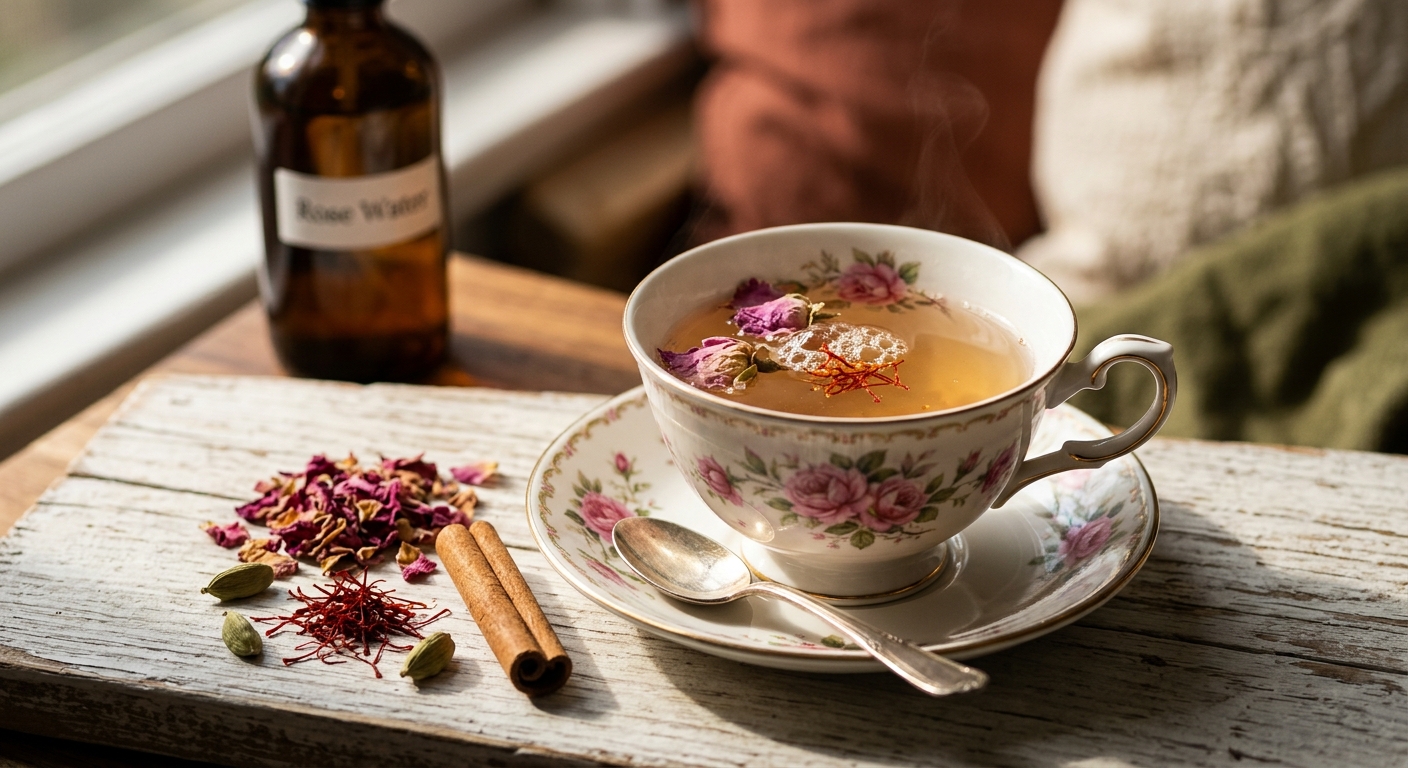
- 2 tbspdried culinary rose petals (Rosa damascena)
- 2 tsppure food-grade rose water
- 480 mlwater (85°C / 185°F)
- —raw honey or sugar to taste (optional)
- —a pinch of dried saffron threads (optional, traditional)
- —fresh rose petals for garnish (optional)
How to Brew
Click on an item below to shop for the recommended items for this recipe on Amazon.
As an Amazon Associate, we earn from qualifying purchases.
- Heat fresh filtered water to 85°C (185°F). If you do not have a temperature-controlled kettle, bring water to a full boil and allow it to rest uncovered for 3 to 4 minutes before using.
- Place 2 tablespoons of dried culinary Rosa damascena petals into a fine-mesh tea infuser or a warmed teapot. If using saffron, add a small pinch directly to the petals now.
- Pour the heated water over the petals, cover the vessel immediately with a lid or small plate to trap the volatile aromatic oils, and steep for 5 to 7 minutes. Do not exceed 8 minutes, as over-steeping can introduce bitterness.
- Remove the infuser or strain the petals through a fine-mesh strainer into your cups. Add 1 teaspoon of pure food-grade rose water per cup at this stage, stirring gently. Adding rose water after brewing rather than during steeping preserves its bright, fresh top notes.
- Sweeten lightly with raw honey if desired, garnish with a few fresh or dried rose petals, and serve in a clear glass or delicate teacup to appreciate the soft blush color.
- Place 3 tablespoons of dried culinary Rosa damascena petals into a clean glass jar or glass pitcher. The slightly higher petal ratio compensates for cold water’s slower extraction rate.
- Pour 480 ml of cold filtered water directly over the petals. Add 2 teaspoons of food-grade rose water and stir gently to combine. If desired, add a pinch of saffron threads, which will slowly release their golden color and honey-like aroma overnight.
- Cover the jar or pitcher tightly with a lid or plastic wrap and place it in the refrigerator. Allow the petals to steep undisturbed for 8 to 12 hours. For a lighter floral flavor, check at 8 hours. For a more concentrated, deeply fragrant result, leave for the full 12 hours.
- Strain the cold brew through a fine-mesh strainer lined with a cheesecloth or a coffee filter to achieve a clear, jewel-toned liquid. Discard the spent petals.
- Pour over ice into tall glasses, sweeten with a small amount of simple syrup or honey dissolved in warm water if needed, and garnish with a thin slice of lemon and a fresh rose petal for a visually stunning, spa-worthy drink.
- Combine 4 tablespoons of dried culinary Rosa damascena petals with 240 ml of water in a small saucepan. Add 2 tablespoons of raw honey or cane sugar to encourage extraction and preservation of the floral compounds.
- Gently warm the mixture over low heat, bringing it to a temperature of 80 to 85°C (176 to 185°F). Do not allow the liquid to boil. Maintain this gentle heat, with the saucepan loosely covered, for 10 to 12 minutes. The petals will fade from pink to a pale cream as their pigments transfer into the liquid.
- Remove from heat and stir in 1 tablespoon of pure food-grade rose water. Allow the concentrate to cool, covered, for 15 minutes. This resting period allows the residual warmth to continue gentle extraction while the rose water aromatics infuse without evaporating.
- Strain the cooled concentrate through a fine-mesh strainer or cheesecloth, pressing the petals gently to extract all liquid. Transfer to a small sterilized glass jar or bottle.
- To serve, stir 2 to 3 tablespoons of concentrate into 200 ml of hot or cold water, adjusting to taste. The concentrate keeps refrigerated for up to one week and can also be added to sparkling water, warm almond milk, or drizzled over desserts for a fragrant, wellness-forward finishing touch.
Health Benefits
The volatile oils in Rosa damascena, particularly geraniol and citronellol, interact with GABA receptors and the limbic system to reduce physiological and psychological stress markers. A 2011 clinical study found that rose water aromatherapy significantly reduced anxiety scores in hemodialysis patients, and subsequent research has supported similar effects from oral consumption of rose petal extracts.
Quercetin and other polyphenols in rose petals have demonstrated inhibitory activity against monoamine oxidase (MAO) enzymes in preclinical models, suggesting a mechanism similar to certain antidepressant compounds. Traditional Persian medicine has used rose preparations for grief and melancholy for over a thousand years, and modern research is providing a biological basis for these effects.
Rose petal tea has long been used in Unani and Persian herbal medicine to soothe the digestive tract, reduce bloating, and ease mild cramping. The antispasmodic properties of citronellol help relax the smooth muscle lining of the gut, making this tea a gentle remedy after meals or during periods of stress-related digestive upset.
Rosa damascena petals are rich in polyphenols, anthocyanins, and flavonoids that neutralize free radicals and reduce systemic inflammation. Regular consumption of rose petal infusions has been associated in observational studies with reduced markers of oxidative stress, which is linked to aging, cardiovascular disease, and neurological decline.
Rose petal tea has a long history in Middle Eastern herbal medicine as a remedy for sore throats, dry coughs, and mild respiratory irritation. Its mild anti-inflammatory and antimicrobial properties, combined with its naturally soothing, slightly mucilaginous texture, make it a comforting drink during seasonal illness or for those prone to throat sensitivity.
🧪 Key Bioactive Compounds
The Science Behind Rosa Damascena (Damask Rose)
The therapeutic reputation of Rosa damascena is increasingly supported by modern phytochemical and pharmacological research. The flower’s volatile oil fraction, which includes geraniol, citronellol, nerol, and linalool, has been shown in multiple studies to interact with the central nervous system in ways that produce measurable anxiolytic and sedative effects. Geraniol, the dominant terpene in Damask rose essential oil, appears to modulate GABA-A receptor activity, the same receptor system targeted by benzodiazepine medications, though with considerably greater gentleness and without the same risk of dependency. Inhalation and ingestion of these aromatic compounds have both been studied, and while aromatherapy research is more extensive, oral consumption of rose petal infusions delivers these volatiles directly to the bloodstream via the gastrointestinal tract, where they can exert systemic nervous system effects.
The flavonoid fraction of rose petals, led by kaempferol and quercetin, offers a distinct but complementary mechanism of action. Quercetin has demonstrated the ability to inhibit monoamine oxidase A (MAO-A) enzymes in laboratory settings, which would theoretically slow the metabolic breakdown of serotonin, dopamine, and norepinephrine, the neurotransmitters most closely associated with mood regulation and anxiety. Kaempferol has shown neuroprotective effects in preclinical models and appears to reduce the production of pro-inflammatory cytokines in brain tissue, addressing the neuroinflammatory dimension of anxiety and depression that is now an active area of psychiatric research. The polyphenol 2-phenylethanol, which gives rose water its distinctive sweet, clean fragrance, has been independently studied for its mood-elevating properties and antimicrobial activity.
From an antioxidant perspective, Rosa damascena petals are among the more polyphenol-rich botanicals used in herbal medicine, with anthocyanins contributing significantly to their ability to neutralize reactive oxygen species. Chronic psychological stress drives oxidative damage throughout the body, including in the brain, and the regular intake of antioxidant-rich foods and herbs has been correlated with improved mood outcomes and reduced anxiety in population studies. While large-scale clinical trials specifically on rose petal tea remain limited, the convergence of traditional use across multiple medical traditions (Persian, Ayurvedic, and Traditional Chinese Medicine) and the growing body of pharmacological evidence for its key compounds provides a compelling, evidence-informed rationale for enjoying Persian Rose Water Tea as a daily wellness practice.
Brewing Tips
- Always buy culinary or food-grade dried rose petals, not floristry roses. Petals from flower shops are almost always treated with pesticides that are harmful to consume. Look for organic certified suppliers or specialist herbal apothecaries.
- Add the rose water after brewing rather than before or during steeping. Rose water’s most fragrant volatile compounds evaporate quickly when exposed to heat, so stirring it into your finished, slightly cooled brew preserves its bright top-note aroma and maximizes the sensory experience.
- Store dried rose petals in an airtight glass jar away from direct sunlight and heat. Properly stored culinary rose petals will retain their color, fragrance, and potency for 12 to 18 months. If your petals have lost their pink hue and smell faintly dusty, they have oxidized and should be replaced for both flavor and therapeutic value.