Few herbs carry as much historical weight as chamomile. Ancient Egyptians dedicated it to their sun god Ra, using it to treat fevers and calm the restless. The Romans brewed it as a medicinal tea and burned it as incense. In medieval Europe, chamomile was one of the nine sacred herbs believed to ward off evil and disease. Today, it is the most widely consumed herbal tea on the planet, with an estimated one million cups drunk every single day. That kind of staying power does not come from tradition alone – it comes from results.
Chamomile belongs to the Asteraceae family and comes primarily in two varieties: German chamomile (Matricaria chamomilla) and Roman chamomile (Chamaemelum nobile). German chamomile is the most common in teas and the most thoroughly studied. Its small, white-petaled flowers with bright yellow centers contain a remarkable concentration of bioactive compounds, particularly apigenin, bisabolol, and chamazulene, each contributing to its well-documented calming, anti-inflammatory, and digestive properties.
What makes chamomile so special as a sleep and relaxation herb is its gentle yet measurable action on the brain. Unlike pharmaceutical sleep aids, chamomile does not force sedation but rather encourages the nervous system to ease down naturally, making it appropriate for most people of all ages. Its flavor – a warm, apple-tinged, slightly honeyed sweetness – makes the nightly ritual of brewing a cup feel like an act of self-care in itself. This guide covers everything you need to brew the perfect cup, understand the science behind it, and make chamomile a meaningful part of your wellness routine.
2
cups
Ingredients
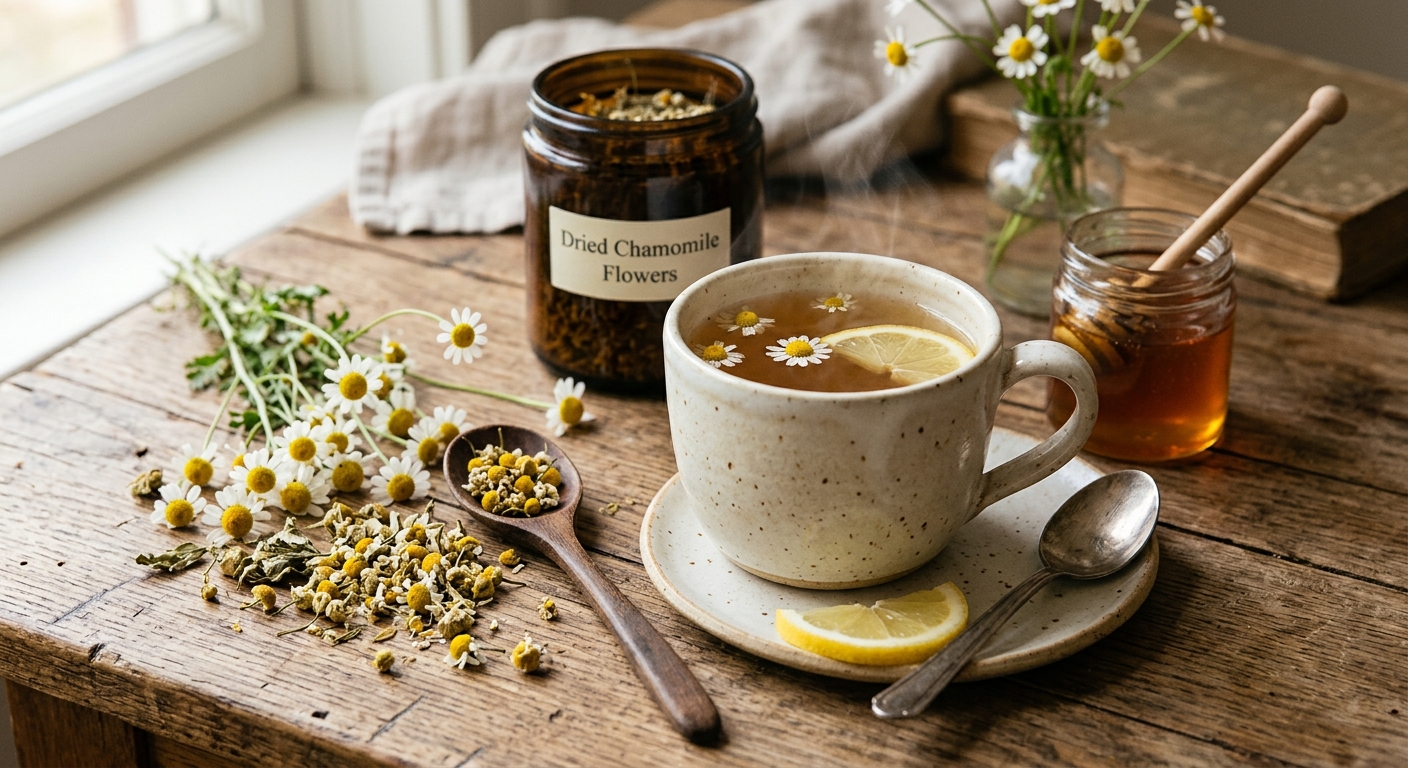
- 4 tspdried chamomile flowers (or 2 chamomile tea bags)
- 480 mlwater (90°C / 194°F)
- —raw honey to taste (optional)
- —a thin slice of fresh lemon (optional)
How to Brew
Click on an item below to shop for the recommended items for this recipe on Amazon.
As an Amazon Associate, we earn from qualifying purchases.
- Heat filtered water to 90 to 95°C (194 to 203°F). If you do not have a temperature-controlled kettle, bring water to a full boil then let it rest off heat for 2 to 3 minutes.
- Warm your mug or teapot by swirling a small amount of hot water in it for 30 seconds, then discard. This keeps your brew at a consistent temperature throughout steeping.
- Add 2 teaspoons of dried chamomile flowers per 240 ml of water to your infuser or teapot. Loose flowers bloom and release compounds more fully than bags, so use them when you can.
- Pour the hot water over the chamomile flowers, cover the mug with a small plate or lid, and steep for 5 to 7 minutes. Covering the cup traps the volatile aromatic oils that would otherwise escape with the steam.
- Remove the infuser or strain the flowers. Taste before adding honey – chamomile has a natural sweetness that may be enough on its own. Drink 30 to 60 minutes before bedtime for best sleep-promoting effect.
- Measure 3 teaspoons of dried chamomile flowers per 240 ml of cold, filtered water. Cold brewing is less efficient at extracting compounds, so a slightly higher flower-to-water ratio compensates without over-steeping.
- Combine the chamomile flowers and cold water in a clean glass jar or pitcher. Stir briefly to ensure all the flowers are submerged and making contact with the water.
- Cover the jar loosely with a lid or cloth and let it sit at room temperature for 1 hour to begin the extraction, then transfer to the refrigerator.
- Steep in the refrigerator for a further 7 to 11 hours (overnight works perfectly). The cold environment slows oxidation, preserving the tea’s pale golden color and delicate floral aroma.
- Strain through a fine-mesh sieve or cheesecloth into a clean glass, pressing the flowers gently to extract the last of the liquid. Serve over ice, add a sprig of fresh mint or a few drops of honey syrup, and enjoy within 48 hours.
- On a warm, sunny day, measure 3 to 4 teaspoons of dried chamomile flowers per 240 ml of room-temperature filtered water and combine in a large, clean glass jar (1 to 2 liter capacity works well for multiple servings).
- Seal the jar with a lid and place it in a spot that receives direct sunlight – a windowsill, patio, or garden step. The glass will warm gradually, gently releasing the flowers’ essential oils and water-soluble compounds.
- Let the jar steep in the sun for 2 to 4 hours, checking the color periodically. You are looking for a warm golden hue and a fragrant apple-floral aroma when you briefly open the lid.
- Once the tea has reached your desired color and fragrance, bring the jar indoors. Strain the flowers through a fine-mesh sieve and discard them.
- Serve the sun tea over ice with a slice of orange or a few fresh lavender sprigs for a lovely botanical pairing. Because sun tea is not heated to pasteurization temperatures, consume it the same day it is brewed and do not store it overnight.
Health Benefits
Apigenin, chamomile’s primary active flavonoid, binds directly to GABA-A receptors in the brain – the same receptors targeted by benzodiazepine medications, but with far milder and non-habit-forming action. A 2017 randomized controlled trial published in the Journal of Advanced Nursing found that postpartum women who drank chamomile tea for two weeks reported significantly better sleep quality and fewer symptoms of depression than controls.
Multiple clinical trials have examined chamomile extract in people with generalized anxiety disorder (GAD), with a landmark 2016 long-term study in Phytomedicine finding that chamomile extract significantly reduced GAD relapse rates compared to placebo. The anxiolytic effect is attributed primarily to apigenin’s action on GABA receptors paired with luteolin’s anti-neuroinflammatory activity.
Chamomile has been used as a digestive herb for thousands of years, and modern science confirms the mechanism: alpha-bisabolol and the coumarin compounds herniarin and umbelliferone relax smooth muscle in the gastrointestinal tract, relieving cramping, bloating, and irritable bowel symptoms. German Commission E has formally approved chamomile for gastrointestinal spasms and inflammatory conditions of the GI tract.
Chamazulene and alpha-bisabolol are both potent inhibitors of cyclooxygenase (COX) enzymes, the same enzymes targeted by common NSAIDs like ibuprofen. Regular consumption of chamomile tea may contribute to a reduction in systemic inflammatory markers, making it relevant not just for gut health but for conditions driven by chronic low-grade inflammation.
A 2015 study published in the Journal of Endocrinological Investigation found that participants with type 2 diabetes who consumed chamomile tea three times daily for eight weeks showed significantly lower fasting blood glucose, insulin levels, and HbA1c compared to the control group. Researchers attribute this effect partly to chamomile’s antioxidant load and its inhibitory action on aldose reductase, an enzyme involved in diabetic complications.
🧪 Key Bioactive Compounds
The Science Behind Chamomile
The science of chamomile centers on its exceptional concentration of apigenin, a flavonoid that has earned serious attention from neurologists and pharmacologists alike. Apigenin binds to benzodiazepine-sensitive GABA-A receptors in the brain with meaningful affinity, triggering the same inhibitory pathways that prescription anxiolytics and sleep medications act on – but without the receptor downregulation, dependency potential, or morning grogginess associated with pharmaceutical interventions. This makes chamomile one of a very small number of herbal compounds with a clearly mapped and scientifically validated mechanism for sleep promotion and anxiety reduction rather than simply anecdotal reports of calm.
Beyond the nervous system, chamomile’s volatile oil fraction contains chamazulene and alpha-bisabolol, two terpene-class compounds with well-documented anti-inflammatory activity. Chamazulene is particularly interesting because it does not exist in the raw flower but is formed during the steam distillation of chamomile essential oil and, to a lesser extent, during hot water brewing. It inhibits the production of leukotriene B4, a potent inflammatory mediator, giving chamomile measurable efficacy in reducing both topical and internal inflammation. Alpha-bisabolol, meanwhile, acts on smooth muscle and mucous membranes, explaining chamomile’s centuries-old reputation as a digestive antispasmodic.
The coumarin compounds herniarin and umbelliferone round out chamomile’s pharmacological profile by contributing additional antispasmodic and mild antimicrobial effects. Research published in peer-reviewed journals including Phytomedicine, Molecular Medicine Reports, and the Journal of Agricultural and Food Chemistry has confirmed that chamomile tea, as consumed in typical dietary quantities (one to three cups per day), delivers bioavailable levels of these compounds sufficient to produce measurable physiological effects. This is an important distinction in herbal medicine: chamomile is not simply a pleasant placebo but a botanically complex preparation with identified mechanisms, clinical trial support, and thousands of years of consistent human application.
Brewing Tips
- Always cover your mug while the chamomile steeps. The volatile aromatic oils responsible for much of the relaxing aroma and therapeutic effect escape readily with steam, and a simple plate over the top retains them in the cup.
- Use whole dried chamomile flowers rather than tea bags whenever possible. Most commercial tea bags contain broken flower fragments with greater surface area, which can release bitter tannins faster and reduce the nuance of the flavor. Whole flowers steep more gently and evenly.
- For the best sleep results, establish a consistent nightly ritual: brew your chamomile at the same time each evening, dim the lights, and avoid screens while you drink it. The behavioral cue of the warm ritual reinforces the physiological signal that sleep is approaching, amplifying chamomile’s natural effect.