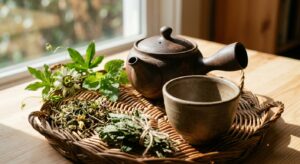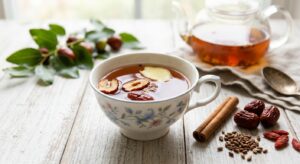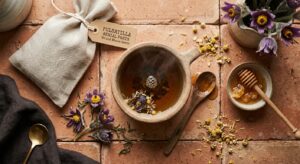
Shift work disrupts one of the most fundamental rhythms of human biology: the circadian clock. Whether you are finishing a night shift at 7am or trying to sleep through a bright afternoon, your nervous system is often still buzzing when your body desperately needs rest. For centuries, herbal traditions across Europe and Asia have relied on a handful of powerful sedative plants to bridge exactly this gap, long before sleep hygiene became a modern wellness concept. Valerian root was prescribed by Greek physicians as early as the 1st century AD, passionflower was used by Indigenous peoples of the Americas to calm restlessness, and lemon balm has been a fixture in European monastic gardens since the Middle Ages for its gentle nerve-soothing properties.
This blend brings those three traditions together into a single cup engineered for the specific challenge of shift work. The goal is not simply to knock you out, but to lower the physiological and psychological activation that makes sleeping off-schedule so difficult. Valerian root contributes the deepest sedative action, working on the same GABA pathways targeted by many pharmaceutical sleep aids but with a far gentler touch. Passionflower addresses the racing, repetitive thoughts that so often accompany irregular schedules, while lemon balm smooths the edges of cortisol-driven alertness that lingers after a stressful shift.
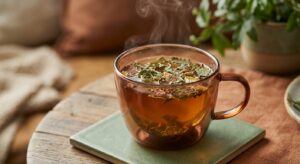
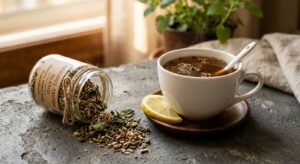
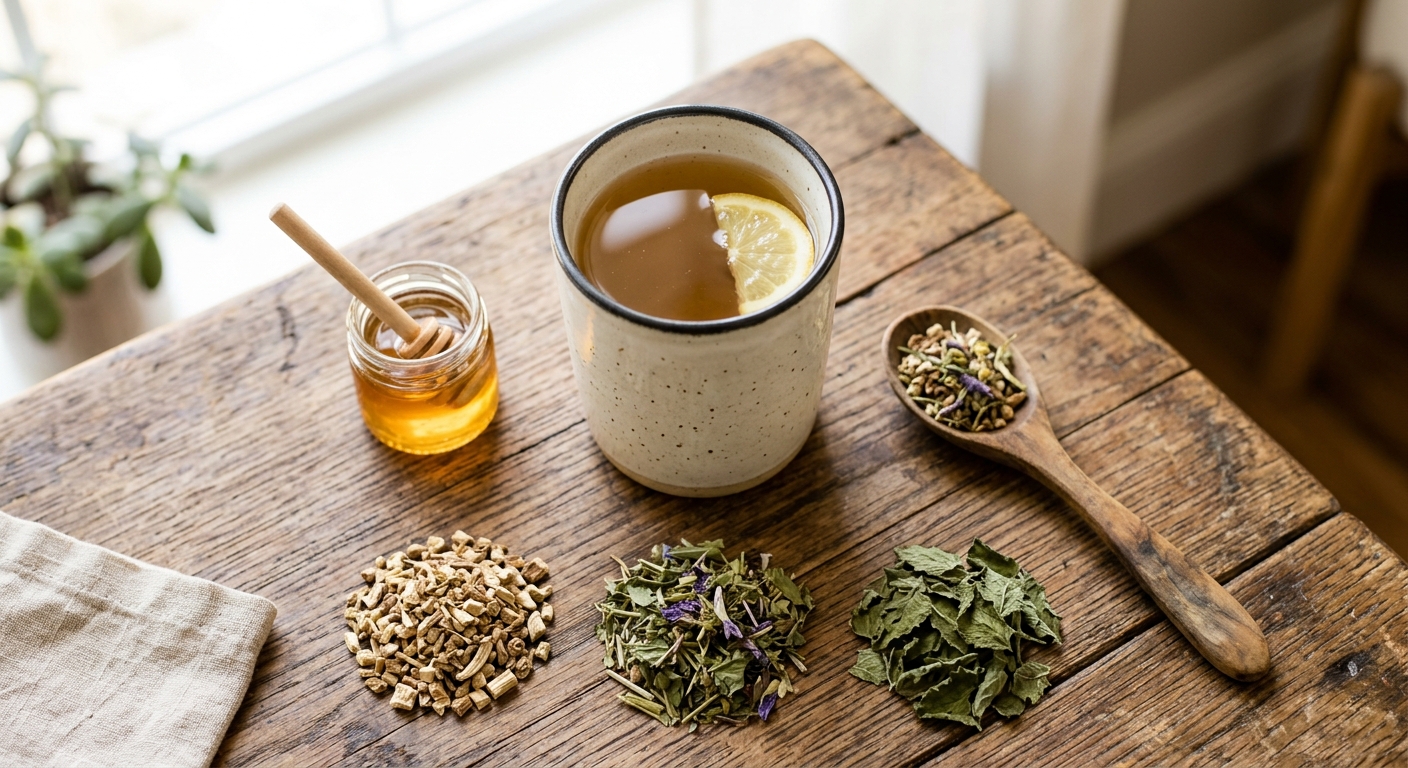
The flavor of this tea is earthy and herbaceous with a soft citrus lift from the lemon balm, grounded by the deep, woody undertones of valerian root. It is not the most delicate tea in the herbal world, but its complex aroma and warmth make it feel genuinely medicinal in the best possible sense. A small drizzle of raw honey rounds out the bitterness beautifully. Brew it as part of a consistent wind-down ritual, and over time the very act of preparing this cup can become a powerful sleep cue in itself.
2
cups
Ingredients
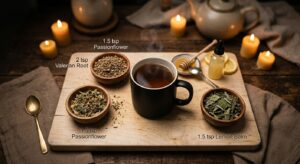
- 1 tspdried valerian root (chopped or cut-and-sifted)
- 1 tspdried passionflower herb
- 1 tspdried lemon balm leaves
- 480 mlwater (95°C / 203°F)
- —raw honey to taste (optional)
- —a small slice of fresh lemon (optional)
How to Brew
Click on an item below to shop for the recommended items for this recipe on Amazon.
As an Amazon Associate, we earn from qualifying purchases.
- Bring filtered water to 95°C (203°F). If you do not have a temperature-controlled kettle, bring water to a full boil and allow it to rest for 60 to 90 seconds before pouring.
- Combine 1 teaspoon each of dried valerian root, dried passionflower herb, and dried lemon balm leaves in a tea infuser or empty teapot. This ratio yields two medium cups.
- Pour the hot water directly over the herbs, ensuring all plant material is fully submerged. Cover the vessel with a lid or small plate to trap the volatile aromatic oils, which carry much of lemon balm’s calming benefit.
- Steep for 10 to 15 minutes. The longer end of this range produces a stronger, more sedative brew. Begin with 10 minutes if you are new to valerian, as the flavor intensifies significantly toward 15 minutes.
- Remove the infuser or strain the tea through a fine-mesh strainer into your mug. Add raw honey to taste. Sip slowly in a dim, quiet space 30 to 45 minutes before your intended sleep time.
- Combine 1.5 teaspoons each of dried valerian root, dried passionflower herb, and dried lemon balm leaves in a clean glass jar. The ratio is slightly higher than hot brew because cold water extracts compounds more slowly and less completely.
- Pour 480 ml of room-temperature filtered water over the herbs. Stir gently with a long spoon to ensure all plant material is saturated, then seal the jar with a lid.
- Allow the jar to sit at room temperature for the first 30 minutes to begin extraction, then transfer to the refrigerator. Cold steep for a total of 8 to 12 hours, or overnight.
- When ready, strain the tea through a fine-mesh strainer or cheesecloth into a glass. The resulting brew will be lighter in color than a hot brew but surprisingly aromatic.
- Drink cold or gently warm the strained tea in a small saucepan over low heat, stirring until just steaming. Do not boil. Sweeten with raw honey if desired. Consume within 24 hours of straining.
- Place 2 teaspoons of dried, chopped valerian root into a small saucepan with 600 ml of cold filtered water. Starting in cold water and bringing it up to temperature slowly draws out more of the root’s active valerenic acids.
- Bring the water to a gentle simmer over medium-low heat, then reduce to the lowest setting that maintains a very gentle simmer. Do not allow the liquid to reach a rolling boil. Simmer uncovered for 20 to 25 minutes, stirring occasionally. The liquid will reduce and deepen in color to a dark amber.
- During the final 3 minutes of simmering, add 1 teaspoon of dried passionflower and 1 teaspoon of dried lemon balm directly to the saucepan. These more delicate herbs should not be decocted for long, as heat degrades their volatile oils. Stir to submerge.
- Remove the saucepan from heat, place a tight-fitting lid on top, and allow everything to rest for 5 minutes. This final covered rest lets the passionflower and lemon balm infuse properly without further heat degradation.
- Strain the blend through a fine-mesh strainer into a mug, pressing the herbs gently with the back of a spoon to extract remaining liquid. The yield will be approximately 360 to 400 ml due to evaporation. Dilute with a splash of hot water if the flavor is too intense, sweeten with raw honey, and consume 45 minutes before sleep.
Health Benefits
Multiple clinical studies on valerian root have shown it can reduce the time taken to fall asleep, particularly in people with stress-related insomnia. This is directly relevant to shift workers whose circadian misalignment delays sleep onset even when fatigue is high.
Passionflower has demonstrated anxiolytic effects comparable to low-dose pharmaceutical anxiolytics in some small trials, specifically addressing the cognitive hyperarousal and repetitive thought patterns that are common obstacles to off-schedule sleep.
Lemon balm’s rosmarinic acid inhibits the enzyme that breaks down GABA, effectively raising calming neurotransmitter levels and blunting the cortisol spike that often keeps shift workers alert long after their shift has ended.
Unlike pharmaceutical sleep aids, the GABA-modulating compounds in this blend do not produce significant rebound sedation or dependency. Research suggests that valerian and passionflower together improve subjective sleep quality, including fewer nighttime awakenings, without impairing next-cycle alertness.
Chronic shift work elevates inflammatory markers and oxidative stress. The polyphenols in lemon balm and passionflower, including rosmarinic acid and orientin, have antioxidant properties that may help buffer the cumulative physiological toll of irregular schedules over time.
🧪 Key Bioactive Compounds
The Science Behind Valerian Root
The sedative action of this blend is rooted primarily in GABA-ergic pharmacology. GABA, or gamma-aminobutyric acid, is the central nervous system’s primary inhibitory neurotransmitter. When GABA levels are adequate and receptor sensitivity is high, the brain shifts away from alertness and toward the quieter electrical patterns associated with sleep onset. Valerian root’s primary bioactive compound, valerenic acid, achieves this by inhibiting the enzyme GABA transaminase, which is responsible for breaking down GABA in the synaptic cleft. The result is a prolonged presence of GABA at receptors, producing calming effects without the receptor desensitization that leads to tolerance with pharmaceutical GABA agonists like benzodiazepines.
Passionflower complements valerian through a related but distinct mechanism. Its flavone glycosides, particularly vitexin and orientin, bind to GABA-A receptor subunits, the same receptor complex targeted by benzodiazepines and barbiturates, but at different binding sites and with much lower receptor occupancy. This partial agonism produces anxiolytic effects that address the cognitive dimension of sleeplessness, specifically the rumination and hypervigilance that are hallmarks of shift-work insomnia, without fully suppressing neurological function. A landmark double-blind crossover trial published in Phytotherapy Research in 2011 found that passionflower tea significantly improved sleep quality scores compared to placebo over a seven-day period.
Lemon balm rounds out the blend through two parallel mechanisms. Its rosmarinic acid content also inhibits GABA transaminase, amplifying the same pathway as valerian root and producing a mild but meaningful additive effect. Simultaneously, lemon balm has been shown in human trials to reduce cortisol-stimulated anxiety and improve mood scores, suggesting that it acts on the hypothalamic-pituitary-adrenal axis to dampen the stress response directly. For shift workers, whose cortisol rhythms are chronically disrupted and often elevated during conventional sleep hours, this HPA-axis modulation is particularly valuable. Together, these three herbs create a synergistic sedative and anxiolytic profile that addresses sleep from multiple biological angles simultaneously.
Brewing Tips
- Consistency matters more than any single cup. Drink this tea at the same point in your wind-down routine every day, regardless of what time the clock reads, to help your body associate the ritual with sleep.
- Valerian root’s earthy, almost barnyard-like aroma intensifies with longer steeping and heat. If the flavor is too challenging on its own, increasing the lemon balm ratio slightly and adding raw honey will make the cup significantly more palatable without reducing its effectiveness.
- Store your dry herb blend in a sealed, dark glass jar away from light and heat. Pre-mixing a two-week supply in the correct ratio means one less mental task between a grueling shift and your bed.