In India, holy basil (Ocimum tenuiflorum, also called Ocimum sanctum) is far more than a kitchen herb. Tulsi, meaning “the incomparable one,” has been grown in courtyard shrines and household gardens for thousands of years, and it is traditionally regarded as a sacred plant. Ayurvedic texts describe it as a rasayana, a rejuvenating herb meant to support longevity, resilience, and a steady mind. Many families still tend a tulsi plant at the center of the home and brew its leaves daily.
What makes holy basil especially interesting for evening use is its classification as an adaptogen, a plant thought to help the body respond to stress. Where coffee and black tea sharpen focus by stimulating the nervous system, tulsi works from the opposite direction. It is believed to ease the mental noise and tension that scatter attention, leaving a calmer, more even kind of clarity. That distinction matters at night, when caffeine can undermine sleep but a restless mind can undermine it just as much.
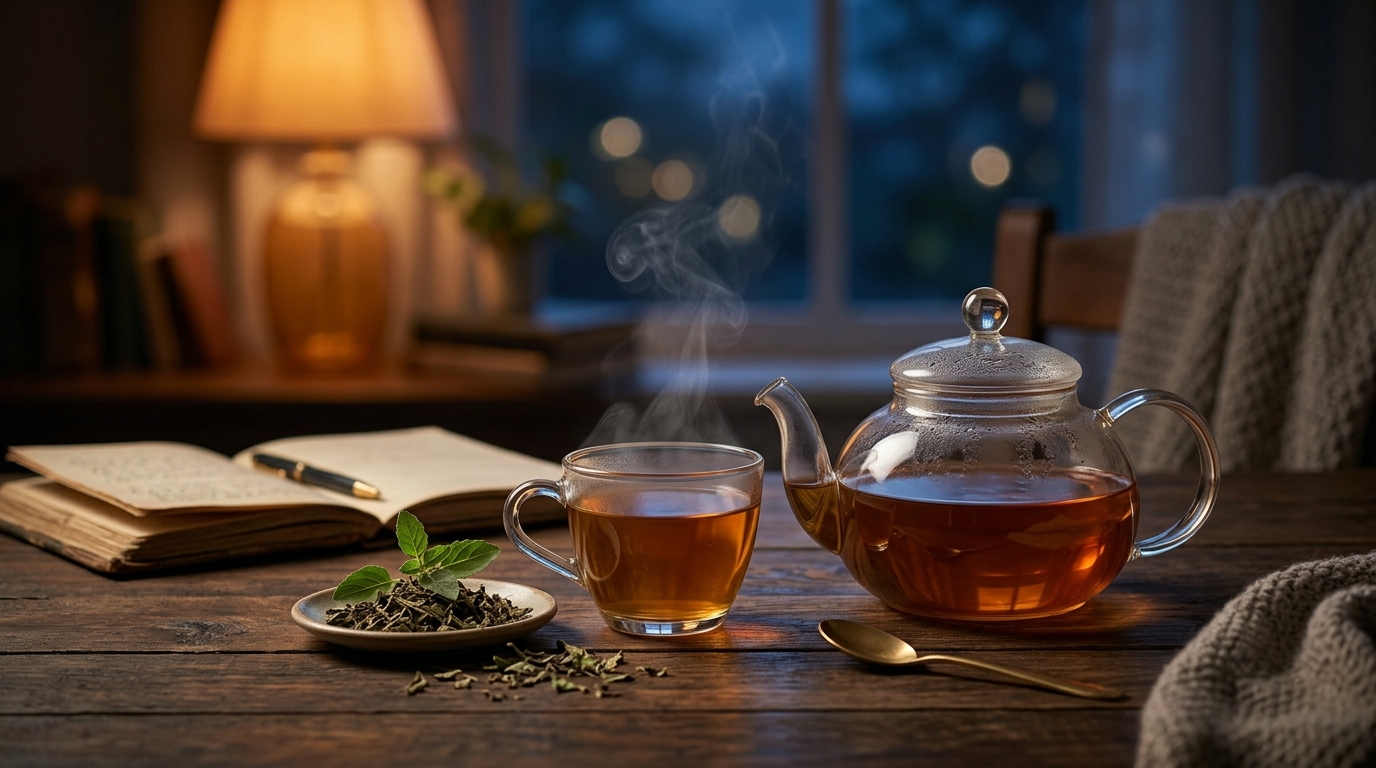
In the cup, tulsi tastes like nothing else in the basil family. Expect a warm, slightly peppery sweetness with clove-like spice, a hint of mint, and a gentle herbal brightness. It is comforting, fragrant, and naturally caffeine-free, which makes it an ideal companion for a late study session, an evening of creative work, or a quiet wind-down ritual that keeps the mind clear while the body begins to settle.
2
cups
Ingredients
- 2 tspdried holy basil (tulsi) leaves
- 480 mlwater (95°C / 203°F)
- —fresh lemon slice (optional)
- —raw honey to taste (optional)
How to Brew
Click on an item below to shop for the recommended items for this recipe on Amazon.
As an Amazon Associate, we earn from qualifying purchases.
- Bring fresh, filtered water to a near boil, then let it rest for about 30 seconds so it settles around 95°C (203°F). Fully boiling water can flatten the delicate aromatics.
- Measure 1 teaspoon of dried tulsi leaves per 240 ml cup and place them in a tea infuser or directly into a warmed teapot. Gently crush the leaves between your fingers first to release more of their oils.
- Pour the hot water over the leaves, then cover the cup or pot with a saucer or lid to hold in the steam and essential oils.
- Steep for 5 to 7 minutes. Closer to 5 gives a lighter, sweeter cup, while 7 brings out deeper spice and a slightly stronger, more peppery character.
- Remove the infuser, give the tea a gentle stir, and taste before adding anything. If you like, add a small squeeze of lemon or a touch of raw honey.
- Sip slowly in a dim, quiet space about 60 to 90 minutes before bed to enjoy the calming focus without any stimulating effect.
- Add 2 tablespoons of dried tulsi leaves to a clean glass jar. Lightly bruise the leaves with your fingers first, since there is no heat to help release their flavor.
- Pour in 1 liter of cold filtered water and stir gently so every leaf is submerged and wet.
- Seal the jar and place it in the refrigerator. Let it steep for 8 to 12 hours, which makes it easy to prepare in the evening for the next day.
- Strain the tea through a fine mesh strainer into a clean pitcher or bottle, pressing lightly on the leaves to collect the last of the liquid.
- Serve over ice with a lemon slice or a few fresh mint leaves. Because this version is mild and refreshing, it works well as an afternoon-to-evening focus drink.
- Keep refrigerated and finish within 48 hours for the best flavor and freshness.
- Add 1 tablespoon of dried tulsi leaves (include any small stem pieces if you have them) to a small saucepan along with 300 ml of cold water.
- If you like, add 2 thin slices of fresh ginger and a pinch of cracked black pepper or one crushed cardamom pod for a traditional warming blend.
- Bring the pot slowly to a gentle simmer over medium-low heat. Reduce the heat as soon as small bubbles appear, since a hard boil will make the tea bitter.
- Simmer uncovered for about 10 minutes, until the liquid darkens to a deeper amber and the kitchen fills with a spicy, sweet aroma.
- Turn off the heat, cover the pan, and let it rest for 5 minutes to deepen the flavor.
- Strain into a mug and stir in a little honey or a splash of warm milk if desired. Drink warm as a rich, grounding evening cup.
Health Benefits
By helping moderate the body’s stress response, tulsi may reduce the mental restlessness that fragments attention. Small human trials have reported improvements in perceived stress and cognitive function, though larger studies are still needed.
As a traditional adaptogen, holy basil has been shown in preliminary human research to lower self-reported stress and may help modulate cortisol, the body’s main stress hormone.
Compounds such as apigenin and linalool are associated with relaxation, so tulsi can settle a keyed-up mind while leaving you alert enough to keep working or reading.
Tulsi is rich in rosmarinic acid, eugenol, and flavonoids that act as antioxidants in laboratory studies, supporting overall cellular health.
Traditionally used as a digestive tonic, its warming, carminative qualities may ease bloating and discomfort, which can make settling in for the night more comfortable.
🧪 Key Bioactive Compounds
The Science Behind Holy Basil
The appeal of holy basil lies in its rich and varied chemistry. The leaves contain volatile oils dominated by eugenol, along with linalool, caryophyllene, and other terpenes that create its distinctive aroma. They also hold a wide range of polyphenols, including rosmarinic acid, apigenin, orientin, and vicenin, as well as the triterpenoid ursolic acid. Together these compounds are responsible for much of tulsi’s antioxidant and anti-inflammatory activity observed in laboratory settings.
Tulsi is classified as an adaptogen, meaning it is thought to help the body maintain balance under stress. Research, mostly in animal models and a handful of small human trials, suggests holy basil may influence the hypothalamic-pituitary-adrenal axis, the system that governs cortisol release. In some human studies, participants taking tulsi extract reported lower stress, fewer symptoms of anxiety, and improved mood and attention compared with placebo. Because chronic stress is a major drain on concentration, easing that load may translate into clearer, calmer thinking.
It is important to be honest about the evidence. Much of the supporting research uses concentrated extracts rather than a simple cup of tea, sample sizes are small, and results vary. Tea contains lower doses than supplements, so its effects are likely gentler and more ritual-driven. Still, as a caffeine-free evening drink, tulsi offers a pleasant, low-risk way to support relaxed focus, and the act of slowing down with a warm cup is itself a proven way to reduce tension before bed.
Brewing Tips
- Bruise or lightly crush the dried leaves before steeping to release more of the aromatic oils, especially for cold brew where there is no heat to help.
- Cover your cup while it steeps so the volatile compounds that give tulsi its calming fragrance stay in the tea instead of escaping with the steam.
- Try the three main tulsi varieties, Rama (mild and sweet), Krishna (peppery and bold), and Vana (bright and citrusy), to find the flavor that suits your evening routine.
- Drink it 60 to 90 minutes before bed so you get the calming focus without needing a late bathroom trip.
- Store dried tulsi in an airtight, opaque container away from light and heat, and use within a year for the best aroma.