For centuries, the dark purple berries of the European elder tree (Sambucus nigra) have occupied a special place in the folk medicine cabinets of Europe. Hippocrates reportedly called the elder tree his ‘medicine chest,’ and village herbalists from England to Eastern Europe turned its berries into syrups, wines, and warm cordials to ease the misery of winter colds and fevers. Elder was also steeped in folklore: it was said that an elder tree planted near the home protected the household from harm, and that the Elder Mother spirit lived within its branches.
Today, elderberry is one of the most researched traditional cold-season herbs. Its deep violet color comes from anthocyanins, plant pigments with strong antioxidant activity, and small clinical studies have explored whether standardized elderberry extracts may shorten the duration of cold and flu symptoms. Evening is a natural time to drink it: the body does much of its repair work during sleep, and a warm, fragrant mug is itself a signal to slow down.
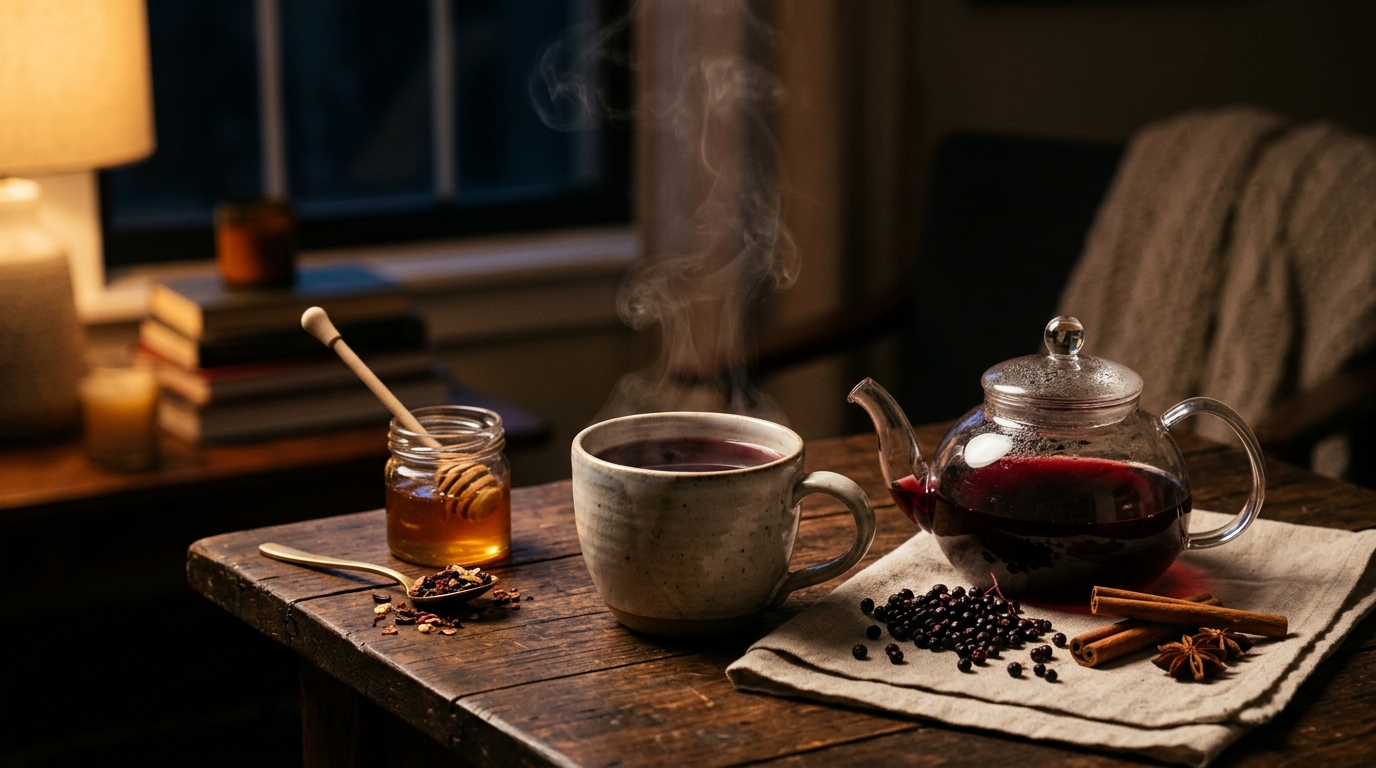
This nightcap blends dried elderberries with a touch of cinnamon, a little ginger, and a slice of orange peel for a tart, gently spiced cup that tastes like a berry compote in liquid form. It is naturally caffeine-free, so it fits comfortably into a bedtime routine. One important note: raw elderberries and other parts of the plant contain compounds that can cause nausea, so berries must always be dried and thoroughly heated before drinking, which this guide covers carefully.
2
cups
Ingredients
- 2 tbspdried elderberries (Sambucus nigra)
- 480 mlwater (filtered)
- 1 smallcinnamon stick
- 3 slicesfresh ginger
- 1 striporange peel
- —raw honey or maple syrup to taste (optional; do not give honey to infants under 12 months)
How to Brew
Click on an item below to shop for the recommended items for this recipe on Amazon.
As an Amazon Associate, we earn from qualifying purchases.
- Add the dried elderberries, cinnamon stick, ginger slices, and 480 ml of water to a small saucepan.
- Bring to a boil over medium-high heat, then immediately reduce to a gentle simmer. Cover with a lid to keep the aromatic compounds from escaping.
- Simmer for 10 to 15 minutes. The berries will soften and the liquid will turn a deep ruby-purple. This sustained heat is important for making the berries safe and for extracting the anthocyanins.
- Remove from the heat, add the orange peel, and cover again. Let steep for 5 more minutes so the citrus oils infuse without turning bitter.
- Strain through a fine mesh strainer into mugs, gently pressing the berries with the back of a spoon to release their juices.
- Sweeten with raw honey or maple syrup once the tea has cooled slightly, and sip slowly about an hour before bed.
- Combine 2 tablespoons of dried elderberries with 240 ml of water in a small saucepan. Bring to a boil, then simmer for 10 minutes to make the berries safe to consume.
- Pour the hot liquid, berries and all, into a clean glass jar. Add the orange peel and ginger slices (skip the cinnamon stick, which can turn woody and harsh in long cold steeps).
- Top the jar with 240 ml of cold filtered water and let it cool to room temperature, about 30 minutes.
- Seal the jar and refrigerate for 6 to 8 hours, or overnight. The cold steep draws out the fruity, jammy notes and leaves a softer, less astringent flavor.
- Strain through a fine mesh strainer, pressing gently on the berries.
- Serve over ice, or pour into a mug and warm gently on the stove (do not boil again) for a quick nightcap the next evening. Keeps well in the fridge for up to 3 days.
- Combine 1/2 cup dried elderberries, 2 cups of water, 1 cinnamon stick, and 4 slices of fresh ginger in a saucepan.
- Bring to a boil, reduce to a low simmer, and cook uncovered for 30 to 40 minutes, until the liquid has reduced by about half and turned almost black-purple.
- Mash the softened berries gently with a potato masher or the back of a spoon to release their juices, then simmer 5 more minutes.
- Strain through a fine mesh strainer or cheesecloth, pressing firmly to extract every drop. Discard the spent berries.
- Let the concentrate cool to just warm, then stir in 1/4 cup of raw honey if desired. Honey added to boiling liquid loses some of its delicate character.
- Pour into a clean glass jar and refrigerate for up to 7 days. To serve, stir 60 ml of concentrate into 180 ml of freshly heated water, add a squeeze of orange, and sip warm.
Health Benefits
Elderberry anthocyanins and flavonoids appear to modulate immune signaling, and small clinical trials suggest standardized elderberry preparations may reduce the duration and severity of cold symptoms, though tea is less concentrated than extracts.
Elderberries rank among the highest antioxidant fruits by anthocyanin content, helping protect cells from oxidative stress that accumulates during illness and daily life.
Warm elderberry tea has long been used traditionally to ease sore throats, congestion, and the achiness of seasonal illness, and the warmth and hydration themselves provide real comfort.
While elderberry itself is not a sedative, the slow preparation of a warm, caffeine-free cup helps signal the body to wind down, and pairing it with ginger and cinnamon adds a settling, digestive warmth.
Drinking a fluid-rich, flavorful tea in the evening encourages hydration during the season when dry indoor air and illness increase fluid needs.
🧪 Key Bioactive Compounds
The Science Behind Elderberry
The standout feature of elderberry is its exceptionally high anthocyanin content. Cyanidin-3-glucoside and cyanidin-3-sambubioside are the dominant pigments, and they give the berries both their near-black color and much of their biological activity. In laboratory studies, these compounds show strong antioxidant capacity, and some research suggests they may interfere with the ability of certain viruses to attach to and enter host cells.
Human evidence, while promising, is still modest. A few small randomized trials of standardized elderberry extracts have reported shorter duration of cold and flu-like symptoms, and a clinical trial in air travelers found reduced cold duration in those taking elderberry. However, these studies typically used concentrated extracts rather than home-brewed tea, and larger, more rigorous trials are still needed. Tea should be viewed as a supportive, comforting practice rather than a cure.
Heat plays an important role in the safety and the chemistry of this tea. Simmering breaks down the cyanogenic glycosides present in raw elderberries, making the berries safe to consume. Gentle heat also helps release anthocyanins into the water, though prolonged boiling can degrade some of them, which is why a moderate simmer rather than a hard rolling boil is recommended.
Brewing Tips
- Buy dried elderberries from a reputable supplier labeled Sambucus nigra, and avoid foraging unless you can identify the plant with complete certainty, since some elder relatives are more toxic.
- Add the honey or maple syrup after the tea has cooled slightly to preserve its character and to avoid heating raw honey too aggressively.
- Brew a double batch of the concentrate on Sunday evening and you will have effortless nightcaps for the whole week.
- Store dried elderberries in an airtight jar in a cool, dark place, where they stay potent for up to a year.