Most people know catnip as the herb that sends house cats into a frenzy, but long before it became a pet store staple, Nepeta cataria was a respected kitchen and apothecary plant. Native to Europe and parts of Asia, it traveled to North America with colonists, who brewed it as an everyday tea. In fact, catnip tea was a common household drink in England before Chinese black tea became widely available and affordable, and Culpeper’s herbal writings from the 1600s praised it for colds, fevers, and nervous complaints.
Traditional herbalists reached for catnip when someone was fretful, sleepless, or suffering from a tense stomach. It was a classic remedy for fussy children and for adults who felt wound up after a long day, often combined with chamomile or lemon balm. Its reputation as a gentle nervine, a herb that soothes the nervous system without heavy sedation, has carried through folk medicine for centuries.
What makes catnip tea special is the contrast between what it does to cats and what it tends to do for people. The same family of volatile compounds that excites a feline is generally experienced by humans as quietly relaxing. The flavor is a pleasant surprise too: minty and lemony with a soft herbal depth, like a mellow cousin of peppermint with a hint of citrus.
2
cups
Ingredients
- 2 tspdried catnip leaves and flowering tops
- 480 mlwater (95°C / 203°F)
- —raw honey to taste (optional)
- —fresh lemon slice (optional)
How to Brew
Click on an item below to shop for the recommended items for this recipe on Amazon.
As an Amazon Associate, we earn from qualifying purchases.
- Bring fresh water to a boil, then let it rest for about 30 seconds so it settles near 95°C (203°F).
- Place the dried catnip into a tea infuser or directly into a warmed teapot or mug. Use about 1 teaspoon of herb per 240 ml of water.
- Pour the hot water over the herb, then immediately cover the cup with a saucer or lid to trap the aromatic steam.
- Steep for 7 to 10 minutes. Seven minutes gives a lighter, more floral cup, while ten minutes yields a stronger, slightly more bitter and medicinal brew.
- Remove the infuser or strain out the leaves, pressing gently to release the last of the liquid.
- Sweeten with a little raw honey if desired and sip slowly 30 to 60 minutes before bedtime.
- Add 2 tablespoons of dried catnip to a clean glass jar. This is a higher ratio than hot brewing to compensate for the cooler extraction.
- Pour in 1 liter of cold, filtered water and stir gently so all the herb is submerged.
- Seal the jar and place it in the refrigerator. Let it infuse for 6 to 8 hours, or overnight.
- Strain through a fine mesh sieve or a layer of muslin into a clean pitcher, pressing lightly on the herbs.
- Serve over ice or straight from the fridge, with a lemon wedge or a few fresh mint leaves. Consume within 48 hours for best flavor.
- Measure 2 tablespoons of dried catnip into a heatproof glass jar or French press.
- Pour 500 ml of freshly boiled water (about 95°C / 203°F) over the herb and immediately cover with a tight-fitting lid.
- Let the infusion sit undisturbed for 20 to 30 minutes, allowing it to cool gradually while the compounds extract.
- Strain through a fine sieve into a mug, pressing the herb to capture the concentrated liquid.
- Gently reheat if you prefer it warm, taking care not to boil it, then add honey or a splash of milk if you like.
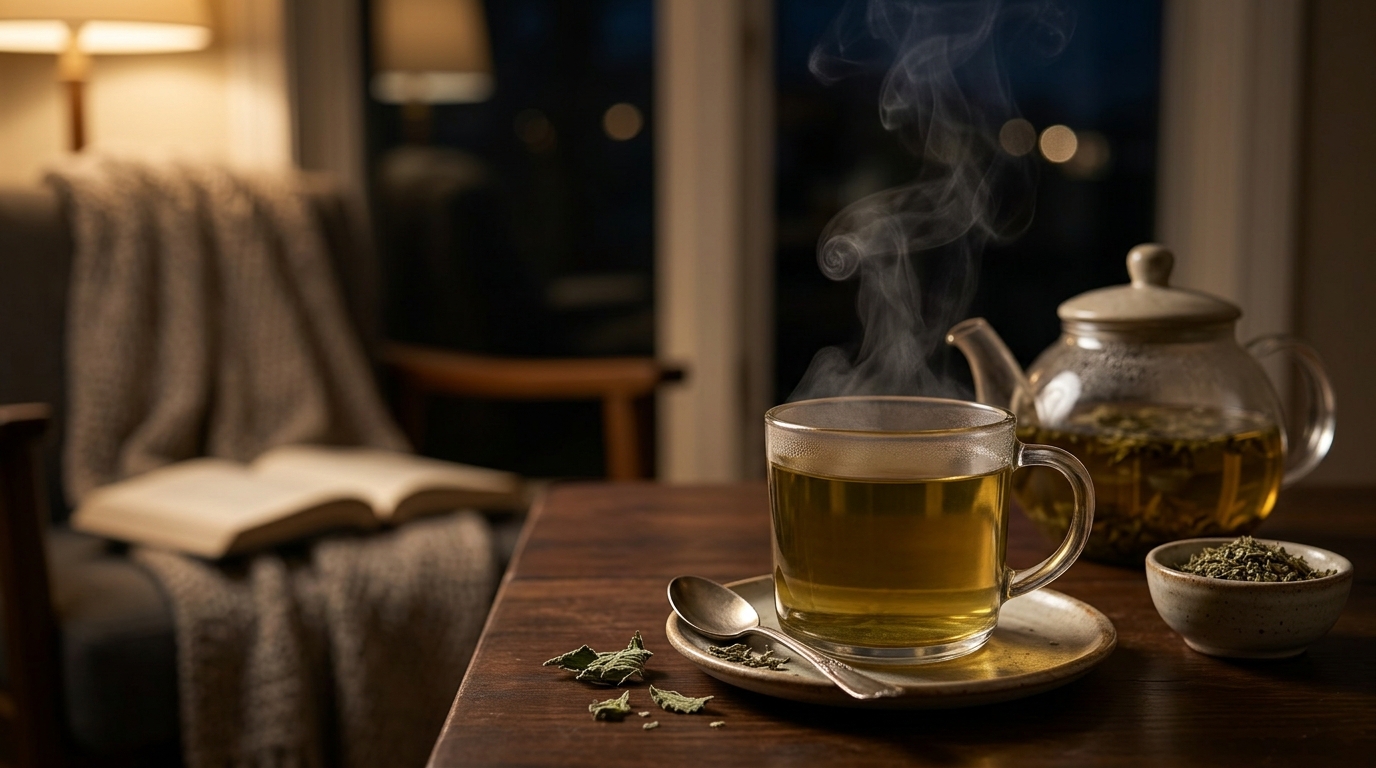
- Drink slowly in a quiet, dimly lit spot to make the most of the calming ritual.
Health Benefits
Catnip has a long traditional reputation as a mild nervine, and its volatile oils are thought to produce a gentle calming effect. Modern clinical trials in humans are scarce, so the evidence rests mostly on traditional use and preliminary animal studies.
Herbalists commonly use catnip in bedtime blends because it is caffeine-free and mildly sedating. Some animal research suggests nepetalactone-related compounds may have sedative properties, though more human studies are needed.
As a carminative and antispasmodic herb, catnip is traditionally used to relieve gas, bloating, and stomach cramps. Its volatile oils are believed to relax smooth muscle in the digestive tract, similar to other mints.
Hot catnip tea was a classic folk remedy for colds and fevers, as it encourages gentle sweating and offers soothing warmth. This use is supported by tradition rather than strong clinical evidence.
Phenolic compounds such as rosmarinic acid give catnip antioxidant activity in laboratory tests. These effects are well documented in vitro, but their impact when drunk as tea is not yet fully established.
🧪 Key Bioactive Compounds
The Science Behind Catnip
The most distinctive compound in catnip is nepetalactone, an iridoid monoterpene found in the plant’s essential oil. In cats, it binds to receptors in the nasal tissue and triggers the familiar euphoric response. In humans, the story is quite different. Nepetalactone and related compounds appear to have mild calming effects, and in animal studies, catnip extracts have shown sedative and anxiety-reducing activity. However, rigorous human clinical trials remain limited, so catnip’s reputation as a relaxant rests largely on centuries of traditional use.
Beyond nepetalactone, catnip contains a rich mix of terpenes including citronellol, geraniol, and caryophyllene, which together create its lemony, minty fragrance. These aromatic compounds are also responsible for much of the herb’s antispasmodic and carminative activity, helping explain its traditional use for stomach cramps and gas. Like other members of the mint family, catnip also contains rosmarinic acid, a phenolic antioxidant studied for anti-inflammatory and neuroprotective properties.
It is worth remembering that the volatile oils responsible for catnip’s effects are delicate and evaporate easily. This is why covering your cup during steeping matters, and why using fresh, properly stored dried herb makes a noticeable difference. Dried catnip kept in an airtight container away from light retains its aroma and potency far longer than herb left open in a cupboard.
Brewing Tips
- Always cover your cup or teapot while steeping to trap the volatile aromatic oils that give catnip its calming character.
- Choose dried catnip that still smells distinctly minty and lemony. If the aroma is faint or hay-like, the herb is old and will make a weak tea.
- Start with a single cup in the evening to see how your body responds, since sensitivity to mild sedative herbs varies from person to person.
- Grow your own catnip in a pot or garden bed and dry the leaves just as the plant begins to flower for the strongest flavor and aroma, but fence it off if neighborhood cats are around.