Deep in the scrublands and dry hillsides of southern Africa, a silver-leafed shrub with vivid scarlet flowers has been gathering the attention of both traditional healers and modern researchers for generations. Sutherlandia frutescens, known across southern Africa as cancer bush, unwabi, or by its Afrikaans name kankerbos, sits at the heart of one of the continent’s oldest and most trusted plant medicine traditions. The Khoi, San, and Zulu peoples brewed decoctions from its leaves to treat everything from fevers and internal cancers to wasting illness and deep fatigue, and contemporary science is now beginning to reveal the remarkable chemistry behind those ancient observations.
What makes Sutherlandia genuinely distinct among immune-supporting herbs is its unusual concentration of three powerful bioactive compounds that rarely appear together in a single plant: L-canavanine, a potent antiviral amino acid analog; pinitol, an insulin-sensitizing cyclitol; and SU1, a recently identified triterpenoid glycoside with demonstrated anti-inflammatory action. Together, these compounds position this herb not merely as a symptom reliever but as a true adaptogen, one that helps the body calibrate its response to both physical and immune stressors. It has earned formal recognition from South Africa’s Medical Research Council as a botanical worth serious clinical investigation.
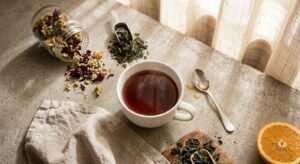
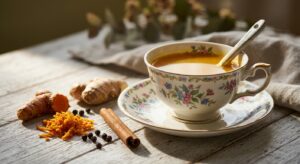
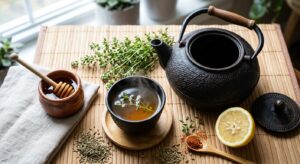
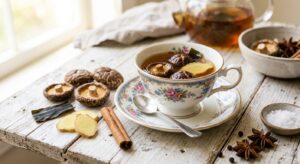
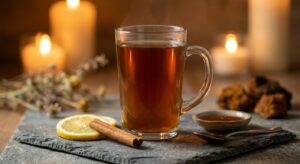
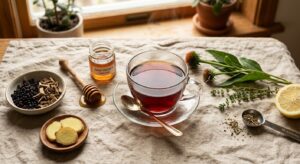
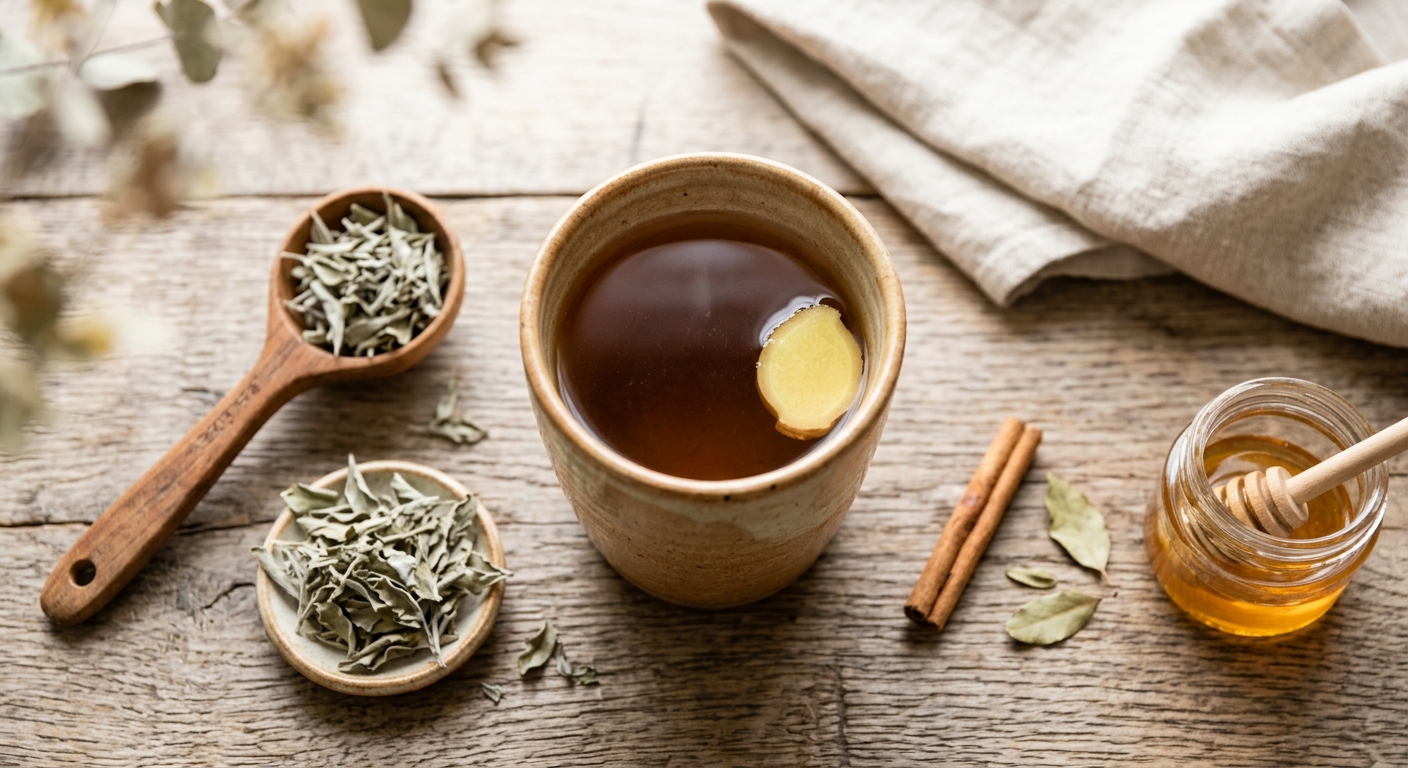
The tea itself carries a character as distinctive as its history. Expect a bold, bitter-edged brew with deep earthy notes and a faintly grassy finish, quite unlike the gentle florals of chamomile or the bright zing of echinacea. That bitterness is, in fact, a sign of its potency. For centuries, southern African herbalists understood that the most medicinally active plants often carry the sharpest flavors, and Sutherlandia rewards those willing to brew it with patience and respect. Paired thoughtfully with warming spices or a touch of raw honey, it becomes a genuinely compelling daily tonic as much at home in a modern wellness ritual as in a traditional clay pot over an open fire.
2
cups
Ingredients
- 2 tspdried Sutherlandia frutescens leaves (African immune herb)
- 500 mlwater (95°C / 203°F)
- —raw honey or fresh ginger slice to taste (optional)
- —pinch of cinnamon (optional, to balance bitterness)
How to Brew
Click on an item below to shop for the recommended items for this recipe on Amazon.
As an Amazon Associate, we earn from qualifying purchases.
- Bring filtered water to 95°C (203°F). If you do not have a temperature-controlled kettle, bring water to a full boil and allow it to rest for 30 seconds before pouring.
- Place 1 teaspoon of dried Sutherlandia frutescens leaves per cup into a tea infuser, strainer basket, or directly into your mug. The leaves are small and somewhat dense, so a fine-mesh infuser works best.
- Pour the hot water over the leaves and cover the mug immediately with a small plate or lid. Covering the brew traps volatile aromatic compounds and retains heat for a more complete extraction.
- Steep for 10 to 15 minutes. Taste at 10 minutes. If you are new to this herb, stop there. More experienced drinkers and those seeking stronger medicinal action may steep the full 15 minutes, though bitterness will increase noticeably.
- Remove the infuser and allow the tea to cool for 1 to 2 minutes. Add raw honey or a thin slice of fresh ginger to soften the bitterness. A pinch of cinnamon also pairs beautifully and adds complementary warming properties.
- Drink one cup in the morning or early afternoon. Avoid drinking on a completely empty stomach if you are sensitive to bitter herbs.
- Measure 2 teaspoons of dried Sutherlandia frutescens leaves per 500 ml of cold, filtered water. Because cold extraction is less efficient than hot, use a slightly higher leaf-to-water ratio than you would for a hot brew.
- Add the leaves and water to a clean glass jar. Stir gently to ensure the leaves are fully submerged. If leaves float, place a small spoon on top to weigh them down, or stir again after 10 minutes.
- Leave the jar at room temperature for the first hour to allow an initial gentle extraction phase, then seal with a lid and transfer to the refrigerator.
- Allow the tea to cold brew in the refrigerator for a minimum of 10 hours and up to 14 hours. Brewing overnight from evening to morning is the most practical approach.
- In the morning, strain the tea through a fine-mesh strainer or cheesecloth into a clean bottle or pitcher. The resulting liquid should be a clear, warm amber with a mellow, earthy character.
- Serve over ice if desired, or drink at refrigerator temperature. Sweeten lightly with agave syrup or a small squeeze of fresh lemon, which brightens the flavor and adds a complementary dose of vitamin C. Store any remaining tea in the refrigerator and consume within 24 hours.
- Measure 1 tablespoon (approximately 3 teaspoons) of dried Sutherlandia frutescens leaves into a small stainless steel or ceramic saucepan. Avoid aluminum cookware, as it can interact with the herb’s tannins and alter flavor.
- Add 600 ml of cold filtered water. Starting with cold water and bringing it up to heat slowly allows the compounds to extract more gradually and completely than adding leaves to already-boiling water.
- Bring the water to a full rolling boil over medium-high heat, stirring once. As soon as a rolling boil is reached, reduce the heat immediately to a low, gentle simmer.
- Simmer uncovered for 20 to 25 minutes, stirring occasionally. The liquid will reduce by roughly 150 to 200 ml. Watch the pot and add a small splash of water if it reduces more than expected. The decoction will deepen significantly in color, moving from amber to a rich dark chestnut.
- Remove from heat and allow to cool for 3 to 5 minutes. Strain through a fine-mesh strainer or a piece of cheesecloth into two cups, pressing gently on the spent leaves to extract remaining liquid.
- This concentrated decoction is more potent and more bitter than a standard steep. Add raw honey, a slice of lemon, or a small piece of fresh turmeric root to the cup. Drink one cup warm, up to twice daily during periods of acute immune stress. Do not exceed recommended usage periods without guidance from a qualified herbal practitioner.
Health Benefits
Unlike simple immune stimulants, Sutherlandia’s combination of triterpenoid saponins and flavonoids appears to act as an immune modulator, supporting both innate and adaptive immune responses. Clinical observations and in vitro studies suggest it can upregulate natural killer cell activity while simultaneously reducing excessive inflammatory signaling, a dual action that makes it valuable during both infection and recovery.
L-canavanine, one of Sutherlandia’s most unusual compounds, has demonstrated direct antiviral properties in laboratory studies by disrupting the protein synthesis of certain RNA viruses. Traditional use across southern Africa for treating viral wasting illnesses, including HIV-associated conditions, has been supported by several South African Medical Research Council investigations.
The unusually high concentration of free GABA in Sutherlandia leaves directly supports the nervous system’s response to stress, helping lower cortisol-driven immune suppression. Since chronic stress is one of the most significant depressors of immune function, this dual immune-stress action makes the herb particularly relevant for modern wellness challenges.
Sutherlandioside B and quercetin work synergistically to inhibit key inflammatory pathways, including NF-kB and COX-2. This helps reduce the severity and duration of inflammatory symptoms associated with upper respiratory infections, and may explain the herb’s traditional use in managing chronic inflammatory conditions.
The presence of pinitol, asparagine, and free amino acids gives Sutherlandia a genuine nutritive dimension beyond its pharmacological compounds. Traditional healers prescribed it specifically to counter the wasting and weakness that accompanies prolonged illness, a use that aligns with modern understanding of how these compounds support cellular energy metabolism and muscle tissue recovery.
🧪 Key Bioactive Compounds
The Science Behind Sutherlandia Frutescens (African Immune Herb / Cancer Bush)
The scientific interest in Sutherlandia frutescens has grown substantially since the early 2000s, driven largely by the South African Medical Research Council’s investigations into traditional plant medicines. The herb’s most pharmacologically unique compound, L-canavanine, is a structural analog of the amino acid L-arginine. Because viral enzymes cannot easily distinguish between the two molecules, L-canavanine gets incorporated into viral proteins during replication, producing non-functional proteins that disrupt the virus’s ability to replicate successfully. This mechanism is distinct from the general immune-stimulating action of herbs like echinacea, and represents a more direct antiviral intervention at the molecular level. Research published in the Journal of Ethnopharmacology and by the South African National Research Foundation has documented this activity against several RNA viral strains, though most studies to date remain in vitro or animal-model based, meaning human clinical trials are still limited in scope.
Equally compelling is Sutherlandia’s impact on the immune-inflammation axis through its triterpenoid saponin fraction, particularly the compound catalogued as Sutherlandioside B, or SU1. This compound has been shown to downregulate nuclear factor kappa B (NF-kB), a master regulator of inflammatory gene expression. When NF-kB signaling is excessive, as occurs during severe infections or chronic inflammatory disease, it drives the overproduction of pro-inflammatory cytokines including TNF-alpha and interleukin-6. By moderating this pathway, Sutherlandia may help prevent the kind of runaway inflammatory response that causes much of the tissue damage associated with severe respiratory infections. This mechanism also aligns with the herb’s traditional use in wasting diseases, where systemic inflammation rather than the infection itself is often the primary driver of physical decline.
The presence of free GABA in Sutherlandia leaf tissue at concentrations significantly higher than in most other botanicals adds a fascinating neuroimmunological dimension to its activity. GABA is the brain’s primary inhibitory neurotransmitter, and oral consumption of GABA-containing botanicals, while subject to ongoing debate about blood-brain barrier permeability, has been shown in several clinical studies to reduce self-reported stress and lower salivary cortisol levels. Since cortisol chronically suppresses lymphocyte production and natural killer cell activity, the herb’s GABA content may indirectly bolster immune function by addressing one of its most common everyday adversaries: sustained psychological stress. This multilayered action, antiviral, anti-inflammatory, adaptogenic, and nutritive simultaneously, is precisely what places Sutherlandia in a category beyond simple immune-supportive teas and into the realm of genuinely complex botanical medicine.
Brewing Tips
- Source your Sutherlandia from certified suppliers who clearly identify the species as Sutherlandia frutescens and state the plant part used (leaf only). The root and stem contain different and potentially harsher compound profiles.
- If the bitterness is too intense on first tasting, add a slice of fresh ginger and a generous teaspoon of raw honey immediately after straining and stir well before sipping. The gingerols in fresh ginger create a warming contrast that genuinely softens the perceived bitterness rather than simply masking it.
- Practice a six-on, two-off cycle when using this herb regularly: drink it daily for six weeks, then take a two-week break before resuming. This prevents physiological habituation and aligns with traditional usage patterns observed among southern African healers who treated it as a periodic tonic rather than a permanent daily beverage.