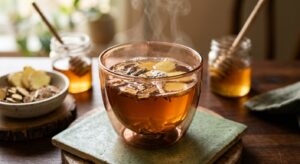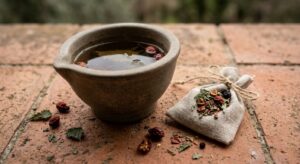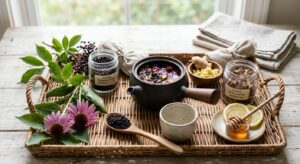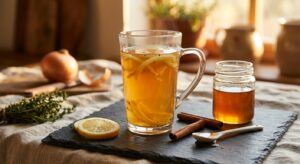
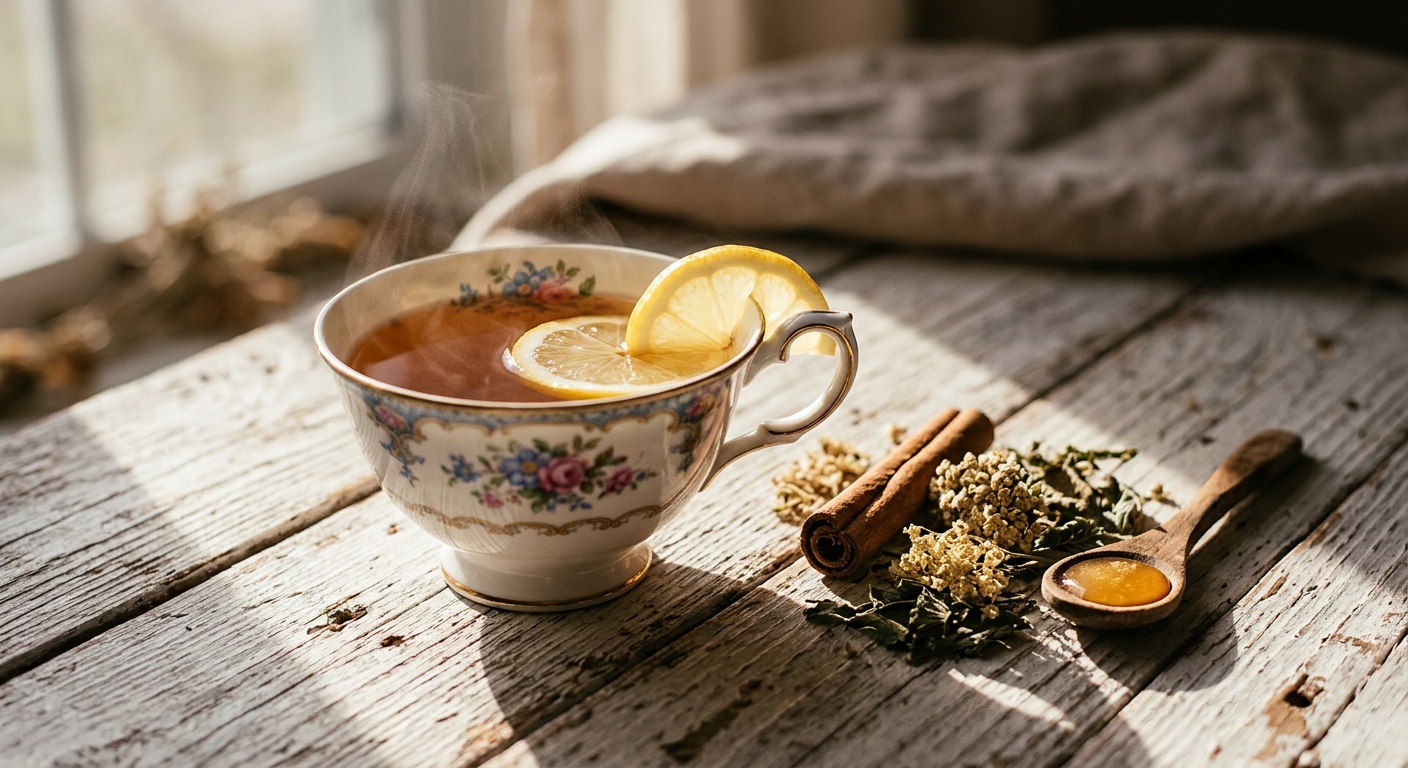
Long before aspirin existed, herbalists across Europe, North America, and the Middle East reached for a trio of plants to manage fever: elderflower, peppermint, and yarrow. This combination was not accidental. Each herb brings a complementary action to the cup, with elderflower opening the pores to encourage perspiration, peppermint cooling the skin and soothing the body from within, and yarrow supporting circulation and immune response. Together, they form what traditional healers called a diaphoretic blend, a tea designed to work with a fever rather than simply suppress it.
Yarrow, known botanically as Achillea millefolium, carries one of the oldest herbal reputations in Western medicine. Its very name references the Greek hero Achilles, who legend says used it to staunch the wounds of his soldiers on the battlefield. Elderflower (Sambucus nigra) has been celebrated in European folk medicine for centuries, appearing in remedies for colds, influenza, and respiratory ailments in manuscripts dating back to the 11th century. Peppermint (Mentha x piperita), though a more modern hybrid, has been used in cooling and digestive preparations across cultures for over 2,000 years. Together, these three herbs form a deeply traditional and increasingly well-studied remedy for febrile illness.
What makes Fever Breaking Tea particularly special is its holistic approach to illness support. Rather than working against the body, this blend respects the fever as a functional immune response while helping to ease discomfort, encourage the natural sweating process that cools the body down, and soothe the aching, restless feeling that so often accompanies a high temperature. It is a tea that asks you to slow down, wrap yourself in a blanket, and trust the wisdom of plants that have been tending to feverish bodies for thousands of years.
2
cups
Ingredients
- 2 tspdried yarrow flowers and leaves
- 2 tspdried elderflower
- 1 tspdried peppermint leaf
- 480 mlwater (95°C / 203°F)
- —raw honey to taste (optional)
- —fresh lemon slice (optional)
How to Brew
Click on an item below to shop for the recommended items for this recipe on Amazon.
As an Amazon Associate, we earn from qualifying purchases.
- Bring fresh filtered water to 95°C (203°F). If using a standard kettle, bring to a full boil and allow to cool for just 60 seconds before pouring.
- Combine the dried yarrow, elderflower, and peppermint in a tea infuser or directly into a heatproof teapot. For two servings, use 2 teaspoons of yarrow, 2 teaspoons of elderflower, and 1 teaspoon of peppermint.
- Pour the hot water directly over the herbs and immediately cover the teapot or mug with a lid or small saucer. This is critical: peppermint and elderflower contain volatile aromatic oils that will evaporate with steam if left uncovered, reducing the tea’s therapeutic potency.
- Steep for 10 to 15 minutes. A longer steep extracts more of the bitter diaphoretic compounds from yarrow. If you find the bitterness unpleasant, start at 10 minutes and adjust to your preference over subsequent cups.
- Strain thoroughly into warmed mugs. Add raw honey to taste, which contributes its own antimicrobial properties, and a squeeze of fresh lemon for vitamin C and brightness.
- Drink while hot, ideally in bed with a blanket. Sip steadily over 10 to 15 minutes for best results. Repeat every 3 to 4 hours during fever, up to three cups per day.
- Combine 3 teaspoons of dried yarrow, 3 teaspoons of dried elderflower, and 2 teaspoons of dried peppermint into a clean glass jar. Use slightly more herb than the hot brew method to compensate for slower compound extraction in cold water.
- Pour 600 ml of cold filtered water over the herbs. Stir gently with a long spoon to ensure all plant material is fully saturated.
- Seal the jar tightly with a lid and leave at room temperature for 1 hour, then transfer to the refrigerator. Allow to steep for a total of 8 to 12 hours, overnight being ideal.
- Remove from the refrigerator and strain the liquid through a fine mesh strainer lined with a piece of muslin cloth or a coffee filter to catch fine herb particles. Press gently on the herbs to extract maximum liquid.
- Pour over ice into tall glasses. The cold brew will be pale gold with a clean, refreshing mint-forward flavor. Stir in a small amount of honey or a splash of elderflower cordial to enhance sweetness if desired.
- Consume within 48 hours and keep refrigerated. Sip throughout the day as a hydrating recovery drink.
- Bring 750 ml of fresh water to a full rolling boil at 100°C (212°F). Meanwhile, place 3 teaspoons of dried peppermint, 2 teaspoons of dried elderflower, and 2 teaspoons of dried yarrow into a large heatproof bowl on a stable, flat surface.
- Carefully pour the boiling water over the herbs in the bowl. Do not place your face over the bowl immediately as the initial steam is too hot and can cause burns. Allow the brew to sit and cool for 60 to 90 seconds.
- Drape a large towel over your head and lean over the bowl at a comfortable distance of 25 to 30 cm. Close your eyes and breathe slowly through your nose and mouth. Inhale the peppermint and elderflower steam for 5 to 10 minutes. Lift the towel periodically if the heat becomes too intense.
- After the steam inhalation is complete, allow the liquid to cool slightly, then strain through a fine mesh strainer into two mugs. The resulting tea will be deeply infused and intensely aromatic from the prolonged steeping during inhalation.
- Add honey and lemon to the strained tea and drink while still warm. The combination of steam inhalation followed by drinking the herb-rich liquid provides a powerful double action for fever with congestion.
- Repeat once or twice daily during acute illness. Do not use this method with children under 12 years old due to the risk of steam burns.
Health Benefits
Yarrow and elderflower are classified as diaphoretic herbs, meaning they support the body’s ability to perspire. Controlled sweating is the body’s primary mechanism for cooling itself during fever, and several traditional medicine systems use this blend specifically to facilitate this process. A 2021 review in the Journal of Ethnopharmacology confirmed yarrow’s traditional diaphoretic use is supported by its vasodilatory and autonomic nervous system effects.
Elderflower contains flavonoids including quercetin and rutin that have demonstrated inhibitory activity against influenza A and B viruses in laboratory studies. Peppermint’s rosmarinic acid has also shown antiviral properties against respiratory syncytial virus (RSV) in in vitro research, suggesting this blend targets the underlying viral causes of many fevers.
Yarrow contains anti-inflammatory sesquiterpene lactones and flavonoids that act similarly to mild analgesics by inhibiting prostaglandin synthesis, the same pathway targeted by over-the-counter fever medications. This helps ease the aching, tender feeling that typically accompanies a raised temperature.
Peppermint’s menthol is a well-documented decongestant that reduces nasal airflow resistance and eases the sensation of sinus pressure. Elderflower has a long traditional use for sinusitis and catarrh, supported by its anti-inflammatory and mild expectorant properties, making this blend particularly effective when fever is accompanied by congestion.
Fevers accelerate fluid loss through respiration and perspiration. Drinking warm herbal tea consistently during illness supports hydration, which is critical for immune function, temperature regulation, and recovery. The mild diuretic and circulatory properties of yarrow also help the body clear metabolic waste products generated during immune activity.
🧪 Key Bioactive Compounds
The Science Behind Yarrow
The scientific basis for Fever Breaking Tea lies in the concept of diaphoresis, the physiological process of perspiration as a fever-regulation mechanism. Yarrow’s sesquiterpene lactones, particularly achillin and achillicin, have been shown in pharmacological studies to influence peripheral vasodilation, increasing blood flow to the skin and promoting sweat gland activity. This supports the traditional herbalist theory that yarrow works with the fever rather than simply reducing it pharmacologically. Meanwhile, the flavonoids in both yarrow and elderflower, particularly quercetin and apigenin, inhibit the cyclooxygenase (COX) enzymes responsible for prostaglandin synthesis, which is the same pathway by which ibuprofen and aspirin reduce fever and inflammation.
Peppermint’s cooling mechanism operates through an entirely different pathway. Menthol selectively binds to and activates TRPM8 (transient receptor potential melastatin 8) channels, which are cold-sensing ion channels found in sensory neurons throughout the skin and mucous membranes. When activated, these channels send signals to the brain that mimic the sensation of cold, providing genuine physiological relief from the discomfort of heat and fever without actually lowering core body temperature. This explains the well-documented subjective cooling effect of peppermint tea even when consumed hot. A 2015 study published in the journal Evidence-Based Complementary and Alternative Medicine confirmed peppermint’s effectiveness in reducing fever perception and improving subjective comfort in participants with mild febrile illness.
Elderflower’s antiviral credentials have been supported by a growing body of in vitro research. Studies have identified that elderflower flavonoids can inhibit the hemagglutinin protein on the surface of influenza viruses, preventing the virus from binding to host cells. This is biologically similar to the mechanism of some pharmaceutical antivirals. Chlorogenic acid, found in elderflower at meaningful concentrations, also demonstrated immunomodulatory activity in a 2020 study, stimulating cytokine responses that help coordinate a faster and more efficient immune defense. While in vitro findings do not automatically translate to equivalent clinical effects, they provide a compelling molecular rationale for a remedy that has been used across European traditions for hundreds of years.
Brewing Tips
- Always cover your mug or teapot while steeping this blend. Peppermint and elderflower both contain volatile aromatic compounds that dissipate quickly with escaping steam, and covering the vessel traps these therapeutically active oils in the liquid where they belong.
- Source your yarrow carefully. Look for dried flowers and leaves that are clearly labeled Achillea millefolium and have a light, slightly bitter herbal scent. Yarrow that smells musty or has lost most of its color has likely degraded and will produce a weaker therapeutic brew.
- Drink three cups spread throughout the day during active fever rather than one large dose at once. The diaphoretic compounds in yarrow work most effectively when maintained at a steady level in the body, and consistent hydration is itself a key part of fever recovery.