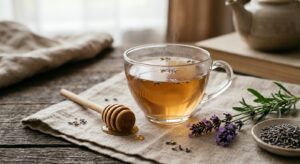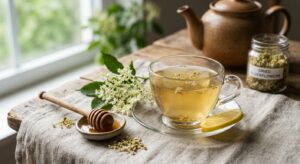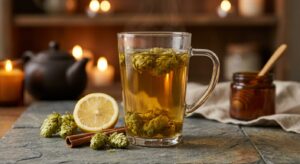
Long before hops were the backbone of beer, they were a folk remedy. European herbalists of the Middle Ages prized the papery green cones of Humulus lupulus for calming the nerves and settling the stomach, and the plant appears in monastic herbals from the 9th century onward. Hildegard von Bingen wrote about its preservative and bitter qualities in the 12th century, and by the Renaissance it was firmly established in both the brewhouse and the apothecary.
The most charming piece of hops folklore comes from the fields themselves. Hop pickers, who spent long days handling the fresh resinous cones, were famously prone to drowsiness, and farmers noticed that those working the harvest often grew sleepy by afternoon. This observation inspired the traditional hop pillow, a small cloth sack stuffed with dried cones and tucked beside the head at night. King George III of England was reportedly prescribed one for his insomnia in the late 1700s, and the practice spread across Europe and North America.
In the cup, hops tea is an acquired but rewarding experience. It is distinctly bitter, resinous, and herbaceous, with a lingering green aroma that smells like a field at dusk. Many people find the bitterness itself part of the ritual, a signal to slow down. Blended with a touch of honey or a sweeter herb, it becomes a deeply comforting evening brew that connects you to centuries of brewers, farmers, and herbalists who trusted this humble cone to help them rest.
2
cups
Ingredients
- 2 tspdried hops cones (or 1 tbsp loosely packed, lightly crushed)
- 480 mlwater (90°C / 194°F)
- —raw honey to taste, to soften the bitterness (optional)
- —a strip of lemon peel (optional)
How to Brew
Click on an item below to shop for the recommended items for this recipe on Amazon.
As an Amazon Associate, we earn from qualifying purchases.
- Measure the dried hops cones into a teapot or the bottom of a mug. Gently crush them between your fingers first to break open the lupulin glands and release their aroma.
- Heat fresh water until just off the boil, about 90 to 95°C (194 to 203°F). Boiling water can drive off delicate volatile oils and push the tea toward harsh bitterness.
- Pour the hot water over the hops and immediately cover with a lid or small saucer to keep the aromatic oils in the cup.
- Steep for 10 to 15 minutes. Start at 10 minutes if you are new to hops, since longer steeping increases bitterness noticeably.
- Strain through a fine mesh strainer to catch the small yellow lupulin particles and any cone fragments.
- Sweeten with a little honey and add a strip of lemon peel if you like. Sip slowly about 30 to 45 minutes before bed.
- Add 1 tablespoon of dried hops cones per 480 ml of cold, filtered water to a clean glass jar. Lightly crush the cones first to expose more surface area.
- Stir once, seal the jar, and leave it on the counter for about 30 minutes to let the cones soften and begin to release their aroma.
- Transfer the jar to the refrigerator and steep for 8 to 10 hours, or overnight. Do not exceed 12 hours, as the tea can turn grassy and flat.
- Strain through a fine mesh strainer or a coffee filter into a clean glass or bottle, pressing gently on the hops to release the last of the liquid.
- Serve over ice with a slice of lemon or a drizzle of honey. Keep any leftovers refrigerated and drink within 48 hours.
- Combine 1 teaspoon dried hops, 1 teaspoon dried chamomile flowers, and 1/2 teaspoon dried lemon balm in your teapot or infuser basket.
- Heat water to 85 to 90°C (185 to 194°F). A slightly cooler temperature protects the delicate chamomile and lemon balm while still extracting the hops.
- Pour 480 ml of water over the herb blend and cover immediately to trap the volatile oils.
- Steep for 8 to 10 minutes. Because the blend is shared among three herbs, you can steep a little shorter than a pure hops tea without losing potency.
- Strain into your mug, stir in a small spoonful of honey if desired, and drink slowly in a quiet, dimly lit space as part of your wind-down routine.
Health Benefits
Hops have a long traditional use as a mild sedative, and small clinical studies suggest hops, especially combined with valerian, can reduce the time it takes to fall asleep and improve perceived sleep quality.
Compounds in hops appear to interact with GABA and melatonin-related pathways, which may help quiet an overactive mind. Evidence is modest but consistent with centuries of herbal use.
The bitter acids stimulate digestive secretions via the bitter taste reflex, which is why hops have long been used as a digestive tonic and appetite stimulant.
Hops contain 8-prenylnaringenin, a powerful phytoestrogen, and some small trials suggest hops extracts may reduce hot flashes and night sweats, which can also disrupt sleep.
Xanthohumol and related prenylated flavonoids show strong antioxidant and anti-inflammatory activity in laboratory studies, though human data is still developing.
🧪 Key Bioactive Compounds
The Science Behind Hops
The sleep-promoting reputation of hops is rooted in a mix of traditional observation and emerging science. For many years researchers puzzled over how hops might act as a sedative, since the fresh cones contain relatively little of the compounds that had been studied. A key finding was that dried and aged hops accumulate a volatile alcohol called 2-methyl-3-buten-2-ol, which showed sedative-hypnotic activity in animal studies. This may help explain why traditional preparations used dried cones and why stale hops pillows were considered effective.
Hops also contain a rich array of bitter acids, including humulones and lupulones, along with prenylated flavonoids such as xanthohumol. Laboratory research suggests these compounds may modulate GABA receptors, the same inhibitory pathway targeted by many calming agents, and some studies have noted that hops may influence melatonin signaling. In human trials, hops have most often been studied in combination with valerian, where the pairing has shown modest improvements in sleep onset and sleep quality compared with placebo. Evidence for hops alone is more limited, and tea delivers a lower dose than the concentrated extracts used in most trials.
Another distinctive feature of hops is 8-prenylnaringenin, considered one of the most potent phytoestrogens identified in nature. This compound is the reason hops have drawn interest for menopausal symptoms, and it is also why people with hormone-sensitive conditions are advised to be cautious. Taken together, the research paints hops as a genuinely bioactive herb with plausible mechanisms for relaxation, though larger and better-controlled human studies are still needed to define its precise role.
Brewing Tips
- Start with a shorter steep of about 8 to 10 minutes the first time you try hops, since the bitterness builds quickly and can be overwhelming for newcomers.
- Always cover your cup while steeping to keep the volatile aromatic oils in the tea rather than letting them drift away with the steam.
- Buy whole dried hops cones from a reputable herb supplier rather than brewing pellets, and check that they are intended for consumption, not just brewing beer or crafts.
- Store dried hops in an airtight, opaque container in the freezer or a cool, dark cupboard, since heat, air, and light degrade their delicate oils and turn them cheesy-smelling when stale.
- Drink your cup 30 to 45 minutes before bed and pair it with other calming habits, such as dim lighting and screen-free time, for the best chance of a restful night.