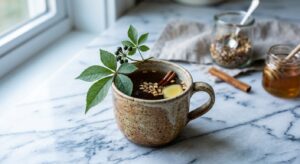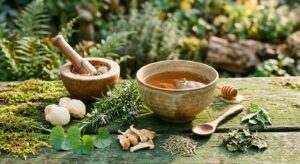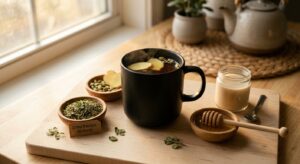
Fatigue, brain fog, and a persistent lack of energy are among the most common complaints in modern life, and iron deficiency is one of the leading nutritional causes worldwide. Before reaching for supplements, many traditional herbalists turned to the plant kingdom, which offers a surprisingly rich collection of iron-dense and absorption-enhancing botanicals. This Iron Deficiency Energy Tea draws on centuries of folk medicine wisdom, blending stinging nettle leaf, rose hip, and spearmint into a beverage that is both restorative and genuinely pleasant to drink.
Stinging nettle (Urtica dioica) has been used medicinally since ancient Egypt, where it was prescribed for arthritis and lower back pain. By the medieval period, European herbalists recognized it as a powerful blood tonic, prescribing nettle infusions for anaemia and general weakness. Its remarkable mineral density, particularly in iron, calcium, and magnesium, makes it one of the most nutritionally potent leafy herbs available. Rose hip, the fruit of the wild rose (Rosa canina), was famously distributed to British children during World War II as a vitamin C syrup when citrus fruits became scarce. Vitamin C is a critical co-factor for non-heme iron absorption, and pairing these two herbs is a combination that modern nutritional science strongly supports. Spearmint rounds out the blend, adding digestive support and a bright, refreshing flavour that balances the earthy depth of nettle.
What makes this blend particularly effective is its synergy. Plant-based iron, known as non-heme iron, is inherently less bioavailable than the heme iron found in meat. However, consuming vitamin C at the same meal or drink can increase non-heme iron absorption by up to three-fold, according to research published in the American Journal of Clinical Nutrition. Rose hip provides substantial vitamin C, while nettle supplies the iron itself. Together, they form a nutritional partnership that has been used intuitively by herbalists long before the biochemistry was understood.
2
cups
Ingredients
- 2 tspdried nettle leaf
- 1 tspdried rose hip pieces or whole rose hips
- 1 tspdried spearmint leaf
- 480 mlwater (90°C / 194°F)
- —raw honey to taste (optional)
- —a small squeeze of fresh lemon juice (optional, boosts vitamin C)
How to Brew
Click on an item below to shop for the recommended items for this recipe on Amazon.
As an Amazon Associate, we earn from qualifying purchases.
- Heat filtered water to 90 to 95°C (194 to 203°F). Avoid a rolling boil, as excessive heat can degrade some of the vitamin C content in the rose hips.
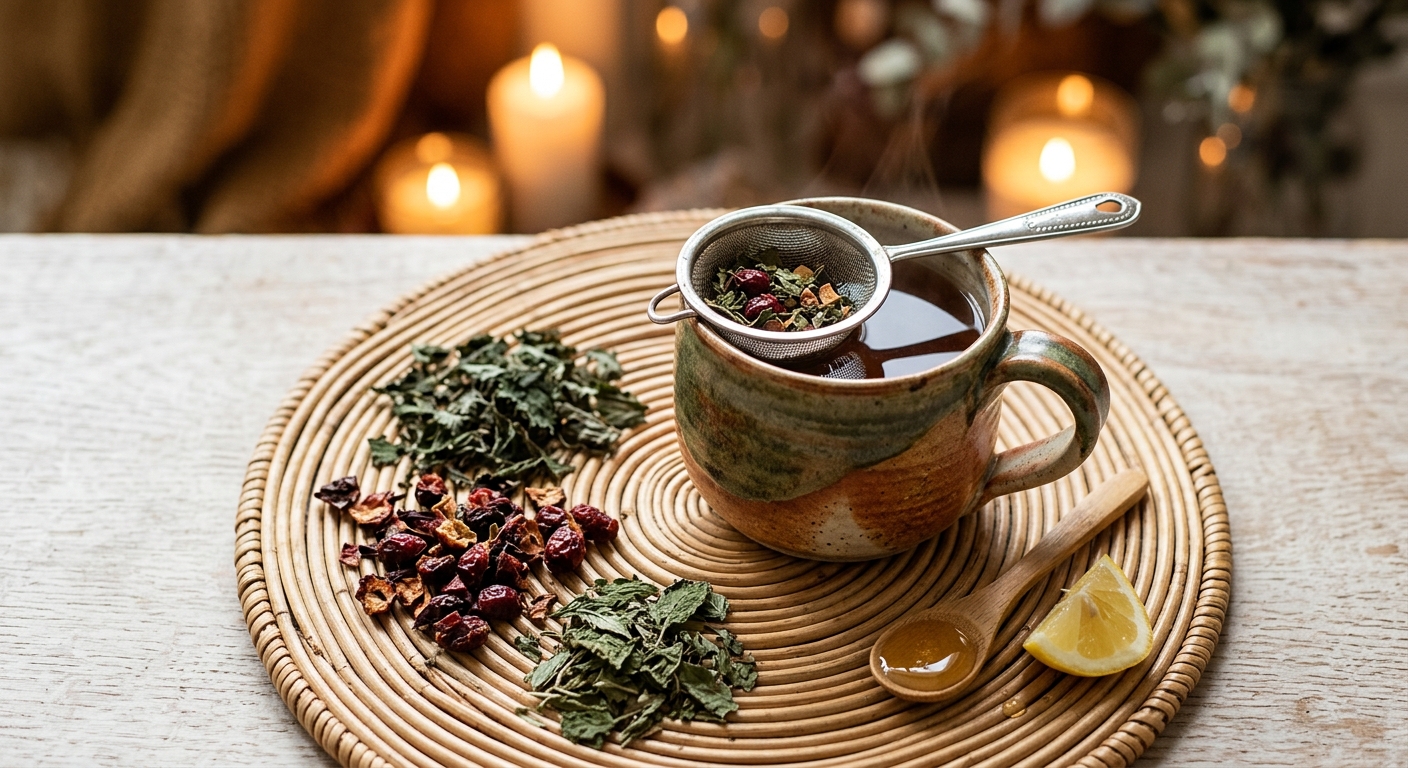
- Combine the dried nettle leaf, rose hip pieces, and spearmint in a large tea infuser, muslin bag, or directly into a teapot. For two servings, use 2 teaspoons of nettle, 1 teaspoon of rose hip, and 1 teaspoon of spearmint.
- Pour 480 ml of the heated water over the herbs and cover the vessel immediately with a lid or small saucer. Covering the tea prevents aromatic volatile compounds and steam-soluble vitamins from escaping.
- Steep for 10 to 15 minutes. The extended steep time draws out more iron, tannins, and vitamin C compared to shorter infusions. If you find the flavour too robust, start with 10 minutes and adjust.
- Strain thoroughly, pressing gently on the herbs to extract any remaining liquid. Discard the spent herbs.
- Add a small squeeze of fresh lemon juice for an additional vitamin C boost, and sweeten with raw honey if desired. Drink while warm for best mineral absorption.
- Measure out 3 teaspoons of dried nettle leaf, 1.5 teaspoons of dried rose hip pieces, and 1.5 teaspoons of dried spearmint for two generous servings. Cold brewing requires a slightly higher herb ratio to compensate for the slower extraction.
- Place all herbs into a clean glass jar and pour in 600 ml of cold, filtered water at room temperature. Do not use hot water, as the goal is a slow, cool extraction that preserves delicate vitamins.
- Stir the herbs gently to ensure they are fully submerged and saturated. Place a lid on the jar and leave it at room temperature for 1 hour to begin the initial extraction phase.
- Transfer the sealed jar to the refrigerator and allow it to steep for a further 7 to 11 hours, or overnight. The cold environment slows extraction but produces a cleaner, gentler flavour with less bitterness.
- Strain the cold brew through a fine-mesh strainer or cheesecloth into a clean jug or bottle, pressing gently on the herbs. The resulting liquid will be a cool, lightly golden-green colour.
- Serve over ice in a tall glass. Add a slice of fresh lemon or a few fresh spearmint leaves as a garnish. The cold brew can be stored in the refrigerator for up to 48 hours.
- Bring 500 ml of filtered water to 90°C (194°F). Use a thermometer or an electric kettle with temperature settings for precision, as maintaining a temperature just below boiling protects vitamin C content.
- Place a generous 4 teaspoons of dried nettle leaf, 2 teaspoons of dried rose hip pieces, and 1 teaspoon of dried spearmint into a heatproof glass jar or French press. The higher herb-to-water ratio is essential for this concentrated method.
- Pour the hot water over the herbs, filling the jar. Cover tightly with a lid or press down the French press plunger just enough to submerge the herbs without filtering yet.
- Allow the concentrate to steep for 20 to 30 minutes at room temperature. For maximum mineral extraction, you may steep for up to 4 hours, though the flavour will intensify significantly and become more robust and tannic.
- Strain the concentrate thoroughly through a fine-mesh strainer, extracting as much liquid as possible by pressing the herbs firmly. You will have a dark, richly coloured concentrate.
- To serve, dilute the concentrate with an equal volume of hot or cold water, adjusting to taste. Add fresh lemon juice and honey as desired. The undiluted concentrate can be refrigerated for up to 24 hours and diluted per cup as needed, making it a convenient daily tonic.
Health Benefits
Dried nettle leaf is one of the most iron-rich plant sources available, and when combined with the vitamin C in rose hip, the body can absorb that non-heme iron far more efficiently than from nettle alone. This combination has a strong basis in nutritional biochemistry, with ascorbic acid shown to increase non-heme iron absorption by two to three times in multiple controlled studies.
Iron is essential for the synthesis of haemoglobin, the protein that carries oxygen in red blood cells. When iron levels are low, cells receive less oxygen and energy production drops, leading to persistent fatigue. Replenishing iron stores through regular consumption of iron-rich teas, alongside dietary changes, can meaningfully restore energy over time.
Rose hip is one of the most antioxidant-dense fruits in the plant kingdom, with a vitamin C content that rivals or exceeds citrus fruits by weight. Combined with the quercetin and beta-carotene in nettle leaf, this blend delivers a wide spectrum of antioxidants that protect cells from oxidative damage, which is elevated in states of iron deficiency.
Spearmint contributes carminative (gas-reducing) and antispasmodic properties to the blend, soothing the digestive tract and reducing the gastrointestinal discomfort that can sometimes accompany iron supplementation or iron-rich foods. A comfortable digestive environment also supports better nutrient absorption overall.
Beyond iron, nettle leaf is a notable source of calcium, magnesium, and vitamin K, while rose hip contributes additional vitamin C and flavonoids that support immune function. Regular consumption of this tea as part of a balanced diet may contribute to bone density maintenance and immune resilience alongside its primary iron-supporting role.
🧪 Key Bioactive Compounds
The Science Behind Nettle Leaf
The science behind this tea’s effectiveness centers on the biochemistry of non-heme iron absorption. Unlike the heme iron found in animal products, plant-based iron must be reduced from its ferric state (Fe³⁺) to its ferrous state (Fe²⁺) before the small intestine can absorb it via the divalent metal transporter 1 (DMT1) protein. Ascorbic acid from rose hip performs this reduction directly in the gut lumen, effectively converting iron into its absorbable form at the site of absorption. Multiple controlled trials, including landmark research published in the American Journal of Clinical Nutrition, have confirmed that co-ingesting vitamin C with non-heme iron sources increases absorption by 200 to 300 percent, making the nettle-rose hip pairing one of the most nutritionally justified combinations in herbal tea formulation.
Nettle leaf (Urtica dioica) owes its mineral richness to its deep root system and its status as an accumulator plant, drawing minerals from the soil in concentrations higher than most surface-rooting plants. Analytical studies of dried nettle have documented iron content ranging from 1.5 to 3.0 mg per gram of dried leaf, alongside significant calcium, magnesium, potassium, and silicon. The presence of chlorophyll, a porphyrin ring compound structurally analogous to haemoglobin, has long fascinated herbalists and some researchers, though the primary iron contribution comes from ionic iron salts rather than the chlorophyll molecule itself. Quercetin, a flavonoid present in both nettle and rose hip, adds another layer of value by acting as a potent antioxidant that scavenges reactive oxygen species generated during cellular iron metabolism, and emerging research suggests quercetin may itself modulate iron transport proteins in the intestinal epithelium.
Spearmint’s contribution to this blend is largely functional rather than mineralogical. The primary bioactive compound carvone, a monoterpenoid responsible for spearmint’s characteristic cool aroma, exerts antispasmodic effects on smooth muscle in the gastrointestinal tract. This relaxation supports digestive efficiency and reduces the cramping that can accompany iron-rich foods or iron supplementation. A well-functioning digestive environment is essential for nutrient absorption, meaning spearmint’s inclusion is not merely cosmetic. It serves as a physiological adjunct that helps the body make the most of what nettle and rose hip provide.
Brewing Tips
- Avoid adding cow’s milk or calcium-rich dairy to this tea, as calcium competes directly with iron for the same intestinal transport proteins and can significantly reduce absorption.
- Store dried nettle and rose hip in airtight, dark-glass containers away from direct light and heat. Rose hip in particular loses vitamin C rapidly when exposed to light and air, so freshness of your dried herbs directly impacts the tea’s effectiveness.
- Drink this tea between meals rather than with food when possible. Tannins in the tea can bind to dietary iron from food consumed simultaneously, reducing overall absorption from your meal.