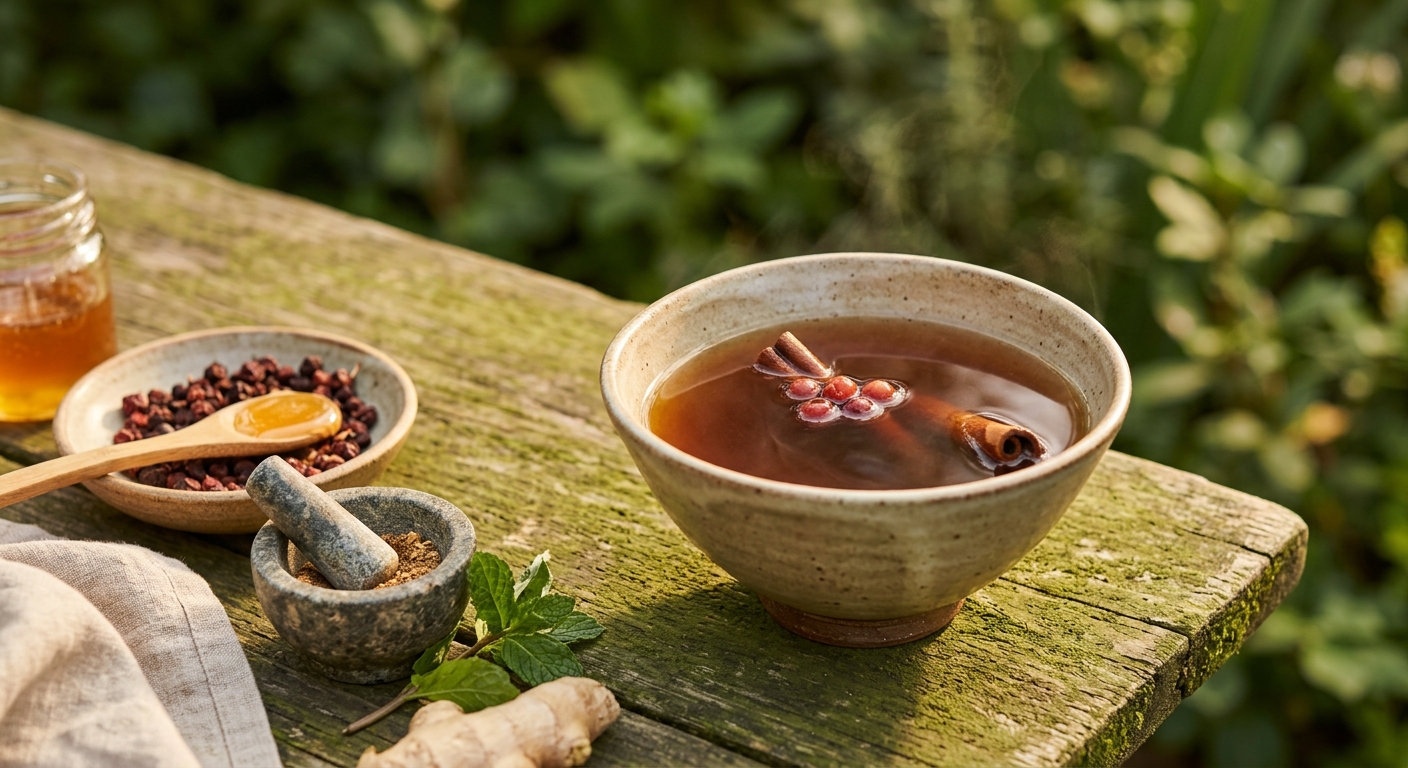
Few herbs carry as much mystique as schisandra, known in Chinese as wu wei zi, meaning “five-flavor fruit.” The berry earned this name because it simultaneously expresses all five flavors recognized in Chinese medicine: sour, sweet, salty, bitter, and pungent. This complexity is not merely poetic. It reflects the remarkable chemical diversity of Schisandra chinensis, a woody vine native to northern China, Korea, and far-eastern Russia. For over two thousand years, practitioners of Traditional Chinese Medicine have prescribed schisandra to calm the heart, quiet the mind, and fortify the body against fatigue and stress.
In classical texts such as the Shennong Bencao Jing, one of the oldest Chinese pharmacopeias, schisandra was listed among the superior herbs, those considered safe for long-term daily use and capable of prolonging life. It was valued by scholars who needed sustained mental focus, by laborers who required physical endurance, and by those seeking relief from restless, unrefreshing sleep. Siberian hunters reportedly chewed the dried berries to sharpen their senses and stay warm during long expeditions through the taiga. This dual reputation as both a calming and a vitalizing herb captures schisandra’s unique adaptogenic character: it helps the body find balance rather than simply pushing it in one direction.
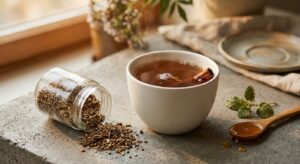
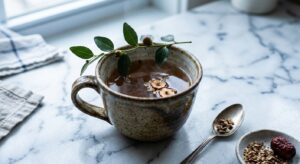
As a tea, schisandra delivers a deeply complex sensory experience. The dried berries brew into a deep ruby or burgundy liquor with a tart, warming, slightly resinous flavor that lingers on the palate. It is not the gentle floral gentleness of chamomile, but something more intentional and medicinal, with a character that rewards slow sipping. When brewed as part of a sleep and relaxation ritual, schisandra encourages the nervous system to downshift, eases mental chatter, and supports the kind of restorative sleep that leaves you genuinely refreshed in the morning.
2
cups
Ingredients
- 2 tbspdried schisandra berries
- 480 mlwater (95°C / 203°F)
- —raw honey or maple syrup to taste (optional)
- —a cinnamon stick or slice of fresh ginger (optional, for warmth)
How to Brew
Click on an item below to shop for the recommended items for this recipe on Amazon.
As an Amazon Associate, we earn from qualifying purchases.
- Place 2 tablespoons of dried schisandra berries in a small saucepan. If you have time, lightly crush the berries with the back of a spoon or a mortar and pestle to break the skin slightly and improve extraction.
- Add 480 ml of cold water to the saucepan and bring slowly to a gentle boil over medium heat. Do not rush this process. The gradual heating begins extracting compounds from the berry skins before full boiling begins.
- Once the water reaches a gentle boil, reduce the heat to a low simmer. Cover the saucepan with a lid to trap volatile aromatic compounds and simmer for 15 to 20 minutes. The liquid should deepen to a rich ruby or dark cranberry color.
- Remove from heat and allow the decoction to rest, still covered, for 5 minutes. This resting period allows the brew to cool slightly and the remaining compounds to fully diffuse into the liquid.
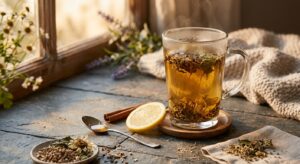
- Strain the berries through a fine mesh strainer into your mug. Add honey, maple syrup, or a cinnamon stick to taste. Sip slowly, ideally 60 to 90 minutes before bed as part of a wind-down ritual.
- Place 3 tablespoons of dried schisandra berries into a clean glass jar. Use slightly more than the hot brew ratio to compensate for the lower extraction efficiency of cold water.
- Lightly crush a few of the berries with a muddler or the back of a spoon to break the skin and encourage extraction. This step is especially important for cold brewing since no heat is present to help open the berry.
- Pour 600 ml of cold, filtered water over the berries. Stir gently to ensure all berries are submerged. Place the lid loosely on the jar or cover with a small cloth held with a rubber band.
- Allow the jar to sit at room temperature for the first 1 hour, then transfer it to the refrigerator. Let the berries infuse overnight, or for a minimum of 10 hours and up to 12 hours.
- Strain the liquid through a fine mesh strainer into a pitcher or individual glasses. The result should be a clear, jewel-toned ruby liquid with a bright, tart flavor. Serve over ice or chilled, with a squeeze of lemon to brighten the flavor if desired.
- Add 6 tablespoons of dried schisandra berries and 750 ml of cold water to a medium saucepan. Lightly crush the berries beforehand for maximum extraction. Optionally add a cinnamon stick, 3 to 4 cardamom pods, or 4 slices of fresh ginger for a warming, spiced concentrate.
- Bring the liquid to a boil over medium heat, then reduce to a steady low simmer. Leave the lid slightly ajar to allow steam to escape and the liquid to reduce.
- Simmer for 30 to 40 minutes, stirring occasionally, until the liquid has reduced to roughly one third of its original volume, approximately 200 to 250 ml of thick, richly colored concentrate.
- Remove from heat and allow to cool completely before straining. Press the berries gently with a spoon against the strainer to extract the last of the liquid. Sweeten the concentrate with honey or coconut sugar while it is still warm if desired, then stir to dissolve.
- Pour the strained concentrate into a sterilized glass bottle or jar and refrigerate. It will keep for up to 7 days. To serve, dilute 2 to 3 tablespoons of concentrate with 200 ml of hot water, sparkling water, or warm oat milk. Adjust concentration to taste.
Health Benefits
Lignans such as schisandrol B have been shown in preclinical research to prolong non-REM sleep duration by enhancing sensitivity of GABA-A receptors, the same receptor system targeted by many pharmaceutical sleep aids. This effect supports falling asleep faster and spending more time in the restorative deep sleep phases.
As a well-established adaptogen, schisandra helps normalize the hypothalamic-pituitary-adrenal (HPA) axis, the system governing the body’s cortisol stress response. Clinical studies in human subjects have found that schisandra extract reduces stress-induced fatigue and improves mental performance under sustained workloads.
Schisandra lignans, particularly schisandrin A and schisandrin B, have been extensively studied for hepatoprotective effects. Research published in peer-reviewed pharmacology journals demonstrates their ability to lower liver enzyme levels, protect hepatocytes from oxidative damage, and support phase I and phase II liver detoxification pathways.
Rather than a sedating effect alone, schisandra improves mental accuracy and working memory under stress. A 2013 randomized controlled trial found that schisandra extract significantly improved attention, speed, and accuracy on cognitive tasks in healthy adults experiencing mental fatigue.
The unique lignan complex found in schisandra berries exerts significant antioxidant activity by scavenging free radicals and upregulating the body’s own antioxidant enzymes, including superoxide dismutase and glutathione peroxidase. This protection extends to the brain, liver, and cardiovascular tissue.
🧪 Key Bioactive Compounds
The Science Behind Schisandra Berry
The therapeutic power of schisandra berry tea lies almost entirely within a class of compounds called dibenzocyclooctadiene lignans, a group of polyphenolic molecules found almost exclusively in the Schisandra genus. These lignans, including schisandrin A, schisandrin B, schisandrol B, and gomisin A, interact with several key biological systems simultaneously. Most relevant to sleep and relaxation is their interaction with gamma-aminobutyric acid (GABA) receptors. GABA is the brain’s primary inhibitory neurotransmitter, responsible for quieting overactive neural circuits. Schisandrol B has been shown in multiple animal studies to bind to GABA-A receptors and enhance their sensitivity to endogenous GABA, producing anxiolytic and sleep-promoting effects without the dependency risk associated with pharmaceutical benzodiazepines.
Schisandra’s adaptogenic properties operate through a separate but complementary mechanism involving the hypothalamic-pituitary-adrenal (HPA) axis. When the body is under physical or psychological stress, the HPA axis triggers the release of cortisol and adrenaline. In chronically stressed individuals, this system can become dysregulated, contributing to insomnia, anxiety, and cognitive impairment. The lignans in schisandra, particularly schisandrin B and gamma-schisandrin, have been shown to normalize HPA axis reactivity by reducing excessive cortisol secretion while still allowing appropriate stress responses. This bidirectional modulation is the hallmark of true adaptogenic action and helps explain why schisandra is considered both calming and energizing depending on the body’s needs.
The hepatoprotective effects of schisandra are among its best-documented properties in clinical and laboratory research. Schisandrin A induces the expression of glutathione S-transferase and superoxide dismutase, two of the liver’s most important antioxidant enzymes. This upregulation not only protects liver cells from drug- and toxin-induced damage but also enhances the liver’s capacity to clear metabolic waste products, including those associated with stress hormone breakdown. A well-functioning liver contributes indirectly to better sleep quality, since the liver plays a critical role in the overnight detoxification cycle that Chinese medicine has long associated with restorative rest.
Brewing Tips
- Do not discard your schisandra berries after the first brew. The dense, woody berries hold significant compounds and can be simmered a second time with fresh water for a lighter but still beneficial second cup.
- Balance the tartness of schisandra by pairing it with naturally sweet herbs such as licorice root or jujube dates (hong zao) during the decoction, a traditional Chinese combination used to harmonize the formula and improve palatability.
- Store dried schisandra berries in an airtight container away from light and heat. Properly stored berries retain their potency for up to 18 months. You will know they have degraded if the deep red color fades significantly or the characteristic sour aroma is no longer present when you open the jar.