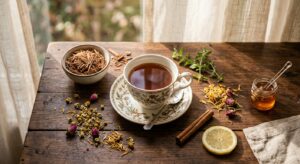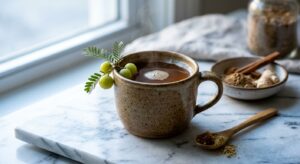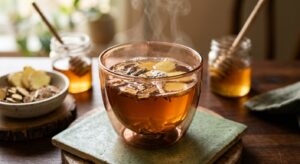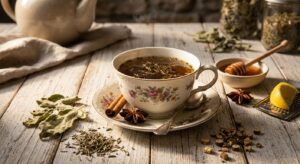
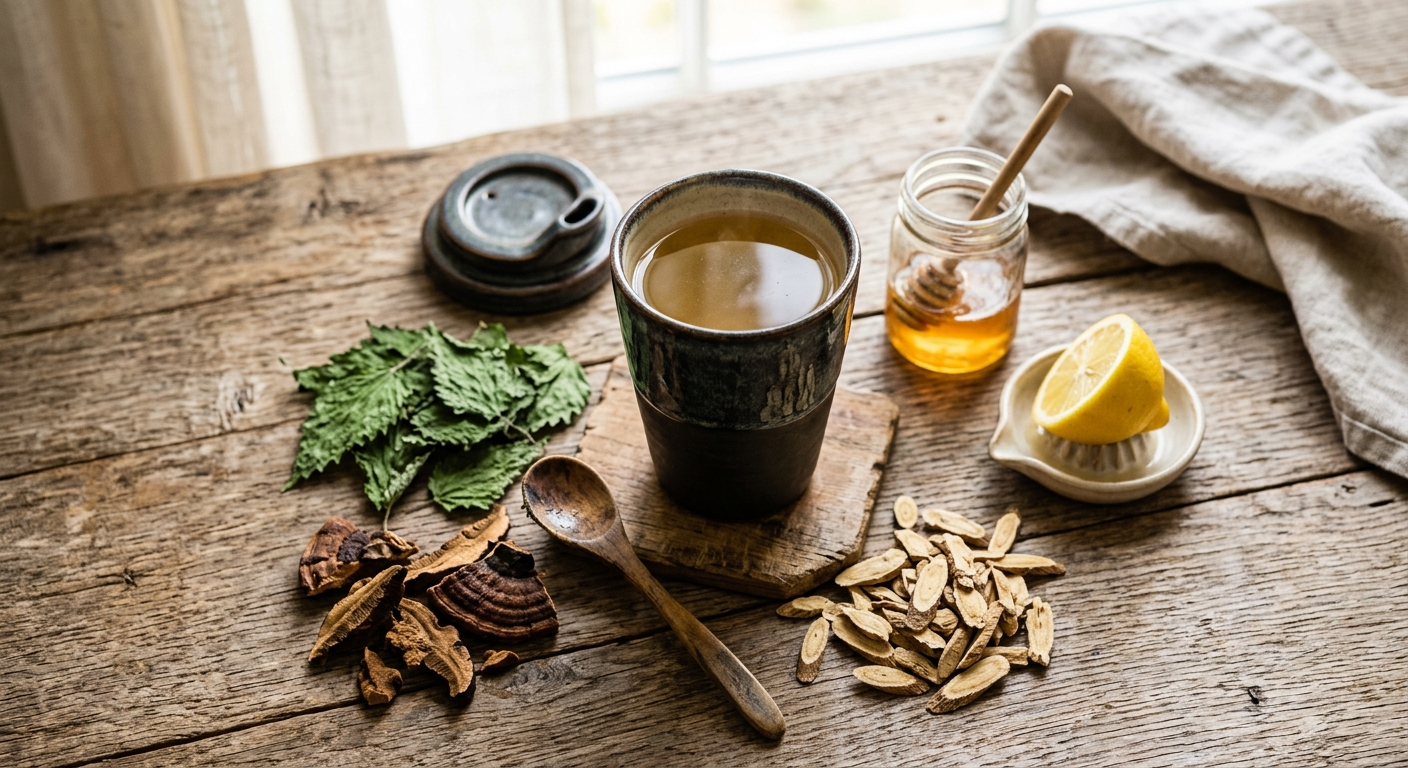
Vitamin D is one of the most talked-about nutrients in modern wellness, yet one of the most widely deficient. While no herbal tea can replace sunlight or direct supplementation, certain plants and fungi have been used for centuries in traditional medicine to strengthen the same biological systems that vitamin D governs: immune defense, bone integrity, and inflammation regulation. This blend draws on that ancient wisdom, combining nutrient-dense nettle leaf, beta-glucan-rich reishi mushroom, and the legendary adaptogen astragalus root into a single, purposeful cup.
Nettle has been a cornerstone of European herbal medicine since antiquity, prized by Greek physicians and medieval herbalists alike for its extraordinary mineral density. It provides magnesium and boron, two cofactors that research suggests play a meaningful role in vitamin D metabolism and calcium absorption. Reishi mushroom, revered in Traditional Chinese Medicine as the “mushroom of immortality,” contains beta-glucans and ergosterol, a plant sterol that converts into vitamin D2 when the mushroom is exposed to UV light. When you steep sun-dried reishi, you are drawing those compounds directly into your cup. Astragalus root rounds out the blend with its long history as an immune tonic, used in TCM formulas for over 2,000 years to tonify “wei qi,” or defensive energy.
Together, these three ingredients create a tea that tastes earthy, mildly sweet, and deeply grounding, with a color that ranges from warm amber to deep brown depending on your steep time. Whether you are navigating a grey winter, recovering from illness, or simply looking to reinforce your immune foundations, this blend offers a nourishing ritual worth making part of your daily routine.
2
cups
Ingredients
- 2 tspdried nettle leaf
- 1 tspreishi mushroom powder or broken dried slices
- 1 tspdried astragalus root slices
- 500 mlwater (95 to 100°C / 203 to 212°F)
- —raw honey to taste (optional)
- —a squeeze of lemon juice (optional, enhances mineral absorption)
How to Brew
Click on an item below to shop for the recommended items for this recipe on Amazon.
As an Amazon Associate, we earn from qualifying purchases.
- Bring 500 ml of filtered water to a near-boil, around 95 to 100°C (203 to 212°F). Using filtered water improves mineral clarity and taste.
- Measure 2 tsp of dried nettle leaf, 1 tsp of reishi mushroom powder or broken dried slices, and 1 tsp of dried astragalus root slices into a large tea infuser, muslin bag, or teapot strainer.
- Pour the hot water over the herbs and cover with a lid or small saucer. Covering is important: it traps volatile aromatic compounds and keeps the temperature stable throughout the steep.
- Steep for a minimum of 10 minutes, and up to 15 minutes for a stronger, more medicinal brew. The longer steep draws out more beta-glucans from the reishi and more saponins from the astragalus.
- Remove the infuser or strain the tea into your mug. Add a squeeze of fresh lemon juice to brighten the flavor and support mineral bioavailability, then sweeten with raw honey if desired.
- Sip slowly while warm. This tea is most beneficial consumed once or twice daily as part of a consistent wellness routine.
- Measure 2.5 tsp of dried nettle leaf, 1.5 tsp of reishi mushroom powder or broken slices, and 1.5 tsp of dried astragalus root into a clean glass jar. Slightly increase the herb ratio compared to hot brew to compensate for the slower, cooler extraction.
- Pour 500 ml of cold, filtered water directly over the herbs. Do not use hot water. Stir briefly to ensure all herbs are submerged and wetted.
- Seal the jar and leave it at room temperature for about 1 hour to allow the initial hydration of the herbs to begin, then transfer to the refrigerator.
- Allow the blend to cold-steep in the refrigerator for 12 to 16 hours, or overnight. The extended time compensates for the absence of heat and allows polysaccharides to slowly migrate into the water.
- Strain the cold brew through a fine mesh strainer or cheesecloth into a clean glass or pitcher. Press the herb solids gently to extract remaining liquid.
- Serve over ice if desired. Add a few drops of lemon juice and a small amount of honey or maple syrup to balance the earthiness. Consume within 48 hours and keep refrigerated.
- Place 2 tsp of dried nettle leaf, 2 tsp of broken dried reishi slices (not powder), and 2 tsp of dried astragalus root slices into a small saucepan. Using slices rather than powder for decoction gives better control and a cleaner result.
- Add 750 ml of cold, filtered water to the saucepan. Starting from cold water allows the herbs to begin releasing compounds gradually as the temperature rises.
- Bring the water to a gentle simmer over medium heat, around 90 to 95°C (194 to 203°F). Do not allow it to reach a rolling boil, which can degrade some heat-sensitive polysaccharides.
- Reduce the heat to low and simmer uncovered for 20 to 30 minutes, stirring occasionally. The liquid will reduce and deepen in color to a rich, dark amber. The longer the simmer, the more concentrated the brew becomes.
- Remove from heat and allow the decoction to cool for 5 minutes. Strain through a fine mesh strainer into a heatproof cup or teapot, pressing the herb material to extract every drop.
- The decoction will yield a concentrated, earthy, deeply flavored tea. You can drink it as-is in a smaller serving of about 150 to 200 ml, or dilute with an equal volume of hot water for a gentler cup. Sweeten with raw honey and add lemon to taste.
Health Benefits
Magnesium and boron from nettle leaf act as critical cofactors in the enzymatic conversion of vitamin D into its active form, calcitriol. Without adequate magnesium in particular, supplemental or dietary vitamin D cannot be properly activated, making mineral-dense nettle a genuine partner to sunlight and supplementation.
Beta-glucans from reishi mushroom bind to pattern recognition receptors on immune cells including macrophages and dendritic cells, priming the innate immune system for faster and more coordinated responses to pathogens. Multiple human and in vitro studies have confirmed this immunostimulant effect.
Astragalus root has over 2,000 years of use in TCM as a tonic for defensive energy, and modern research supports its role in enhancing both innate and adaptive immune function. Astragalosides have shown the ability to increase T-lymphocyte proliferation and NK cell activity, particularly relevant during times of stress or seasonal vulnerability.
Triterpenes in reishi mushroom, particularly ganoderic acids, and anti-inflammatory compounds in nettle such as scopoletin and quercetin, help modulate pro-inflammatory cytokine activity. Since chronic inflammation impairs vitamin D receptor function and immune efficiency, reducing it is directly relevant to this blend’s purpose.
Vitamin D works in concert with calcium, magnesium, and boron to maintain bone mineral density. Nettle leaf is one of the most mineral-rich plants in the Western herbal tradition, and regular consumption has been associated with improved mineral intake, supporting the skeletal benefits tied to healthy vitamin D levels.
🧪 Key Bioactive Compounds
The Science Behind Nettle Leaf, Reishi Mushroom, Astragalus Root
The connection between this herbal blend and vitamin D is rooted in biochemistry rather than folklore. Magnesium, found in meaningful concentrations in nettle leaf, is a required cofactor for two critical enzymatic reactions: the hydroxylation of vitamin D in the liver to form 25-hydroxyvitamin D, and the subsequent conversion in the kidneys to the active hormone calcitriol (1,25-dihydroxyvitamin D3). A landmark analysis published in The Journal of the American Osteopathic Association found that magnesium deficiency effectively impairs the activation of vitamin D regardless of how much is consumed or synthesized, making magnesium-rich foods and herbs directly relevant to vitamin D sufficiency. Nettle also provides boron, a trace mineral shown in clinical studies to increase serum levels of 25-hydroxyvitamin D and estradiol, suggesting a supportive role in vitamin D retention and hormonal integration.
Reishi mushroom contributes to this blend through two distinct mechanisms. First, its beta-glucans, particularly the 1,3 and 1,6-D-glucan fractions, modulate the same immune pathways that vitamin D regulates, including the activity of macrophages, T-helper cells, and natural killer cells. Second, reishi and other fungi contain ergosterol, a sterol compound that serves as a provitamin D2 precursor. When mushrooms are dried in sunlight rather than by artificial heat, ergosterol is photochemically converted into ergocalciferol (vitamin D2), which can then be absorbed from the tea and contribute modestly to circulating vitamin D levels. Studies comparing UV-exposed mushrooms to non-UV-dried mushrooms have confirmed significantly higher vitamin D2 concentrations in the former, which is why sourcing sun-dried reishi specifically matters for this tea.
Astragalus root operates on the immune system through its saponin glycosides, most notably Astragaloside IV and its aglycone cycloastragenol. These compounds have been shown in peer-reviewed research to stimulate the production and activity of T-lymphocytes, enhance NK cell cytotoxicity, and upregulate interferon gamma, an immune signaling molecule closely tied to the vitamin D receptor pathway. Additionally, astragalus polysaccharides have demonstrated antioxidant effects that protect immune cells from oxidative stress, preserving the functional integrity of the very cells that vitamin D helps to regulate. The convergence of mineral cofactor support, immune pathway modulation, and potential ergosterol contribution makes this blend a genuinely science-informed approach to holistic vitamin D wellness.
Brewing Tips
- Source sun-dried reishi mushroom slices rather than artificially dehydrated ones whenever possible. Sun-dried reishi contains measurably higher levels of ergosterol converted to vitamin D2, which is one of the functional advantages of using this mushroom specifically in a vitamin D support blend.
- Drink this tea alongside a meal that contains healthy fats such as avocado, olive oil, or nuts. Vitamin D is fat-soluble, and consuming fat-soluble nutrients alongside dietary fat meaningfully improves their absorption from both food and complementary herbal sources.
- For a more potent immune tonic cycle, consume this tea daily for six weeks during autumn and winter, then take a two-week break before resuming. Cycling adaptogenic herbs like astragalus is a traditional practice in Chinese herbal medicine that is thought to preserve their tonic effectiveness and prevent overstimulation of immune pathways.