Long before nootropics became a modern wellness trend, healers in India, China, and Southeast Asia were steeping the delicate, fan-shaped leaves of Centella asiatica, commonly known as gotu kola, to sharpen the mind and calm the nervous system. In Ayurvedic tradition, it was classified as a medhya rasayana, a category of herbs considered supreme tonics for the intellect, memory, and longevity. Sri Lankan legend holds that elephants, renowned for their remarkable memory, regularly grazed on gotu kola growing wild in the jungle, a detail that deepened the herb’s reputation as a plant of extraordinary mental power.
In Traditional Chinese Medicine, gotu kola appears as ji xue cao, a cooling herb used to clear heat from the body and calm the mind. In Bali, fresh leaves are blended into daily tonics, and throughout Indonesia and Malaysia, it appears in traditional salads and medicinal preparations. What connects all these traditions is a shared recognition of this humble creeping plant’s profound effect on cognitive function, circulation, and nervous system resilience. Unlike stimulants, gotu kola does not force alertness. Instead, it cultivates a grounded, attentive clarity that practitioners describe as the feeling of the mind becoming still enough to actually think.
Modern phytochemistry has begun to validate these ancient observations. The herb’s unique triterpenoid compounds, particularly asiaticoside and madecassoside, have been shown to support neurogenesis, reduce neuroinflammation, and enhance the integrity of blood vessels that feed the brain. Brewed as a tea, gotu kola delivers a subtly earthy, mildly green cup that rewards patience. It is not a dramatic herb. Its benefits accumulate with consistent use, making it an ideal daily ritual for students, writers, and anyone seeking calm, sustainable focus over time.
2
cups
Ingredients
- 2 tspdried gotu kola leaf (or 1 tbsp fresh leaves, lightly bruised)
- 240 mlwater (80 to 85°C / 176 to 185°F)
- —raw honey or a slice of fresh ginger to taste (optional)
- —a squeeze of fresh lemon juice (optional, brightens the flavor)
How to Brew
Click on an item below to shop for the recommended items for this recipe on Amazon.
As an Amazon Associate, we earn from qualifying purchases.
- Bring filtered water to a full boil, then remove it from the heat and allow it to rest for 3 to 4 minutes until it cools to approximately 80 to 85°C (176 to 185°F). Using a kitchen thermometer ensures accuracy.
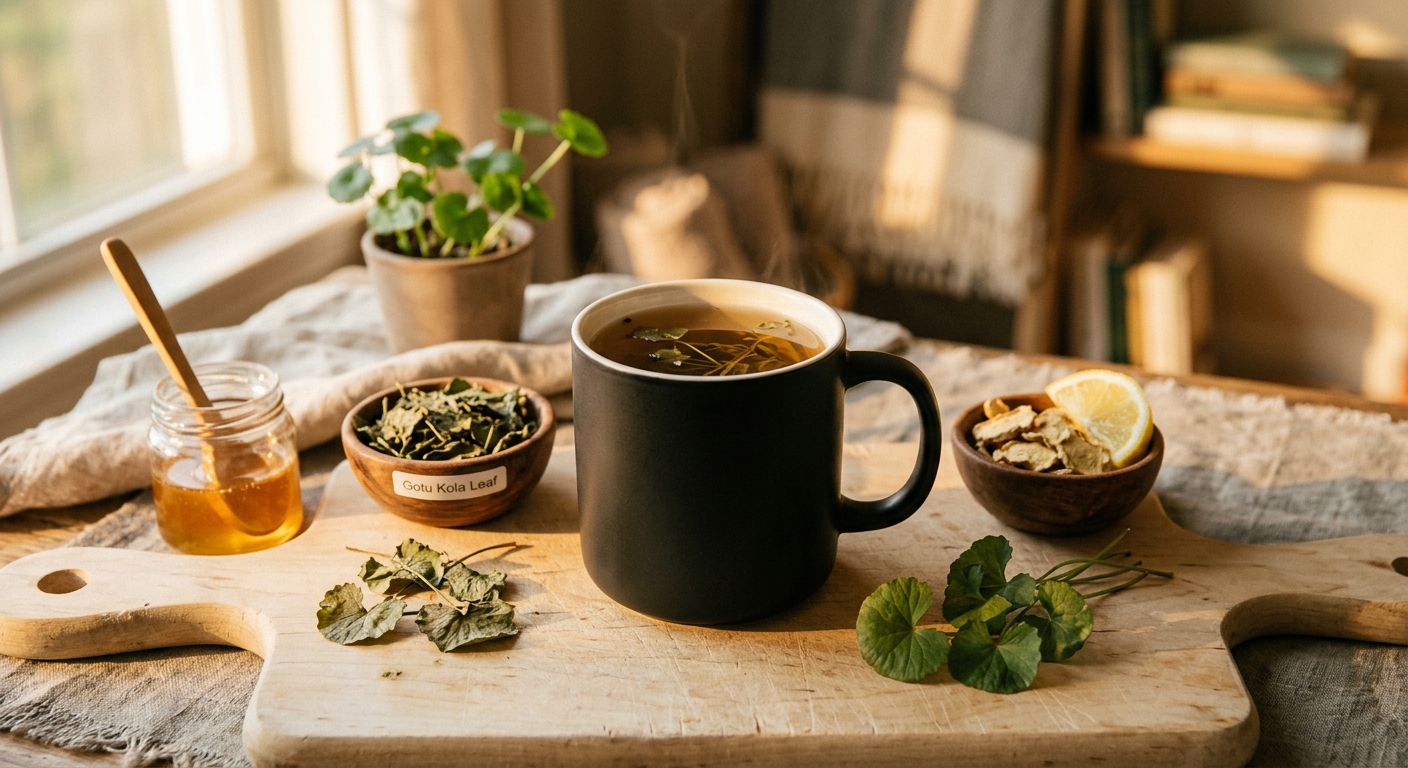
- Place 2 teaspoons of dried gotu kola leaf per cup into a tea infuser or directly into a warmed teapot. If using fresh leaves, use 1 tablespoon per cup and bruise them lightly between your fingers to release their active compounds before placing them in the infuser.
- Pour the cooled water over the leaves and cover the mug or teapot immediately with a lid or small saucer. Covering is essential: it traps the volatile aromatic compounds that would otherwise escape with the steam.
- Steep for 7 to 10 minutes. A shorter steep of 7 minutes yields a lighter, greener flavor. Pushing to 10 minutes brings out a deeper earthiness and stronger bitterness, which many practitioners prefer for maximum therapeutic concentration.
- Strain the leaves and sip slowly. If the flavor feels too bitter, a small drizzle of raw honey softens it beautifully. A thin slice of fresh ginger added during steeping adds warmth and complements the herb’s cooling character.
- Measure 1 tablespoon of dried gotu kola leaf per 240 ml of water into a clean glass jar. Cold brewing requires a slightly higher leaf-to-water ratio than hot brewing because the lower temperature extracts more slowly and less aggressively.
- Add room-temperature filtered water to the jar, filling it to your desired volume. Stir gently to ensure all the leaves are fully submerged. You can add a few thin slices of cucumber or a sprig of fresh mint at this stage for a refreshing flavor variation.
- Seal the jar with a lid and place it in the refrigerator. Allow the tea to cold brew for a minimum of 8 hours, though 10 to 12 hours overnight produces the most well-rounded extraction.
- When ready, strain the liquid through a fine mesh strainer or cheesecloth into a clean glass, pressing the leaves gently to extract every last drop. The resulting brew should be a pale, clear green with a clean, grassy aroma.
- Serve over ice or chilled as-is. This cold brew keeps in the refrigerator in a sealed jar for up to 48 hours, making it convenient for preparing two or three days’ worth of your focus ritual in one batch.
- In the morning, add 1 tablespoon of dried gotu kola leaf per 240 ml of cold filtered water into a large, clear glass jar. Clear glass is essential as it allows sunlight to pass through and gently warm the water from multiple angles.
- Seal the jar loosely with a lid or cover it with a small cloth secured with a rubber band. This prevents insects and debris from entering while still allowing slight pressure release as the jar warms.
- Place the jar in a sunny windowsill or outdoors in direct sunlight for 3 to 5 hours. The sun’s gentle heat, far below boiling, creates an infusion that is exceptionally smooth and mild, with a natural sweetness and a soft, green flavor that needs little or no sweetener.
- Once steeped, bring the jar indoors and strain the liquid through a fine mesh strainer into a clean pitcher or serving vessel. Taste and adjust with a small amount of honey or a squeeze of lemon if desired.
- Serve immediately over ice for a refreshing warm-weather focus drink, or refrigerate and consume within 24 hours. Do not leave sun tea sitting out at room temperature after steeping, as tepid liquid can encourage bacterial growth over extended periods.
Health Benefits
Several clinical trials have found that Centella asiatica supplementation significantly improves working memory, attention, and cognitive processing speed in healthy adults. The triterpenoids asiatic acid and madecassoside appear to promote neuroplasticity by encouraging dendritic branching and synapse formation in memory-critical regions of the brain.
Unlike herbs that work by sedating the nervous system, gotu kola modulates neurological activity through saponin compounds that reduce cortisol-driven reactivity and support GABA pathways. A 2016 human study found that a single dose meaningfully reduced startle response and anxiety scores without impairing alertness or reaction time.
Gotu kola’s triterpenoids are among the most well-studied natural agents for improving microvascular integrity and blood flow. By strengthening the walls of the capillaries that feed the brain, the herb ensures consistent delivery of oxygen and glucose, the two fuels most critical for sustained cognitive performance.
Chronic neuroinflammation is a key driver of cognitive fatigue, brain fog, and long-term neurodegenerative risk. Madecassoside and asiaticoside have both demonstrated significant inhibition of pro-inflammatory cytokines in neural tissue in preclinical models, suggesting a protective role with consistent, long-term use.
Gotu kola is classified in Ayurveda as a rasayana, an adaptogenic tonic that builds the body’s capacity to handle physical and psychological stress over time. Animal and human studies both support a reduction in stress-induced cognitive impairment, with regular consumers reporting a greater sense of mental equanimity under pressure.
🧪 Key Bioactive Compounds
The Science Behind Gotu Kola
The cognitive benefits of gotu kola are rooted primarily in a class of compounds called pentacyclic triterpenoids, with asiaticoside, madecassoside, asiatic acid, and madecassic acid being the most pharmacologically active. These compounds cross the blood-brain barrier and exert direct effects on neural tissue. Asiatic acid, in particular, has been shown in multiple preclinical studies to stimulate the growth of axons and dendrites, the physical structures through which neurons communicate. More dendrites means more potential synaptic connections, which is the physical substrate of learning and memory. This mechanism, known as neurotrophic support, is one reason gotu kola has historically been classified alongside other cognitive-enhancing herbs like brahmi (Bacopa monnieri) in Ayurvedic medicine.
Neuroinflammation, defined as the activation of immune cells within the central nervous system, is increasingly recognized as a major contributor to brain fog, fatigue, and cognitive decline. Madecassoside has demonstrated a remarkable ability to inhibit the production of pro-inflammatory cytokines including TNF-alpha and interleukin-6 in neural tissue, both in cell culture and in animal models of neurodegeneration. By dampening this low-grade inflammatory activity, gotu kola may help preserve the clarity and efficiency of neural communication. This anti-inflammatory action also supports cerebrovascular health: chronic vascular inflammation is a well-established contributor to reduced cerebral blood flow, and gotu kola’s saponins have been clinically shown to improve capillary permeability and reduce venous insufficiency in human trials.
The anxiolytic effects of gotu kola appear to involve modulation of the hypothalamic-pituitary-adrenal (HPA) axis, the body’s central stress-response system, as well as direct interaction with GABA-A receptors, the same receptors targeted by benzodiazepine drugs, though far more gently and without the sedative or addictive properties. A landmark randomized controlled study published in the Journal of Clinical Psychopharmacology in 2000 found that a single 12 g dose of Centella asiatica significantly attenuated the acoustic startle response in healthy volunteers, a validated measure of anxiety reactivity. This combined action on stress hormones, inflammatory mediators, and neurotransmitter receptors creates the distinctive quality that users describe as calm, grounded focus: alert without agitation, relaxed without drowsiness.
Brewing Tips
- Source your gotu kola from a reputable supplier who tests for heavy metals. As a low-growing creeping plant that thrives in moist, often cultivated soil, Centella asiatica is prone to absorbing contaminants from the ground, so soil quality during cultivation matters enormously for safety and efficacy.
- Consistency is more important than quantity with gotu kola. The herb’s triterpenoids accumulate and produce greater cognitive effects over weeks of daily use rather than in a single strong dose. One or two cups per day for four to six weeks is the traditional and clinically studied approach.
- Fresh gotu kola leaves, if available at an Asian grocery store or from a home-grown plant, produce a noticeably brighter, more vegetal tea with a higher concentration of volatile aromatic compounds. Use about three times the amount of fresh leaves compared to dried, and bruise them gently before steeping.