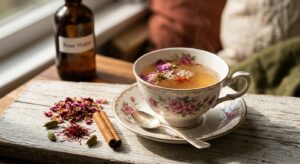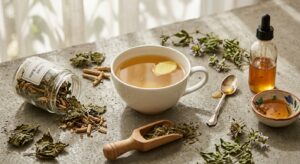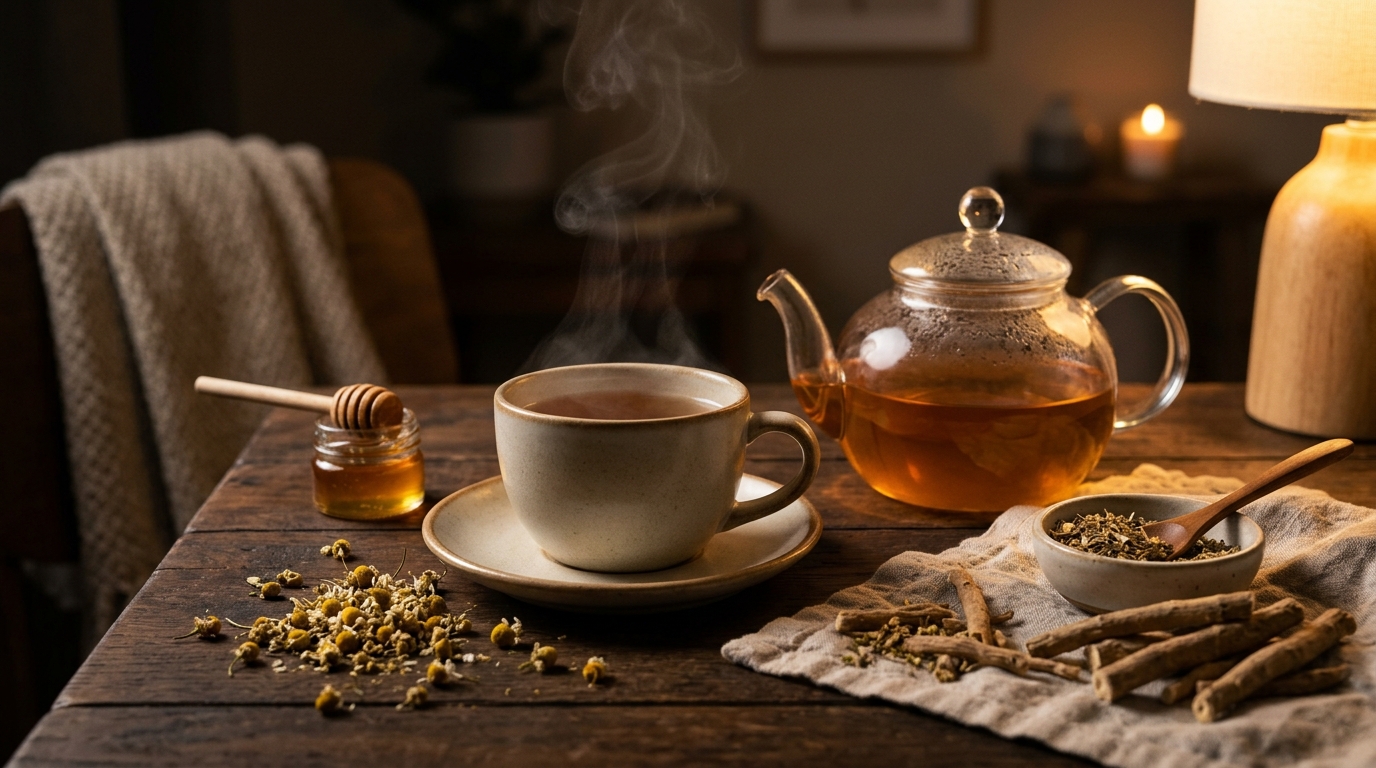
Ashwagandha (Withania somnifera) has been used in Ayurveda for over 3,000 years. Its Sanskrit name translates roughly to “smell of the horse,” a nod to the root’s earthy, musky aroma and to the folk belief that it grants the vitality and strength of a stallion. Traditional practitioners classify it as a rasayana, a rejuvenating tonic, and have long prescribed it for exhaustion, nervous tension, and difficulty sleeping. The species name somnifera means “sleep-inducing,” a clue to how it was valued.
Chamomile (Matricaria chamomilla) has an equally storied past. Ancient Egyptians dedicated it to their sun god, Greek physicians prescribed it for digestive complaints, and generations of European grandmothers brewed it for fussy children and restless adults alike. Its small, daisy-like flowers carry a honeyed, apple-like fragrance that has become shorthand for bedtime comfort.
Brewed together, these two herbs balance each other beautifully. Ashwagandha brings a deep, slightly bitter, earthy backbone, while chamomile adds floral sweetness and softens the root’s rough edges. The result is a warming, grounding cup that works on two fronts: ashwagandha helps modulate the body’s stress response over time, while chamomile offers gentle, immediate relaxation. It is an ideal ritual for winding down after a demanding day.
2
cups
Ingredients
- 1 tspdried ashwagandha root, coarsely cut
- 2 tbspdried chamomile flowers
- 480 mlfiltered water
- —raw honey or maple syrup to taste (optional)
- —a thin slice of fresh ginger or a pinch of cinnamon (optional)
How to Brew
Click on an item below to shop for the recommended items for this recipe on Amazon.
As an Amazon Associate, we earn from qualifying purchases.
- Bring the filtered water to a full boil, then let it rest for about one minute so it settles near 90 to 95°C. Water that is too hot can make chamomile taste harsh and grassy.
- Place the ashwagandha root and chamomile flowers together in a large infuser basket or directly into a warmed teapot. Using a roomy infuser lets the flowers fully expand.
- Pour the hot water over the herbs and immediately cover the vessel with a lid or saucer to keep the aromatic oils from evaporating.
- Steep for 10 to 12 minutes. Closer to 10 gives a gentler, floral cup; closer to 12 draws out more of the root’s earthy depth and bitterness.
- Strain thoroughly, pressing the herbs lightly against the strainer to release the last of the liquid.
- Stir in honey or maple syrup if desired and sip slowly, ideally 30 to 60 minutes before bed.
- Combine 2 teaspoons of ashwagandha root and 3 tablespoons of chamomile flowers in a clean glass jar. This is a higher ratio than the hot brew to compensate for the gentler extraction.
- Pour 720 ml of cool, filtered water over the herbs and stir once to ensure everything is submerged.
- Seal the jar and refrigerate for 8 to 12 hours, or overnight. Avoid exceeding 12 hours, as the root can start to taste muddy.
- Strain through a fine-mesh sieve lined with a piece of muslin or a coffee filter to catch the fine root particles.
- Serve chilled over ice, or pour into a mug and warm gently on the stove without boiling. Drink within 48 hours and keep refrigerated.
- Add 1 to 2 teaspoons of ashwagandha root and 480 ml of cold water to a small saucepan. Starting with cold water allows the root to release its compounds gradually.
- Bring to a gentle simmer over medium heat, then reduce to low. Cover partially and simmer for 15 minutes, until the liquid reduces slightly and turns a deep tan color.
- Remove the pan from the heat and immediately add the chamomile flowers. Stir once, cover fully, and steep for 5 minutes.
- Strain through a fine-mesh sieve into a warmed mug, discarding the spent herbs.
- For a traditional touch, stir in a splash of warm milk or oat milk, a pinch of cinnamon, and a little honey once the tea has cooled slightly.
Health Benefits
Several randomized controlled trials have found that standardized ashwagandha root extract reduced both self-reported stress and serum cortisol compared with placebo. Most studies used concentrated extracts, so a tea is likely a milder effect.
Clinical research suggests ashwagandha can improve sleep onset and overall sleep quality, particularly in people with stress-related insomnia. Chamomile adds its own modest benefit, with some trials showing improved sleep quality in adults.
Ashwagandha has been associated with reductions in anxiety scores in multiple trials, while chamomile has shown benefit for generalized anxiety symptoms in clinical studies. Apigenin’s action on GABA receptors is the likely mechanism for chamomile’s calming effect.
Chamomile has a long traditional and research-backed history as a carminative and antispasmodic, helping relax the gut muscles that tighten under stress, which can ease bloating and cramping before bed.
Both herbs contain polyphenols and flavonoids that neutralize free radicals in laboratory studies, which may contribute to their broader protective and restorative reputation.
🧪 Key Bioactive Compounds
The Science Behind Ashwagandha
Ashwagandha’s reputation rests largely on a family of compounds called withanolides, steroidal lactones concentrated in the root. Researchers believe these compounds influence the hypothalamic-pituitary-adrenal (HPA) axis, the body’s central stress-response system. In several human trials, participants taking standardized root extract showed meaningful reductions in serum cortisol along with lower scores on stress and anxiety scales. Animal studies also point to GABA-mimetic activity, which may help explain the calming and sleep-supporting effects traditionally attributed to the plant.
Chamomile works through a complementary pathway. Its flavonoid apigenin is a well-studied ligand for benzodiazepine receptors on GABA-A channels, the same general system targeted by many anti-anxiety and sleep medications, though at a far gentler and much weaker level. Meanwhile, volatile oils such as alpha-bisabolol and chamazulene have anti-inflammatory and antispasmodic properties, which is why chamomile has been used for centuries to relax the digestive tract and calm the body generally.
An important note on evidence: most of the strongest clinical data for ashwagandha comes from concentrated, standardized extracts taken in capsule form, often providing 300 to 600 mg of extract daily. A cup of tea delivers a smaller and more variable dose of withanolides, partly because these compounds are not highly water-soluble. The simmered decoction method extracts more than a short steep. Tea should therefore be seen as a supportive, ritual-based practice rather than a replacement for clinically studied doses, and the calming ritual of preparing and sipping a warm drink is itself a recognized contributor to evening relaxation.
Brewing Tips
- Choose cut-and-sifted ashwagandha root rather than powder when making tea, as powder turns muddy and difficult to strain.
- Drink this blend 30 to 60 minutes before bed to give both herbs time to settle in, and pair it with dimmed lights and screen-free time for the best effect.
- If the earthy flavor is too strong at first, start with half a teaspoon of root and increase gradually as your palate adjusts.
- Store both herbs in airtight, opaque containers away from heat and light, and use within 12 months for the best aroma and potency.