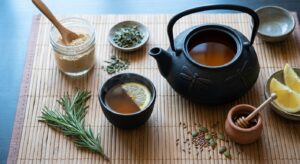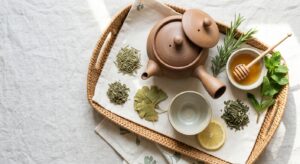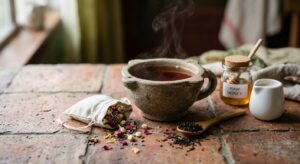
Long before Silicon Valley coined the term ‘nootropic,’ healers across Asia and Ayurvedic traditions were crafting plant-based brain tonics from the earth’s most potent cognitive herbs. Gotu kola (Centella asiatica) was revered in classical Indian medicine as a medhya rasayana, a class of herbs specifically prescribed to sharpen intellect and rejuvenate the mind. Ginkgo biloba, one of the oldest living tree species on Earth, has been used in Traditional Chinese Medicine for over 2,000 years to support circulation to the brain and enhance memory. Lion’s mane mushroom (Hericium erinaceus) rounds out this ancient lineage, prized by Buddhist monks who brewed it into a tea to sustain focused meditation practice for hours at a time.
What unites these three ingredients is their shared ability to support neurological function through distinct but complementary mechanisms. Rather than delivering a sharp spike of stimulation followed by a crash, nootropic herbal tea works gradually and sustainably, nourishing the neural pathways that govern attention, working memory, and mental clarity. The result is a state of alert calm, often described as feeling ‘switched on’ without the jitteriness or anxiety associated with high-caffeine beverages. This makes nootropic tea an ideal companion for deep work, creative sessions, studying, or any task that demands sustained cognitive presence.
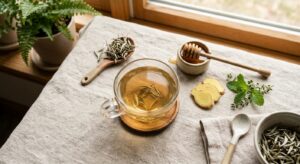
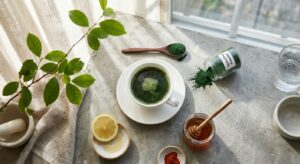
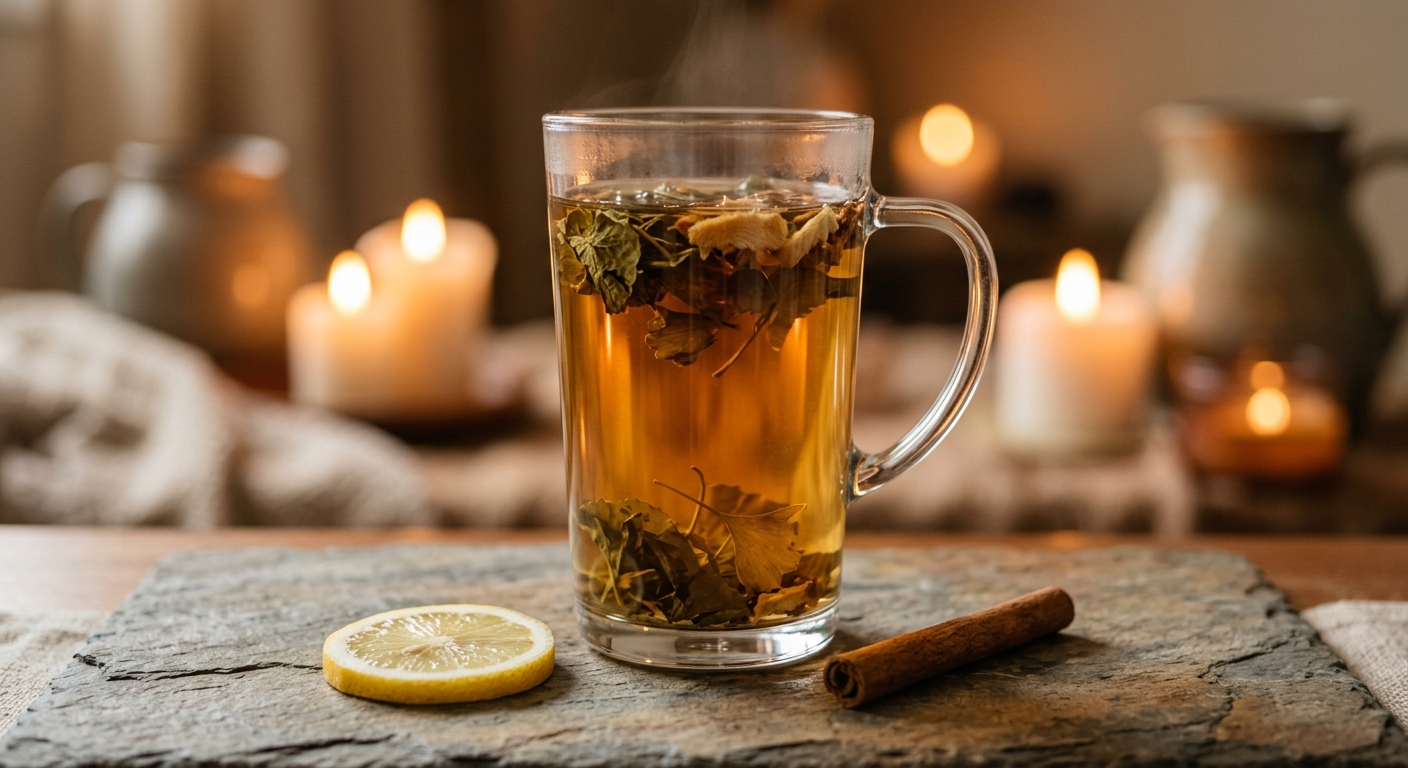
The sensory experience of this blend is earthy and grounding with a subtle herbal depth. Gotu kola contributes a mild, slightly bitter green note, ginkgo adds a faint nuttiness, and lion’s mane lends a delicate mushroom earthiness that is far more pleasant than it sounds. A touch of raw honey and a slice of fresh ginger can transform the cup into something genuinely enjoyable, making it a ritual worth returning to every morning or afternoon when your focus needs a gentle but powerful lift.
2
cups
Ingredients
- 1.5 tspdried gotu kola leaf
- 1 tspdried ginkgo biloba leaf
- 1 tspdried lion’s mane mushroom pieces
- 480 mlwater (85 to 90°C / 185 to 194°F)
- —raw honey to taste (optional)
- —1 thin slice of fresh ginger (optional)
How to Brew
Click on an item below to shop for the recommended items for this recipe on Amazon.
As an Amazon Associate, we earn from qualifying purchases.
- Heat your water to 85 to 90°C (185 to 194°F). If you do not have a temperature-controlled kettle, bring water to a full boil and allow it to rest for 3 to 4 minutes before brewing.
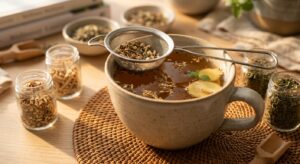
- Combine 1.5 tsp dried gotu kola leaf, 1 tsp dried ginkgo biloba leaf, and 1 tsp lion’s mane mushroom pieces in a tea infuser or strainer. If using fresh ginger, add one thin slice directly to the infuser.
- Place the infuser in your mug or teapot and pour the heated water evenly over the herbs. The water should fully submerge all the plant material.
- Cover the mug or teapot with a lid or small plate to trap the aromatic volatile compounds and maintain temperature. Steep for 7 to 10 minutes, tasting at the 7-minute mark for a milder cup or continuing to 10 minutes for fuller depth.
- Remove the infuser and press the herbs gently against the side of the mug with a spoon to release the last of the beneficial compounds. Add raw honey to taste and drink while warm.
- Measure 2 tsp dried gotu kola leaf, 1.5 tsp dried ginkgo biloba leaf, and 1.5 tsp lion’s mane mushroom pieces into a glass jar. Increase herb quantities slightly compared to hot brew to compensate for the slower cold extraction.
- Pour 600 ml of cool, filtered water at room temperature directly over the herbs. Do not use cold water from the refrigerator at this stage, as room temperature water kick-starts the extraction process more effectively.
- Stir the herbs gently to ensure all the plant material is fully submerged and saturated. Seal the jar with a lid or cover it tightly with a cloth secured with a rubber band.
- Allow the jar to sit at room temperature for 1 hour, then transfer it to the refrigerator. Let it steep for a total of 10 to 14 hours, ideally overnight.
- Strain the tea through a fine mesh strainer lined with a thin cloth or a paper coffee filter to remove all herb particles and mushroom sediment. Pour over ice in a tall glass or drink straight from the jar chilled. Sweeten with liquid honey if desired, as it dissolves more readily in cold liquid.
- Combine 3 tsp dried gotu kola leaf, 2 tsp dried ginkgo biloba leaf, and 2 tsp lion’s mane mushroom pieces in a small saucepan or heatproof pitcher. These doubled quantities are designed to yield a 4-serving concentrate.
- Heat 480 ml of water to 90°C (194°F). Pour over the herbs and stir to fully submerge all plant material. Cover the saucepan or pitcher with a lid to prevent evaporation and volatile compound loss during the extended steep.
- Allow the concentrate to steep covered for 20 to 25 minutes, stirring once at the halfway point. The resulting liquid will be noticeably darker and more intensely flavored than a standard brew.
- Strain through a fine mesh strainer lined with cheesecloth, pressing the spent herbs firmly to extract every drop of the concentrated liquid. Discard the spent herbs.
- Allow the concentrate to cool to room temperature before transferring to a sealed glass jar and refrigerating. To serve, mix equal parts concentrate and hot or cold filtered water. Add honey or a squeeze of lemon to taste.
Health Benefits
Multiple randomized controlled trials have found that ginkgo biloba extract (standardized to 24% flavonol glycosides) significantly improves performance on working memory tasks in both healthy adults and older populations with mild cognitive impairment. Gotu kola extracts have shown complementary effects on spatial memory in animal models, with human pilot studies supporting improved word recall.
Lion’s mane mushroom is uniquely distinguished among nootropic herbs by its ability to stimulate NGF production in the brain. A 2009 double-blind, placebo-controlled trial published in Phytotherapy Research found significant improvements in cognitive function scores among older adults with mild cognitive impairment who consumed lion’s mane daily for 16 weeks, with effects attributed to NGF-stimulating hericenones and erinacines.
Ginkgo biloba’s terpene lactones, particularly ginkgolide B, act as potent inhibitors of platelet-activating factor, reducing blood viscosity and improving microcirculation in cerebral vessels. This mechanism is linked to ginkgo’s demonstrated ability to reduce symptoms of cerebrovascular insufficiency, including mental fatigue, difficulty concentrating, and slow information processing.
Gotu kola has a long Ayurvedic history as an adaptogen for reducing stress-related mental fatigue. A randomized, double-blind study published in the Journal of Ethnopharmacology found that a standardized gotu kola extract significantly reduced anxiety, depression, and stress scores in healthy elderly volunteers over 60 days, without the sedation associated with pharmaceutical anxiolytics.
The combined flavonoid content of this blend, particularly quercetin from ginkgo and gotu kola alongside the beta-glucans in lion’s mane, creates a multi-pathway antioxidant shield in neural tissue. Chronic neuroinflammation and oxidative stress are primary drivers of age-related cognitive decline, and regular consumption of antioxidant-rich nootropic herbs is associated with slower cognitive aging in epidemiological studies.
🧪 Key Bioactive Compounds
The Science Behind Gotu Kola
The cognitive-enhancing properties of this nootropic blend operate across multiple neurological pathways simultaneously, which is precisely what makes plant-based combinations so compelling to researchers. Gotu kola’s most studied compounds, asiaticoside and asiatic acid, are pentacyclic triterpenes that cross the blood-brain barrier and have been shown in both in vitro and in vivo studies to upregulate brain-derived neurotrophic factor (BDNF) and support axonal growth. BDNF is often called ‘fertilizer for the brain’ because it governs the survival, differentiation, and plasticity of neurons, particularly in the hippocampus, the brain’s primary memory consolidation center. Reduced BDNF levels are consistently associated with depression, cognitive decline, and stress-induced memory impairment, making gotu kola’s ability to support its expression particularly significant.
Lion’s mane mushroom stands apart in the nootropic world because of its unique content of hericenones (found in the fruiting body) and erinacines (found in the mycelium), which are the only naturally occurring small molecules known to stimulate Nerve Growth Factor (NGF) synthesis in the brain. NGF is essential for the maintenance of cholinergic neurons in the basal forebrain, which are among the first neurons to degenerate in Alzheimer’s disease. A landmark 2009 clinical trial demonstrated that daily lion’s mane consumption over 16 weeks produced statistically significant improvements in a standardized cognitive function scale among adults with mild cognitive impairment, with scores declining again after supplementation ceased, confirming the mushroom’s active role. More recent research has also identified additional neuroactive compounds in lion’s mane, including dilinoleoyl-phosphatidylethanolamine (DLPE), which promotes neurite outgrowth in cultured neurons.
Ginkgo biloba’s cognitive benefits are among the most extensively documented of any botanical. Its unique combination of flavonol glycosides (including quercetin, kaempferol, and isorhamnetin) and terpene lactones (ginkgolides and bilobalide) act through at least three distinct mechanisms: inhibiting platelet-activating factor to improve cerebral perfusion, quenching reactive oxygen species that cause oxidative neuronal damage, and modulating neurotransmitter systems including dopamine and serotonin receptors. A 2016 meta-analysis in the Journal of Alzheimer’s Disease, which pooled data from over 2,600 patients across nine randomized controlled trials, found that standardized ginkgo extract at 240 mg per day produced significant improvements in cognitive function and activities of daily living in patients with dementia, outperforming placebo in 8 of 9 trials. While tea-based extraction yields lower concentrations than standardized extracts, regular consumption of the whole leaf provides a gentle, cumulative nootropic effect that is well-suited to daily use.
Brewing Tips
- Source your lion’s mane from a reputable supplier that specifies the use of fruiting bodies rather than mycelium on grain, as fruiting bodies contain significantly higher concentrations of the hericenones responsible for NGF stimulation.
- Consistency matters more than quantity with nootropic herbs. The cognitive benefits of gotu kola and lion’s mane in particular are cumulative and typically become noticeable after 4 to 6 weeks of daily use, rather than after a single cup.
- Store dried ginkgo biloba leaves away from light and moisture in an airtight glass container. Ginkgo’s terpene lactones are sensitive to oxidation, and stale or improperly stored leaf material will produce a noticeably less effective brew.