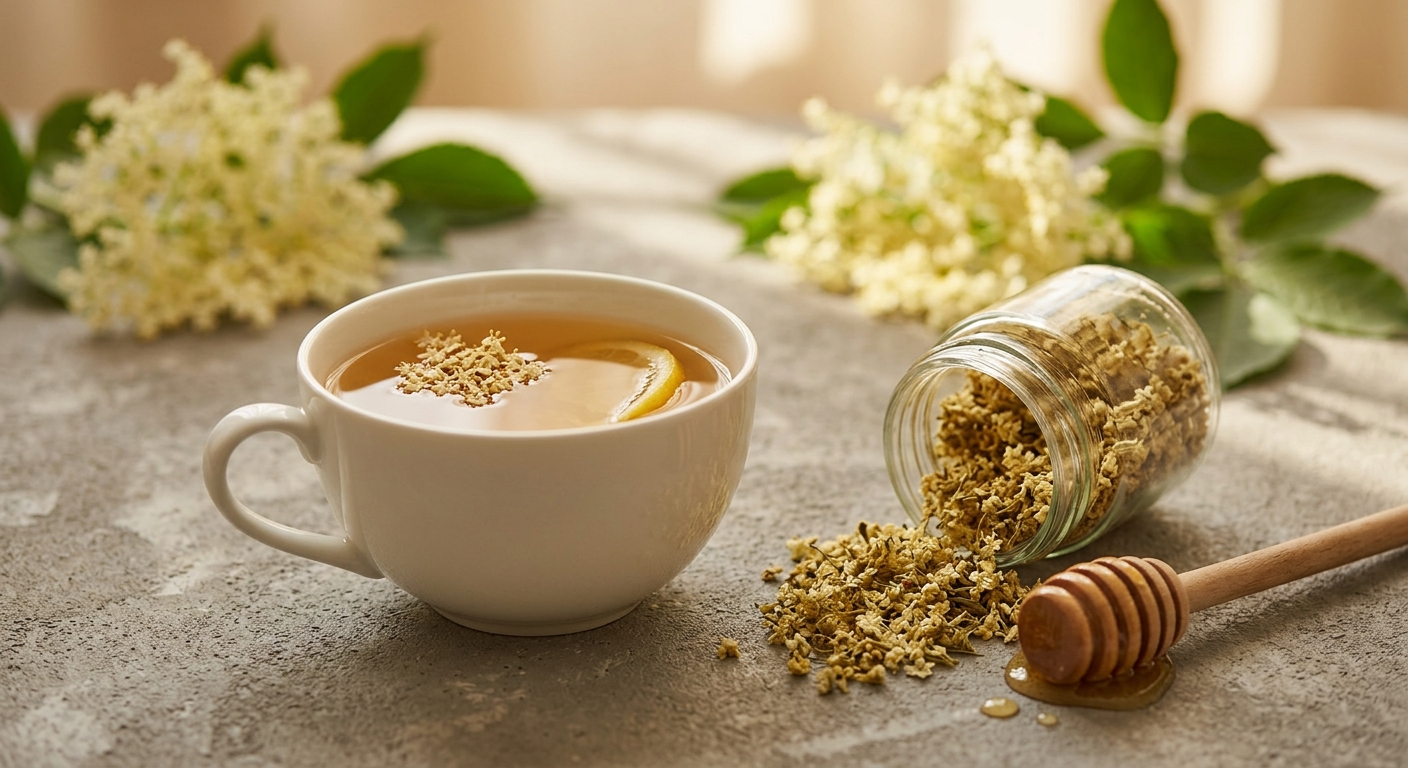
Few plants carry as rich a cultural legacy as the elder tree. Across northern and central Europe, Sambucus nigra has been revered for millennia, appearing in Norse mythology as the dwelling of the protective spirit Hyldemor, or Elder Mother, and featuring prominently in the folk medicine traditions of England, Germany, and Scandinavia. Elderflowers, the creamy white blossoms that appear each spring and early summer, were gathered with great ceremony and used to treat fevers, colds, hay fever, and inflammation. This was not mere superstition. Modern phytochemistry has since validated what herbalists observed for generations: these small, star-shaped flowers are genuinely packed with bioactive compounds that support the immune system and ease respiratory discomfort.
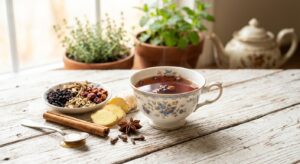
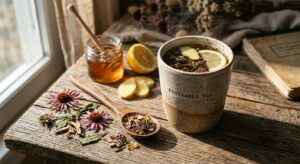
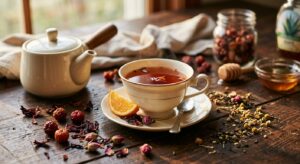
Elderflower tea brewed from dried blossoms offers a sensory experience unlike almost any other herbal infusion. The fragrance is intoxicating, a soft and honeyed floral scent with faint green, almost grape-like undertones. The brew itself is pale and luminous, somewhere between clear straw and warm gold depending on steep time, and the flavor is gently sweet with a lightly musky depth that lingers pleasantly. It is the kind of tea that feels both medicinal and luxurious at once, making it easy to drink daily through the colder months when immune support matters most.
As a cold tea, elderflower truly comes into its own. Cold brewing coaxes a cleaner, more refined sweetness from the blossoms while preserving delicate volatile aromatic compounds that hot water can dissipate too quickly. Whether you are reaching for it at the first sign of a sniffle, sipping it proactively through flu season, or simply enjoying it as a sophisticated summertime cooler, elderflower cold tea deserves a permanent place in your herbal repertoire.
2
cups
Ingredients
- 4 tspdried elderflowers
- 480 mlfiltered water
- —1 strip of lemon peel (optional)
- —raw honey or elderflower cordial to taste (optional)
How to Brew
Click on an item below to shop for the recommended items for this recipe on Amazon.
As an Amazon Associate, we earn from qualifying purchases.
- Heat filtered water to 85 to 90°C (185 to 194°F). If you do not have a temperature-controlled kettle, bring water to a full boil, then let it rest uncovered for 3 to 4 minutes before using.
- Place 2 teaspoons of dried elderflowers per cup into a tea infuser or strainer and set it inside your warmed mug.
- Pour the hot water slowly over the elderflowers, filling the mug. Cover the mug with a small saucer or lid to trap the volatile aromatic oils as the tea steeps.
- Steep for 7 to 10 minutes. Taste at 7 minutes; a longer steep produces a fuller flavor but should not exceed 12 minutes or mild bitterness can develop.
- Remove the infuser and gently press the blossoms against the strainer with a spoon to release the last of the concentrated liquid.
- Add a thin strip of lemon peel and a small drizzle of raw honey if desired. Drink warm, ideally within 20 minutes while the aromatics are at their peak.
- Measure 4 teaspoons of dried elderflowers and place them directly into a clean glass jar. Add a thin strip of fresh lemon peel to brighten the infusion.
- Pour 480 ml of cold, filtered water over the blossoms. The cold water will slowly extract flavor and bioactive compounds without heat degradation.
- Stir gently once with a clean spoon to ensure all the flowers are fully submerged. Seal the jar with a lid.
- Leave the jar at room temperature for 30 minutes to begin the extraction, then transfer to the refrigerator and steep for a total of 8 to 12 hours. Overnight is ideal.
- When ready to serve, strain the infusion through a fine mesh strainer into a pitcher or directly into glasses filled with ice, pressing the blossoms lightly to extract remaining liquid.
- Taste before sweetening, as cold brew elderflower is naturally sweeter than the hot version. Add a splash of elderflower cordial or a small amount of honey syrup if desired, then serve immediately over ice.
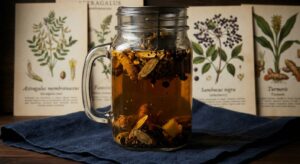
- Fill a clean, clear glass jar with 480 ml of fresh cold filtered water. The transparency of the jar allows sunlight to pass through and gently warm the infusion throughout the steeping process.
- Add 4 teaspoons of dried elderflowers to the water along with an optional strip of lemon peel and 2 to 3 fresh mint leaves for a complementary herbal note.
- Seal the jar loosely (or use a breathable cloth secured with a rubber band) and place it in a sunny spot outdoors or on a south-facing windowsill where it will receive continuous direct sunlight.
- Allow the tea to infuse for 3 to 5 hours, checking periodically. The water should take on a warm golden hue and the fragrance will be noticeable when you open the jar.
- Strain the finished infusion through a fine mesh strainer into a clean pitcher, discarding the spent blossoms.
- Refrigerate immediately and consume within the same day. Serve over ice with a slice of lemon and a drizzle of honey for a beautifully fragrant warm-weather elderflower tea.
Health Benefits
The flavonoids rutin and quercetin found in elderflowers have demonstrated antiviral activity in preliminary studies, particularly against influenza viruses. Combined with chlorogenic acid’s immune-modulating effects, elderflower tea is a well-supported herbal ally during the colder months.
Traditional European herbalism has long used elderflower to ease congestion, soothe inflamed mucous membranes, and reduce the severity of colds. Modern herbalists attribute this effect partly to kaempferol and quercetin, which reduce inflammatory cytokine activity in respiratory tissues.
Quercetin’s well-documented ability to inhibit mast cell degranulation and reduce histamine release makes elderflower tea a useful option for managing hay fever and mild allergic rhinitis. Regular consumption during allergy season may help reduce the frequency and intensity of symptoms.
Elderflowers contain a broad spectrum of polyphenolic antioxidants, including rutin, quercetin, and chlorogenic acid, that neutralize free radicals and reduce oxidative stress. This cumulative antioxidant activity supports cellular health and may contribute to the immune resilience associated with regular elderflower consumption.
In traditional Western herbalism, elderflower is classified as a diaphoretic, meaning it gently promotes perspiration, which supports the body’s natural fever-reduction process. Hot elderflower tea taken at the onset of a cold or fever has been used for this purpose in European folk medicine for hundreds of years.
🧪 Key Bioactive Compounds
The Science Behind Elderflower
The therapeutic reputation of elderflower is increasingly supported by phytochemical research. The most pharmacologically significant compounds in Sambucus nigra blossoms are the flavonoid glycosides, particularly rutin and quercetin. These molecules have been shown in cell-based and animal studies to inhibit the replication of influenza A and B viruses, partly by blocking the viral hemagglutinin protein that allows the virus to bind to host cells. Quercetin also functions as a zinc ionophore, facilitating the transport of zinc ions across cell membranes, which in turn inhibits the RNA polymerase enzymes that viruses rely on for replication. This mechanism helps explain why elderflower has historically been paired with zinc-rich foods in traditional cold remedies.
Chlorogenic acid, another prominent compound in elderflower, plays a dual role as both an antioxidant and an immunomodulator. Research published in phytochemistry journals has found that chlorogenic acid activates macrophage activity, one of the body’s first-line immune responses, while simultaneously reducing the overproduction of pro-inflammatory cytokines like interleukin-6 and tumor necrosis factor alpha. This balancing act is particularly relevant during respiratory infections, where unchecked inflammation can prolong symptoms and damage mucosal tissues. The anti-inflammatory flavonoid kaempferol further supports this effect by suppressing nuclear factor kappa B (NF-kB), a key signaling pathway in the inflammatory cascade.
Quercetin’s antihistamine properties are among the most extensively studied aspects of elderflower’s bioactivity. Multiple in vitro studies have demonstrated that quercetin stabilizes mast cell membranes, preventing the release of histamine in response to allergen exposure. A 2016 review in the journal Nutrients highlighted quercetin as one of the most promising natural antihistamines currently under clinical investigation, noting that consistent dietary intake over several weeks appears to produce measurable reductions in allergy-related inflammation markers. Cold brewing elderflower is particularly advantageous for preserving quercetin content, as prolonged exposure to boiling temperatures has been shown in food science research to cause partial degradation of this sensitive flavonoid.
Brewing Tips
- Source your dried elderflowers from a reputable herbalist or certified organic supplier to ensure you are getting Sambucus nigra blossoms that have been harvested and dried correctly, not leaves or bark, which contain higher concentrations of potentially irritating compounds.
- For cold brew elderflower tea, use the best filtered or spring water you can find, as this method relies entirely on water quality to carry the flavor with no heat to mask mineral off-notes.
- To make a quick elderflower honey syrup for sweetening iced versions, gently warm equal parts raw honey and elderflower cold brew on the stovetop (do not boil) until fully combined. Store in the refrigerator for up to one week and use a small splash in any preparation.