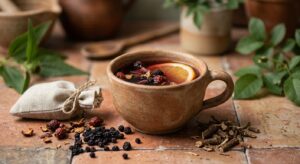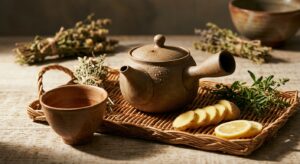
Long before echinacea became a fixture in health food stores, the Plains Indigenous peoples of North America had built an entire tradition of healing around this striking purple coneflower. Tribes including the Lakota, Cheyenne, and Comanche used echinacea root to treat everything from toothaches and snake bites to infections and fevers. It was one of the most widely used medicinal plants on the continent, and when 19th-century herbalists began documenting its uses, word spread quickly across the Atlantic. By the early 1900s, echinacea was the best-selling herbal remedy in the United States, a title it arguably still holds today.
There are three species most commonly used in herbal medicine: Echinacea purpurea, Echinacea angustifolia, and Echinacea pallida. Each part of the plant, including the vivid petaled flower, the lance-shaped leaves, and the thick, resinous root, carries its own concentration of bioactive compounds. Teas made from the aerial parts (flowers and leaves) tend to have a lighter, more floral character, while root-based preparations are deeper, earthier, and more pungent. Many commercial echinacea teas blend both for a balanced, full-spectrum brew.
What makes echinacea truly remarkable is that its reputation has not wilted under scientific scrutiny. Dozens of clinical trials have examined its effects on the immune system, and while researchers continue to debate the precise mechanisms, the evidence consistently points to a plant that genuinely interacts with human immune function. Brewing it as a tea is one of the oldest and most accessible ways to enjoy its benefits, drawing out water-soluble polysaccharides, caffeic acid derivatives, and volatile oils that work together in ways no single isolated compound can replicate.
2
cups
Ingredients
- 2 tspdried echinacea (flowers, leaves, or root, or a blend)
- 480 mlwater (95°C / 203°F)
- —raw honey to taste (optional)
- —slice of fresh ginger (optional, for added warmth)
- —squeeze of lemon juice (optional)
How to Brew
Click on an item below to shop for the recommended items for this recipe on Amazon.
As an Amazon Associate, we earn from qualifying purchases.
- Bring fresh, filtered water to 95°C (203°F). If you do not have a temperature-controlled kettle, bring water to a full boil and allow it to rest for 30 seconds before pouring.
- Place 1 teaspoon of dried echinacea per cup (roughly 240 ml) into a tea infuser, muslin bag, or directly into your mug or teapot. A blend of aerial parts and root pieces gives the most balanced extraction.
- Pour the hot water over the echinacea and cover your mug or teapot with a lid or small plate. This is important: covering traps the volatile aromatic oils that would otherwise escape with the steam.
- Steep for 10 to 15 minutes. Echinacea needs a longer steep than most herbal teas because its immune-active polysaccharides and alkylamides require more time to fully release into the water.
- Remove the infuser or strain the tea through a fine-mesh strainer. Notice the characteristic tingling sensation on your tongue as you sip – this is caused by the alkylamides and is a sign of good potency.
- Sweeten with raw honey if desired, or add a squeeze of lemon to brighten the earthy flavor. Drink while warm for the most comforting effect.
- Add 2 teaspoons of dried echinacea (aerial parts work especially well here – the flowers and leaves yield a pleasantly mild cold infusion) to a clean glass jar.
- Pour 480 ml of cold, filtered water over the herb. Do not use hot water. The low temperature extracts a different ratio of compounds, favoring the polysaccharides over the more pungent volatile oils and some of the bitter constituents.
- Stir gently to ensure all the plant material is submerged, then seal the jar with a lid. Leave at room temperature for the first hour to begin extraction, then transfer to the refrigerator.
- Allow the tea to cold brew in the refrigerator for 8 to 12 hours, or overnight. A longer steep within this range will produce a more concentrated brew.
- Strain the finished tea through a fine-mesh strainer or cheesecloth, pressing the herb gently to extract remaining liquid. Compost the spent herb.
- Serve cold over ice, or allow it to come to room temperature before drinking. Add a few slices of cucumber or a sprig of fresh mint for a refreshing immune-support drink. Consume within 48 hours and keep refrigerated.
- Measure 1 tablespoon of dried echinacea root pieces (or a blend of 2 teaspoons root and 1 teaspoon dried aerial parts) per 480 ml of water. Place the root pieces directly into a small saucepan – do not use an infuser at this stage, as the root needs to move freely in the water.
- Add 600 ml of fresh, cold water to account for evaporation. Bring the water to a full boil over medium-high heat, stirring once to ensure the root pieces are fully submerged.
- Reduce the heat to a low simmer and cover the saucepan with a lid. Allow the roots to simmer gently for 20 to 25 minutes. Check occasionally to ensure the liquid is at a gentle simmer rather than a rolling boil, which can degrade some volatile compounds.
- If using aerial parts in your blend, remove the saucepan from heat after 20 minutes and add the dried flowers and leaves directly to the hot liquid. Cover and allow them to infuse for an additional 5 minutes using residual heat.
- Strain the decoction through a fine-mesh strainer into a heat-proof pitcher or directly into mugs, pressing the root material firmly to extract all remaining liquid.
- The resulting brew will be darker, more resinous, and noticeably more potent than a simple hot infusion. Sweeten generously with raw honey, and consider adding a small cinnamon stick during simmering to balance the earthy bitterness with gentle warmth.
Health Benefits
A widely cited meta-analysis published in The Lancet Infectious Diseases found that echinacea preparations reduced the incidence of the common cold by 58% and the duration of colds by an average of 1.4 days. The mechanism involves both direct antiviral activity and immune system stimulation that helps the body respond more rapidly.
Echinacea’s polysaccharides and glycoproteins have been shown in multiple studies to increase the number and activity of white blood cells, including macrophages and natural killer cells, which form the body’s first line of defense against pathogens. This immunostimulatory action makes it particularly valuable as a short-term immune booster at the onset of illness.
Laboratory studies have demonstrated that echinacea extracts can inhibit the replication of several respiratory viruses, including influenza and rhinovirus, by interfering with viral entry into host cells. Caffeic acid derivatives like echinacoside and cichoric acid appear to play a key role in blocking pathogen adhesion.
Alkylamides in echinacea modulate the production of pro-inflammatory cytokines, helping to regulate rather than simply suppress inflammation. This makes it potentially useful not only during acute infections but also for managing chronic low-grade inflammatory states.
The rich pool of phenolic compounds in echinacea, including cichoric acid, chlorogenic acid, and echinacoside, contributes meaningful antioxidant activity. Regular moderate consumption may help protect cells from oxidative stress, which is implicated in both immune dysfunction and premature aging.
🧪 Key Bioactive Compounds
The Science Behind Echinacea
The immunological activity of echinacea is not the result of a single magic compound but rather an orchestra of interacting constituents that operate across multiple biological pathways simultaneously. The alkylamides, lipophilic amides found most abundantly in Echinacea purpurea and E. angustifolia root, are particularly fascinating because they interact with the endocannabinoid system, specifically binding to cannabinoid receptor type 2 (CB2), which is expressed on immune cells throughout the body. Through this interaction, alkylamides influence the production of cytokines, the chemical messengers that coordinate immune responses, helping to modulate both the activation and resolution of inflammation. This is why echinacea can be described as an immunomodulator rather than simply an immunostimulant: it appears to push the immune system toward a more balanced and appropriate response rather than simply turning up the volume indiscriminately.
The water-soluble fraction of echinacea, dominated by high-molecular-weight polysaccharides such as arabinogalactans and heteroxylan, works through an entirely different mechanism. These large sugar-chain molecules are recognized by pattern recognition receptors on macrophages and dendritic cells, triggering the innate immune response. Research published in journals including Phytomedicine and the Journal of Clinical Pharmacy and Therapeutics has shown that these polysaccharides can increase phagocytic activity (the immune system’s ability to engulf and destroy pathogens), stimulate natural killer cell production, and upregulate interferon production, which plays a central role in antiviral defense. Importantly, polysaccharides are readily extracted in water at moderate temperatures, making tea a genuinely effective delivery method for this class of compounds.
Caffeic acid derivatives, including cichoric acid and echinacoside, round out the phytochemical picture by contributing antioxidant, antiviral, and antimicrobial activity. Cichoric acid, dominant in the aerial parts of E. purpurea, has shown the ability to inhibit hyaluronidase, an enzyme that some pathogens use to break down connective tissue during infection. Echinacoside, more characteristic of E. angustifolia, has demonstrated direct antibacterial properties and may inhibit viral surface proteins. The combined presence of all these compound classes in a well-made echinacea tea creates what researchers call an entourage effect, where the whole plant preparation outperforms any of its isolated constituents, which is a key reason why traditional whole-herb preparations continue to show impressive results in clinical settings.
Brewing Tips
- Use echinacea tea at the very first sign of a cold or immune challenge rather than waiting until you are fully unwell. Clinical trials suggest it is most effective when started at the onset of symptoms, as it supports the initial immune activation that can prevent a minor infection from taking hold.
- The tongue-tingling sensation you experience when sipping a well-made echinacea tea is caused by alkylamides and is one of the most reliable indicators of potency. If your tea produces no tingling at all, the herb may be old, poorly stored, or a lower-quality product – try sourcing from a reputable supplier and store dried echinacea in a sealed, opaque container away from heat and light.
- Rotate between echinacea species and plant parts for broader coverage of bioactive compounds. Using an E. purpurea aerial-part tea one week and an E. angustifolia root decoction the next gives your body access to a wider spectrum of alkylamides, polysaccharides, and caffeic acid derivatives than any single preparation can provide.