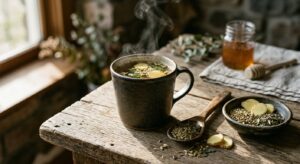
Bloating is one of the most common digestive complaints, affecting millions of people after meals, during periods of stress, or as a result of food sensitivities. Long before modern antacids and digestive enzymes, traditional healers across Europe, Asia, and the Middle East turned to the plant world for relief. Fennel seeds were chewed after meals in ancient Rome and remain a staple digestive aid across South Asia today. Peppermint was prized by Egyptian physicians and later became a cornerstone of European herbal medicine. Ginger root has been central to Ayurvedic and Traditional Chinese Medicine for over two thousand years, revered for its ability to kindle digestive fire and move stagnant energy through the gut.
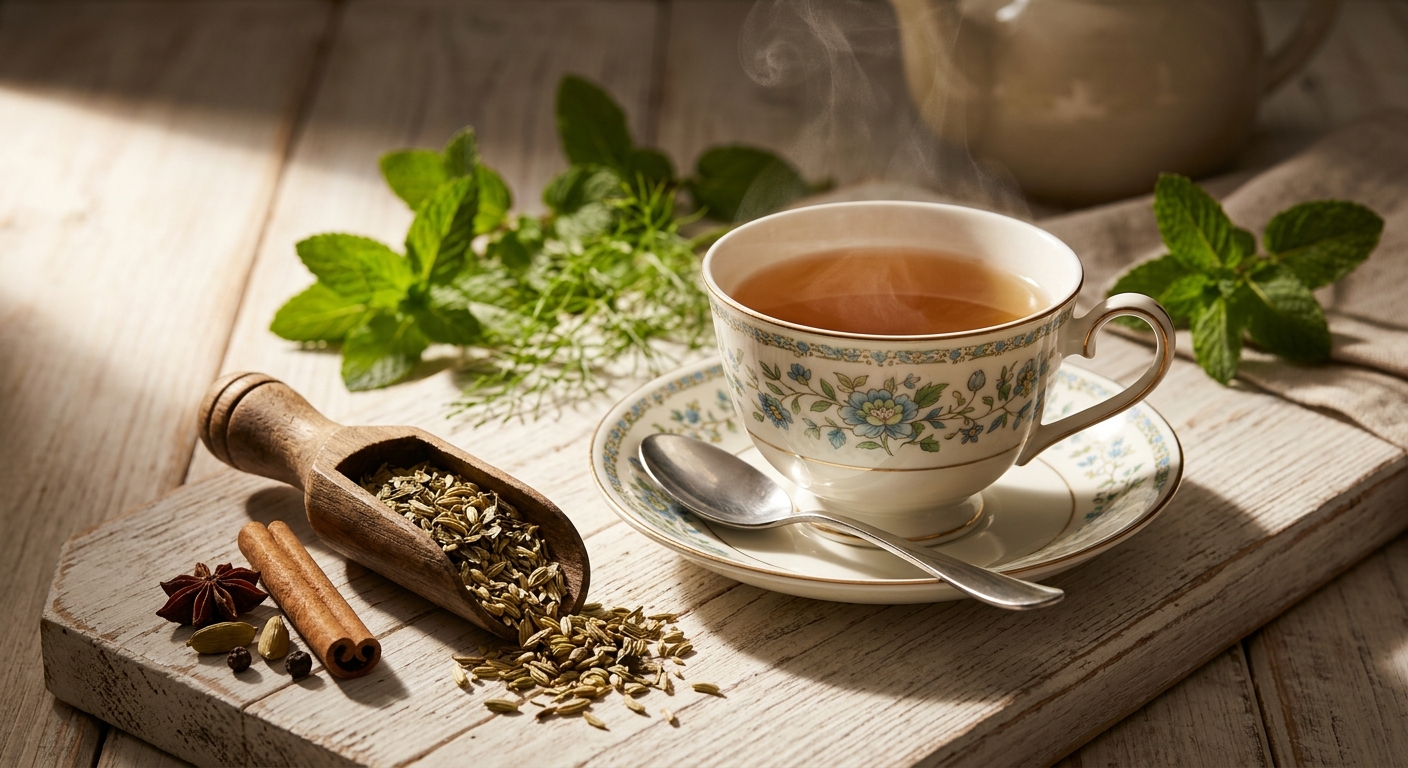
This bloating relief blend brings these three powerful herbs together in a single, easy-to-brew cup. Fennel seed works as a carminative, meaning it actively helps dispel gas from the digestive tract while relaxing smooth muscle spasms. Peppermint contributes a cooling antispasmodic action, easing the cramping and pressure that so often accompany bloating. Fresh or dried ginger adds warmth and stimulates the production of digestive enzymes, helping the body break down food more efficiently and reducing fermentation in the gut that leads to gas buildup.
What makes this blend especially appealing beyond its functional benefits is its flavor. Fennel brings a gentle anise-like sweetness, peppermint adds a bright, clean coolness, and ginger layers in a spicy, warming depth. The result is a tea that tastes as comforting as it is effective. Whether sipped slowly after a heavy meal or prepared as a cold brew to keep on hand throughout the day, this digestive blend offers a natural, accessible way to support gut health using ingredients that have stood the test of centuries.
2
cups
Ingredients
- 2 tspfennel seeds (lightly crushed)
- 1.5 tspdried peppermint leaves
- 4 slicesfresh ginger root (or 1 tsp dried ginger)
- 480 mlwater (95°C / 203°F)
- —raw honey or maple syrup to taste (optional)
- —a squeeze of fresh lemon juice (optional)
How to Brew
Click on an item below to shop for the recommended items for this recipe on Amazon.
As an Amazon Associate, we earn from qualifying purchases.
- Place the fennel seeds in a mortar and pestle or on a cutting board and lightly crush them, just enough to crack the seeds open. You should smell a burst of sweet anise fragrance.
- Combine the crushed fennel seeds, dried peppermint leaves, and fresh ginger slices in a tea infuser or small strainer set inside a teapot or heatproof mug.
- Heat water to approximately 95°C (203°F). If using a standard kettle, bring to a full boil and then let it rest for 30 to 45 seconds before pouring.
- Pour the hot water directly over the herbs and cover the cup or teapot with a lid or small plate. Covering traps the volatile oils that would otherwise escape with the steam, preserving the medicinal potency of peppermint and fennel.
- Steep for 7 to 10 minutes. Taste at 7 minutes. A longer steep gives a more robust flavor and greater carminative potency.
- Remove the infuser, stir in honey or a squeeze of lemon if desired, and sip slowly, ideally within 20 to 30 minutes of a meal or when bloating symptoms begin.
- Lightly crush 3 teaspoons of fennel seeds per 480 ml of filtered water to open the seeds and release their oils into the cold water more effectively.
- Combine the crushed fennel seeds, 2 teaspoons of dried peppermint leaves, and 6 thin slices of fresh ginger in a glass jar with a lid.
- Pour room-temperature or cool filtered water over the herbs, ensuring all plant material is submerged. Give the jar a gentle stir to settle the herbs.
- Seal the jar and leave it at room temperature for 1 hour to allow initial extraction, then transfer it to the refrigerator.
- Steep in the refrigerator for 8 to 12 hours or overnight. The slow, cold extraction draws out delicate aromatic compounds without releasing harsh bitter notes.
- Strain through a fine mesh strainer into a clean bottle or pitcher. Serve over ice with a slice of lemon. The cold brew keeps refrigerated for up to 48 hours.
- Add 2 teaspoons of lightly crushed fennel seeds and 6 to 8 slices of fresh ginger (or 1.5 teaspoons of dried ginger) to a small saucepan with 600 ml of cold, filtered water. Starting in cold water allows the tough cell walls of seeds and roots to release compounds gradually as the temperature rises.
- Bring the water to a gentle simmer over medium heat, then reduce heat to low. The water should bubble softly but not reach a rolling boil, which would damage volatile aromatic oils.
- Simmer uncovered for 15 to 20 minutes. The liquid will reduce slightly and deepen to a warm amber. The kitchen will fill with a rich, spiced fennel aroma.
- Remove from heat and add 2 teaspoons of dried peppermint leaves directly to the hot decoction. Cover the saucepan with a lid and allow the peppermint to infuse off the heat for 5 minutes. Adding peppermint at the end preserves its heat-sensitive volatile oils.
- Strain through a fine mesh strainer into mugs. Sweeten with honey if desired, and sip slowly. This method yields a deeply warming, concentrated digestive tea best suited for evenings or after heavier meals.
Health Benefits
Fennel seed is one of the most studied carminative herbs in the world. Anethole and fenchone directly relax intestinal smooth muscle, reducing spasms and allowing trapped gas to move through and exit the digestive tract more easily. Clinical studies have confirmed that fennel-based preparations significantly reduce bloating, flatulence, and abdominal distension compared to placebo.
Peppermint is the subject of numerous randomized controlled trials demonstrating its effectiveness for irritable bowel syndrome symptoms, including cramping and spasms. Menthol inhibits smooth muscle contraction by blocking calcium ion channels, producing a measurable antispasmodic effect that eases the painful pressure associated with post-meal bloating.
One key cause of bloating is delayed gastric emptying, where food sits in the stomach longer than necessary and begins to ferment. Ginger has been shown in multiple clinical studies to significantly accelerate the rate at which the stomach empties into the small intestine, reducing the window for gas-producing fermentation and the uncomfortable fullness it causes.
Chronic low-grade inflammation in the gut lining can worsen bloating sensitivity and digestive discomfort. Gingerol, shogaol, and rosmarinic acid in this blend work through complementary pathways to inhibit inflammatory mediators, including COX-2 enzymes and pro-inflammatory cytokines, helping to calm an irritated gut over time with regular consumption.
Ginger has been shown to stimulate the production of bile from the gallbladder and digestive enzymes from the pancreas, enhancing the breakdown of fats, proteins, and carbohydrates. More thorough digestion upstream means less undigested material reaching the large intestine, where bacterial fermentation and gas production would otherwise occur.
🧪 Key Bioactive Compounds
The Science Behind Fennel Seed
The effectiveness of this bloating relief blend is grounded in decades of pharmacological research and a growing body of clinical evidence. Fennel seed’s primary active compound, anethole, has been shown in smooth muscle studies to directly inhibit muscle contraction in the gastrointestinal wall, explaining its longstanding reputation as a carminative herb. A 2016 study published in the Journal of Ethnopharmacology confirmed that fennel preparations significantly reduced bloating and intestinal gas in adults, supporting what traditional herbalists have observed for centuries. Anethole’s mild estrogenic activity also helps explain why fennel has historically been used to ease menstrual cramps, which share a smooth-muscle-spasm mechanism with digestive cramping.
Peppermint is one of the most clinically validated herbs for gut health, particularly for irritable bowel syndrome. A 2014 meta-analysis published in the Journal of Clinical Gastroenterology reviewed nine randomized controlled trials and concluded that enteric-coated peppermint oil was significantly more effective than placebo for reducing overall IBS symptoms, including abdominal pain and bloating. The mechanism centers on menthol’s interaction with transient receptor potential melastatin 8 (TRPM8) channels and its ability to block L-type calcium channels in intestinal smooth muscle, reducing the involuntary contractions that produce cramping and trapped gas. Rosmarinic acid contributes an anti-inflammatory layer, inhibiting the enzyme 5-LOX that produces leukotrienes linked to gut wall irritation.
Ginger rounds out the blend by addressing the upstream causes of bloating rather than just the symptoms. A randomized crossover trial published in the European Journal of Gastroenterology and Hepatology demonstrated that ginger capsules accelerated gastric emptying in healthy volunteers by approximately 25 percent compared to placebo. Gingerol achieves this through agonist activity at serotonin 5-HT3 receptors in the gut, which regulate motility, and through antagonism of substance P, a neuropeptide involved in nausea signaling. The conversion of gingerol to shogaol during drying and heating further amplifies the anti-inflammatory and prokinetic effects, making the stovetop decoction method particularly valuable for deep therapeutic use.
Brewing Tips
- Always cover your cup or teapot while the tea steeps. Peppermint and fennel are rich in volatile aromatic oils that escape in steam, and a simple lid or small plate can significantly preserve the medicinal potency and aroma of the finished brew.
- Drink this tea within 20 to 30 minutes of finishing a meal for the best results against post-meal bloating, or at the first sign of digestive discomfort. The herbs work fastest on an empty or lightly full stomach rather than on a very full one.
- If fresh ginger is unavailable, dried ginger works well but use roughly half the amount, as the drying process concentrates the pungent shogaols and the flavor becomes significantly more intense. Start with half a teaspoon of dried ginger and adjust to taste.