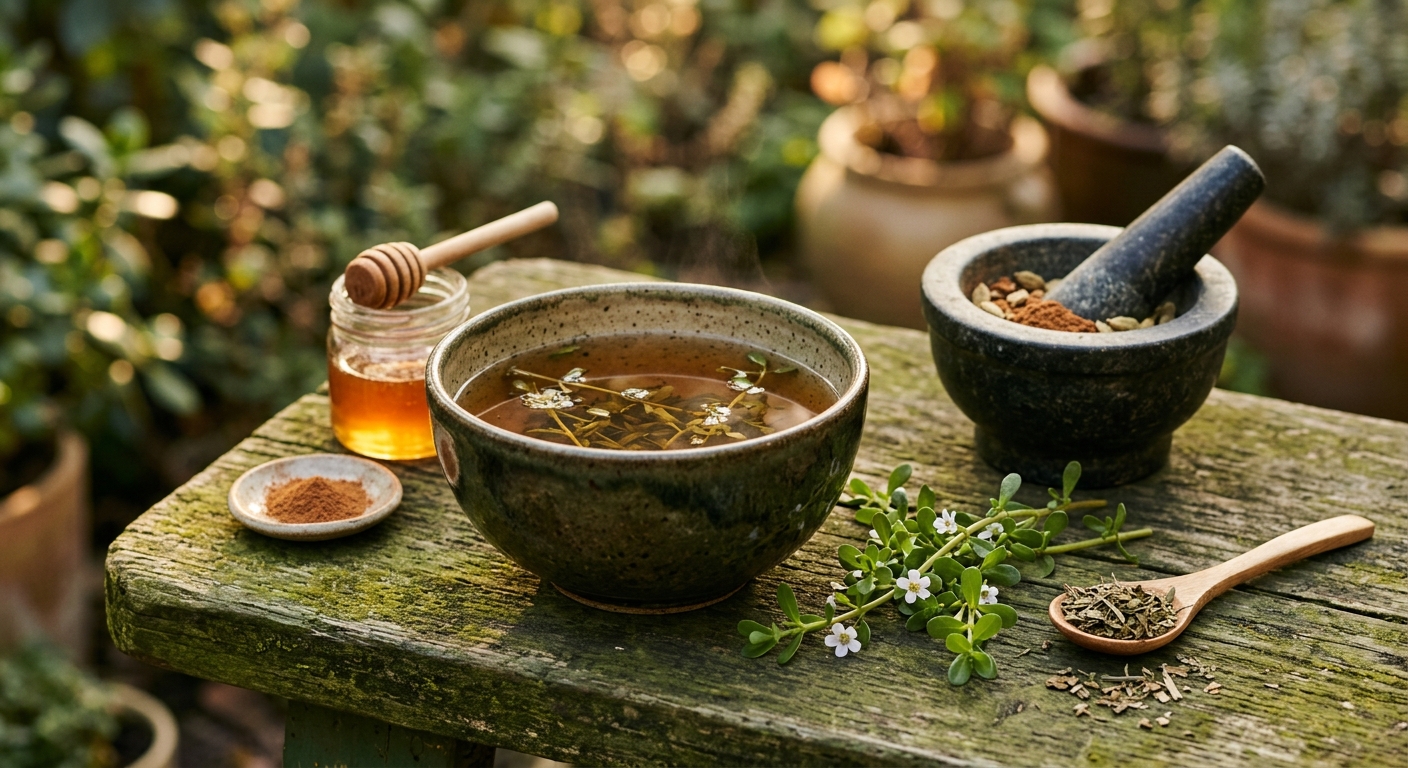
Long before modern neuroscience began mapping the brain’s stress pathways, Ayurvedic physicians were prescribing Bacopa monnieri to scholars, meditators, and anyone whose mind refused to quiet at night. Known in Sanskrit as Brahmi, meaning ‘that which gives supreme knowledge,’ bacopa has been a cornerstone of traditional Indian medicine since at least 600 CE. Ancient texts from the Charaka Samhita describe it as a medhya rasayana, a class of herbs specifically chosen to rejuvenate the mind, sharpen memory, and restore calm to an overworked nervous system.
What makes bacopa so compelling today is that it bridges two worlds rarely served by a single herb: relaxation and cognitive clarity. Unlike sedatives that cloud thinking, bacopa works gradually to reduce anxiety while simultaneously supporting memory consolidation and neuronal repair. It thrives in marshy, wet environments across India, Sri Lanka, and parts of Southeast Asia, and its small, succulent leaves carry a faintly bitter, slightly earthy taste that speaks to its deep medicinal roots. Brewed as a tea, it delivers a gentle, grounding warmth that many drinkers describe as a quieting of background mental noise rather than a heavy drowsiness.
In the Sleep and Relaxation context, bacopa tea is best understood as a long-game herb. A single cup can take the edge off an anxious evening, but its most celebrated effects, reduced cortisol reactivity, improved sleep architecture, and steadier daytime calm, build meaningfully over several weeks of consistent use. Whether you are winding down after a mentally demanding day or seeking a caffeine-free evening ritual that does more than warm your hands, bacopa tea offers something rare: rest for the mind as much as the body.
2
cups
Ingredients
- 2 tspdried bacopa herb (Bacopa monnieri)
- 480 mlwater (90°C / 194°F)
- —raw honey or jaggery to taste (optional)
- —a pinch of cinnamon or cardamom (optional, to balance bitterness)
How to Brew
Click on an item below to shop for the recommended items for this recipe on Amazon.
As an Amazon Associate, we earn from qualifying purchases.
- Heat your water to 88 to 92°C (190 to 198°F). If you do not have a temperature-controlled kettle, bring water to a full boil and allow it to rest for 2 minutes before pouring.
- Add 1 teaspoon of dried bacopa herb per 240 ml of water into a tea infuser or small teapot. For a stronger medicinal cup, increase to 1.5 teaspoons per serving.
- Pour the hot water directly over the herbs and cover the vessel immediately with a lid or small saucer. Covering traps volatile aromatic compounds and keeps the temperature stable during steeping.
- Steep for 7 to 10 minutes. A 7-minute steep produces a lighter, more approachable cup. A 10-minute steep extracts more bacosides and deepens the earthy bitterness, which you can offset with a small spoonful of jaggery or raw honey.
- Remove the infuser or strain the tea through a fine mesh strainer directly into your mug. Stir in honey, jaggery, or a pinch of cardamom if desired, and drink slowly about 30 to 60 minutes before bed.
- Measure 2 teaspoons of dried bacopa herb per 480 ml of filtered cold water. Because cold extraction is slower and gentler, a slightly higher ratio than hot brew is recommended to achieve sufficient potency.
- Combine the herbs and cold water in a clean glass jar. Stir briefly to ensure all the herb is fully submerged, then seal the jar with a lid.
- Allow the jar to sit at room temperature for 1 hour to begin extraction, then transfer it to the refrigerator. Steep for a total of 10 to 14 hours, or simply prepare it before bed and strain it the following morning.
- Strain the cold brew through a fine mesh strainer or cheesecloth into a clean bottle or pitcher, pressing the herbs gently to release the last of the liquid.
- Serve over ice or chilled as-is. Cold bacopa brew pairs well with a few drops of liquid honey stirred in while cold, or a small slice of fresh ginger for a brighter finish. Store any remaining cold brew in the refrigerator and consume within 48 hours.
- Combine 1 teaspoon of dried bacopa herb per serving with 240 ml of whole milk (or a full-fat plant milk such as oat or coconut milk) in a small saucepan. Add an optional pinch each of cardamom and cinnamon for flavor and additional digestive support.
- Place the saucepan over low to medium-low heat and bring the mixture slowly up to a gentle simmer, around 85 to 90°C (185 to 194°F). Do not allow the milk to boil rapidly, as this scorches the milk and may degrade the bacosides.
- Simmer gently, stirring occasionally, for 15 to 20 minutes. The liquid will reduce slightly and take on a pale golden or faintly green-tinged hue. This slow, sustained heat draws both water-soluble and fat-assisted compounds from the herb into the milk.
- Remove the saucepan from heat and allow it to rest for 2 minutes. Strain the decoction through a fine mesh strainer or cheesecloth into a mug, pressing the spent herbs firmly to extract all the liquid.
- Sweeten with a small amount of raw honey (added only after the liquid has cooled slightly, not while hot, to preserve honey’s enzymes) or use jaggery, which Ayurvedic tradition favors in this preparation. Drink warm, 30 to 45 minutes before sleep.
Health Benefits
Multiple randomized controlled trials, including a 2012 study published in the Journal of Ethnopharmacology, have found that standardized bacopa extract significantly reduces anxiety scores and self-reported stress after 4 to 12 weeks of use. The mechanism involves modulation of serotonin and GABA pathways alongside downregulation of the HPA axis stress response.
Bacopa’s anxiolytic compounds, particularly apigenin and the bacosaponins, help quiet racing thoughts and reduce cortisol reactivity in the evening hours, two of the most common physiological barriers to falling and staying asleep. While not a classical sedative, its effect on stress hormones creates more favorable neurochemical conditions for natural sleep onset.
Bacopa monnieri is among the most clinically studied herbs for cognitive performance. A meta-analysis published in the Journal of Alternative and Complementary Medicine (2014) concluded that bacopa significantly improves free recall memory. The bacosides achieve this by repairing and regenerating synaptic kinase activity in the hippocampus, the brain region central to memory formation.
Bacopa is classified as an adaptogen because it normalizes cortisol and adrenocorticotropic hormone (ACTH) levels in chronically stressed individuals. Animal studies and human pilot trials suggest it reduces the magnitude of the cortisol stress response without suppressing it entirely, helping the body return to baseline more efficiently after stressful events.
The luteolin and triterpenoid fractions in bacopa demonstrate significant free radical scavenging activity in neural tissue. Research suggests bacopa reduces lipid peroxidation in the brain, a key marker of oxidative stress linked to age-related cognitive decline, making it a meaningful long-term ally for brain longevity.
🧪 Key Bioactive Compounds
The Science Behind Bacopa
The neurological activity of Bacopa monnieri is driven primarily by its unique class of triterpenoid saponins called bacosides, most notably Bacoside A and Bacoside B. These compounds have been shown in both in vitro studies and animal models to upregulate the activity of protein kinase C in the hippocampus, a signaling enzyme critical for synaptic plasticity and long-term potentiation, the cellular basis of learning and memory. Crucially, bacosides appear to facilitate the repair and regeneration of damaged synaptic nerve endings called dendrites, which degrade under conditions of chronic psychological stress and normal aging. This reparative mechanism is what distinguishes bacopa from simple stimulant herbs and gives it its reputation as a genuine trophorestorative for nervous tissue.
On the anxiolytic and sleep-supportive side of the science, bacopa works through at least two distinct pathways. First, its flavonoid constituents, particularly apigenin, have affinity for the benzodiazepine binding site on GABA-A receptors, producing a mild calming effect without the dependency risks associated with pharmaceutical benzodiazepines. Second, and perhaps more significantly for long-term wellbeing, bacopa’s bacosaponins have been demonstrated in human clinical trials to measurably reduce serum cortisol levels in chronically stressed adults. A 2014 study published in Evidence-Based Complementary and Alternative Medicine found significant reductions in cortisol among participants taking standardized bacopa extract over 12 weeks compared to placebo, with corresponding improvements in self-reported anxiety and cognitive fatigue.
It is important to understand bacopa’s timeline of action when evaluating the science. Unlike pharmaceutical anxiolytics or sedatives, bacopa does not produce pronounced effects after a single dose. Clinical trials consistently show that meaningful improvements in anxiety, memory, and sleep quality emerge after 4 to 12 weeks of daily use at doses equivalent to 300 to 450 mg of standardized extract. This is because the herb’s primary mode of action involves structural and neurochemical adaptation rather than acute receptor binding. For tea drinkers, this means embracing bacopa as a daily ritual rather than an on-demand remedy, understanding that each cup contributes to a cumulative rebalancing of the brain’s stress and cognitive architecture that becomes more noticeable with time.
Brewing Tips
- Always drink bacopa tea with food or within 30 minutes of eating a meal. The herb’s saponin content can irritate an empty stomach, and pairing it with food containing healthy fats, such as a small handful of nuts, may also enhance absorption of its fat-soluble constituents.
- Bacopa’s benefits are cumulative, so consistency matters far more than the size of any single dose. Aim to drink one cup daily for at least 4 weeks before assessing its effect on your sleep and anxiety levels. Keep a brief daily journal of sleep quality and morning mental clarity to notice the gradual changes.
- If you find the bitterness of bacopa challenging, start with a shorter steep of 5 to 6 minutes and blend the dried herb with warming spices like cardamom, cinnamon, or licorice root before steeping. Licorice root is a particularly effective companion because its natural sweetness directly offsets bacopa’s bitter edge while adding its own adaptogenic benefits.