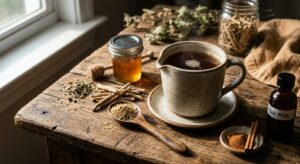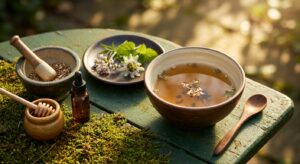
Known as Ling Zhi in Chinese and Mannentake in Japanese, reishi mushroom (Ganoderma lucidum) has been called the “Mushroom of Immortality” for over two thousand years. Ancient Chinese physicians prescribed it to emperors seeking longevity, and Taoist monks brewed it during meditation retreats to cultivate a calm, focused mind. For centuries it was so rare and valuable that only royalty had regular access to it, making it a powerful symbol of divine fortune and spiritual attainment in East Asian cultures.
What sets reishi apart from most herbal teas is that it is not a flowering plant but a woody, shelf-growing fungus. Its active compounds are locked inside tough, fibrous cell walls, which means reishi demands a longer and hotter extraction than delicate herbs like chamomile or lavender. When properly prepared, the resulting brew is a deep, mahogany-colored tea with a complex bitterness that traditional practitioners considered a mark of its potency. Many modern drinkers soften that bitterness with a touch of honey, cinnamon, or adaptogenic companions like ashwagandha.
Contemporary research has begun to validate what Asian herbalists observed for millennia. Studies suggest that reishi’s signature triterpenes and polysaccharides interact with the nervous system and immune pathways in measurable ways, supporting everything from sleep quality to stress hormone regulation. Whether you are drawn to its ancient history, its striking bitter depth, or its science-backed adaptogenic profile, reishi tea offers a genuinely different experience from anything else in the herbal world.
2
cups
Ingredients
- 10 gdried reishi mushroom slices or chunks
- 600 mlwater (100°C / 212°F)
- —raw honey or maple syrup to taste (optional)
- —cinnamon stick (optional, to soften bitterness)
How to Brew
Click on an item below to shop for the recommended items for this recipe on Amazon.
As an Amazon Associate, we earn from qualifying purchases.
- Measure 10 g of dried reishi mushroom slices or chunks per 600 ml of water. If your pieces are very thick, you can break them into smaller fragments using a clean kitchen towel and a mallet to increase surface area.
- Bring water to a full rolling boil at 100°C (212°F) in a small saucepan. Add the reishi pieces directly to the boiling water rather than using an infuser, as the long extraction requires full immersion and circulation.
- Reduce the heat to a gentle simmer. Cover the saucepan with a lid to prevent aromatic compounds from escaping with the steam, and simmer for 20 to 30 minutes. The liquid will darken to a deep mahogany brown as compounds are released.
- Remove from heat and allow to rest for 2 minutes. Strain the liquid through a fine mesh strainer into your mugs, pressing the reishi pieces gently with the back of a spoon to extract any remaining liquid.
- Add honey, maple syrup, or a cinnamon stick to taste. Drink warm and slowly – this tea is meant to be savored rather than rushed.
- Measure 12 g of dried reishi mushroom slices into a clean glass jar. Use slightly more mushroom than you would for hot brewing to compensate for the lower extraction efficiency of cold water.
- Pour 700 ml of cold, filtered water over the reishi pieces. The water should be cold or at room temperature – do not use warm water, as this changes the extraction profile and defeats the purpose of cold brewing.
- Seal the jar with a lid and leave it at room temperature for 1 hour to begin the initial extraction. Then transfer the sealed jar to the refrigerator.
- Allow the reishi to cold steep in the refrigerator for 12 to 18 hours. The longer end of this range will produce a deeper, more complex flavor. Do not exceed 24 hours, as the brew may become overly bitter and the quality can begin to decline.
- Remove the jar from the refrigerator and strain the liquid through a fine mesh strainer or cheesecloth into glasses filled with ice. The cold brew will appear a lighter amber than a hot decoction. Sweeten lightly with honey stirred in at room temperature if desired, and serve immediately.
- Measure 15 to 20 g of dried reishi slices and add them to a ceramic or clay pot, or a stainless steel saucepan. Traditional practitioners favor uncoated clay or ceramic vessels, which are believed to preserve the medicinal quality of the brew without reactive metal interference.
- Add 1 liter of cold, filtered water to the pot. Starting with cold water allows the mushroom to begin releasing compounds gradually as the temperature rises, which traditional herbalists believe produces a fuller extraction.
- Bring the water and reishi to a full boil over medium-high heat, then immediately reduce to a low boil or a vigorous simmer. The water should be actively moving but not furiously bubbling. Cover partially with a lid to allow steam to escape while retaining most of the liquid.
- Maintain this low boil for 45 to 60 minutes, checking occasionally to ensure the liquid does not boil dry. If the water reduces by more than half, add a small amount of hot water to maintain adequate volume.
- After 45 to 60 minutes, the liquid should have reduced to approximately 500 to 600 ml of a very dark, concentrated brew. Remove from heat and strain through a fine mesh strainer or cheesecloth, pressing the mushroom pieces firmly to capture all liquid.
- Pour into small cups or bowls and sip slowly in 120 to 150 ml servings. The decoction can be stored in the refrigerator for up to 3 days and gently reheated. Do not boil it again after storage.
Health Benefits
Reishi’s ganoderic acids and adenosine content modulate neurotransmitter activity associated with sleep regulation, including the GABAergic system. A 2012 study published in the Journal of Ethnopharmacology found that reishi polysaccharide extract significantly increased total sleep time and non-REM sleep in animal models.
As a classic adaptogen, reishi has been shown in multiple studies to help regulate cortisol and adrenal activity under chronic stress. Its triterpenes appear to dampen the hyperactivation of the hypothalamic-pituitary-adrenal axis, promoting a more balanced physiological response to daily stressors.
Reishi’s beta-glucans are among the most studied immunomodulatory compounds in natural medicine. Research shows they stimulate activity in natural killer cells, T-lymphocytes, and macrophages, helping the body mount more effective defenses against pathogens and abnormal cell growth.
A randomized controlled trial involving patients with neurasthenia found that reishi supplementation significantly reduced fatigue and improved overall well-being after eight weeks. This is believed to result from its effects on mitochondrial function and its ability to lower oxidative stress in muscle tissue.
Reishi has a long history of use in traditional Chinese medicine as a liver tonic. Modern research supports this, with studies showing that ganoderic acids and polysaccharides help protect liver cells from oxidative damage and may assist in regulating liver enzyme levels in those with mild hepatic stress.
🧪 Key Bioactive Compounds
The Science Behind Reishi Mushroom
The biological activity of reishi mushroom tea is anchored in two primary compound classes: triterpenes and polysaccharides. The triterpenes, most notably the ganoderic acids, are bitter lanostane-type compounds unique to Ganoderma species. Research has shown that ganoderic acids interact with the GABA-A receptor, the same pathway targeted by many pharmaceutical sleep and anxiety medications, producing a mild sedative and anxiolytic effect without the risk of dependency associated with synthetic drugs. These compounds also inhibit histamine release, contributing to reishi’s anti-allergic and anti-inflammatory properties.
The polysaccharides in reishi, particularly the beta-D-glucans, represent a second and equally important pharmacological front. These long-chain sugar molecules are too large to be absorbed directly into the bloodstream in significant quantities, but they exert profound effects by binding to pattern-recognition receptors on immune cells in the gut and bloodstream. This binding triggers downstream immune signaling, increasing the production and activity of natural killer cells, macrophages, and T-lymphocytes. This mechanism is why reishi is classified as a biological response modifier in pharmacological literature, capable of upregulating immune function when it is suppressed and helping to balance it when overactive.
Perhaps most relevant to its sleep reputation is reishi’s naturally occurring adenosine content. Adenosine is a well-documented endogenous sleep regulator that accumulates in the brain throughout waking hours, progressively increasing what scientists call sleep pressure. Caffeine works by blocking adenosine receptors, which is why it delays sleep onset. Reishi tea, by contributing exogenous adenosine alongside its GABA-modulating triterpenes, creates a complementary biochemical environment that supports natural sleep architecture. This dual action on both the GABAergic and adenosinergic systems offers a compelling scientific explanation for what practitioners of traditional Chinese medicine have observed and prescribed for over two thousand years.
Brewing Tips
- Do not discard your reishi pieces after the first brew. Dried reishi can be re-simmered two or three times, with each successive decoction yielding progressively lighter but still nutritious tea. Store spent pieces in the refrigerator between uses.
- Source reishi from reputable suppliers who provide third-party testing for heavy metals and contaminants. Because mushrooms are powerful bioaccumulators, they can absorb toxins from their growing substrate, making quality sourcing especially important.
- If you find the bitterness too intense, try pairing reishi with licorice root during the decoction. Licorice is a traditional pairing in Chinese herbal medicine that naturally sweetens the brew and is also believed to enhance the absorption of reishi’s active compounds.