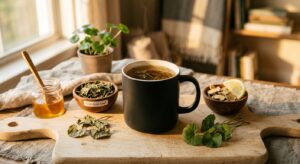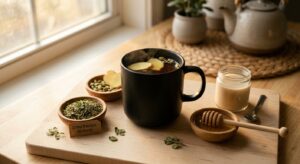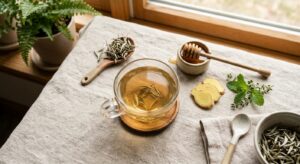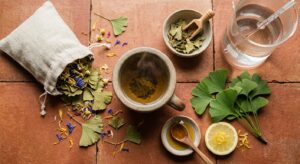
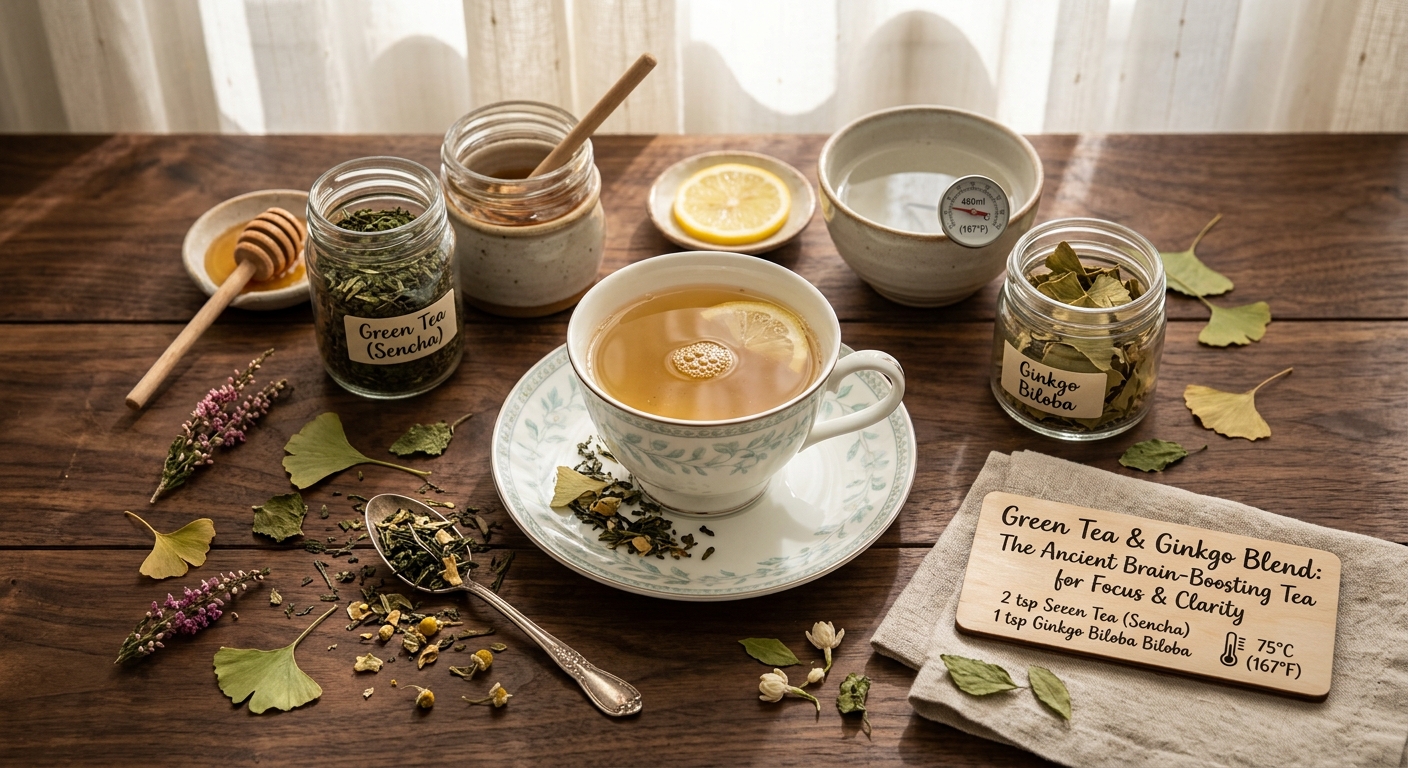
Few herbal blends carry as much historical weight as green tea paired with ginkgo biloba. Green tea has been revered in Chinese and Japanese cultures for over 4,000 years, prized not only as a beverage but as a cornerstone of meditative practice and scholarly life. Ginkgo biloba, sometimes called a living fossil, is the sole surviving species of an ancient tree lineage that predates the dinosaurs. Its fan-shaped leaves have been used in Traditional Chinese Medicine for centuries to sharpen the mind, support circulation, and ease respiratory complaints. When these two botanicals meet in a single cup, the result is something genuinely greater than the sum of its parts.
What makes this blend so compelling is the elegant synergy between its two stars. Green tea contributes L-theanine, a calming amino acid that smooths out the stimulating effects of caffeine, producing a state of focused alertness that practitioners of Zen Buddhism recognized long before modern neuroscience could explain it. Ginkgo biloba adds its own dimension by enhancing cerebral blood flow, helping nutrients and oxygen reach the brain more efficiently. Together, these mechanisms converge on the same goal: a clear, attentive mind that can sustain concentration without the anxious edge that so many caffeinated drinks produce.
The sensory experience of this blend is equally rewarding. A high-quality green tea base, whether a grassy Japanese sencha or a sweeter Chinese dragonwell, provides a fresh, vegetal foundation with gentle umami depth. Ginkgo leaf tea contributes a subtly bitter, slightly earthy note and a faint nuttiness that rounds out the cup beautifully. The brew is pale gold to soft green in the cup, and the aroma carries delicate grassy and herbaceous tones. Whether you are preparing for a long work session, studying for an exam, or simply seeking a mindful morning ritual, this blend offers one of the most thoughtfully crafted focuses teas nature has to offer.
2
cups
Ingredients
- 2 tsploose-leaf green tea (sencha or dragonwell)
- 1 tspdried ginkgo biloba leaves
- 480 mlwater (75°C / 167°F for hot brew)
- —raw honey or agave to taste (optional)
- —thin lemon slice to taste (optional)
How to Brew
Click on an item below to shop for the recommended items for this recipe on Amazon.
As an Amazon Associate, we earn from qualifying purchases.
- Heat filtered water to 75 to 80°C (167 to 176°F). If using a standard kettle, bring water to a full boil then let it rest uncovered for 5 to 7 minutes until it drops to the correct temperature.
- Warm your teapot or mug by swirling a small amount of the hot water inside for 30 seconds, then discard. This prevents the vessel from pulling heat away from your steep.
- Combine 2 teaspoons of loose-leaf green tea and 1 teaspoon of dried ginkgo biloba leaves in a tea infuser or strainer basket. Use slightly heaped measures for a more robust cup.
- Place the infuser in the warmed vessel and pour 480 ml of the temperature-controlled water slowly over the leaves, ensuring all plant material is saturated.
- Steep for 2 to 3 minutes. Check at the 2-minute mark and taste, extending by 30-second intervals if you prefer a stronger brew. Do not exceed 4 minutes or bitterness will dominate.
- Remove the infuser promptly, add honey or a squeeze of lemon if desired, and sip while hot. The ginkgo note becomes more pronounced as the tea cools slightly.
- Measure 3 teaspoons of loose-leaf green tea and 1.5 teaspoons of dried ginkgo biloba leaves into a clean glass jar or pitcher. The ratio is slightly higher than hot brew to compensate for the gentler cold extraction.
- Pour 600 ml of cold, filtered water (room temperature or straight from the refrigerator) over the leaves. Do not use warm water, as this will trigger fast extraction and reintroduce bitterness.
- Stir gently with a spoon to ensure all the plant material is submerged and evenly distributed in the water.
- Cover the jar tightly with a lid or plastic wrap and place in the refrigerator. Allow to steep for 6 to 8 hours. For a lighter, more delicate cup, check at 6 hours. For a fuller-bodied brew with more pronounced ginkgo earthiness, steep the full 8 hours or overnight.
- Strain the blend through a fine mesh strainer or cheesecloth into a clean pitcher, pressing the leaves gently to release the last drops of liquid.
- Serve over ice in tall glasses. Add a slice of lemon or a drizzle of agave if desired. The cold brew will keep refrigerated for up to 48 hours.
- Heat 300 ml of filtered water to 75 to 80°C (167 to 176°F), the same temperature as the standard hot brew to protect the delicate green tea from scorching.
- Combine 4 teaspoons of loose-leaf green tea and 2 teaspoons of dried ginkgo biloba leaves in a small teapot or heatproof measuring jug. The doubled herb ratio relative to water volume is what creates the concentrate.
- Pour the temperature-controlled water over the leaves and steep for 4 to 5 minutes. This is slightly longer than the standard hot brew because dilution will balance the intensity when you serve it.
- Strain the concentrate through a fine mesh strainer into a clean glass jar, pressing the leaves lightly. Allow it to cool to room temperature before sealing and refrigerating.
- To serve hot, combine equal parts concentrate and freshly heated water (75 to 80°C) in a mug. To serve iced, pour the concentrate over a glass filled with ice, allowing the ice to dilute it naturally. Sweeten to taste and enjoy immediately.
Health Benefits
The combination of green tea’s L-theanine and caffeine is one of the most well-researched nootropic pairings in nutritional science. Multiple double-blind studies have demonstrated that this duo improves attention, working memory, and reaction time more effectively than either compound alone, and the addition of ginkgo’s circulation-enhancing terpenoids further supports optimal brain function.
Ginkgo biloba’s ginkgolides inhibit platelet-activating factor and promote vasodilation in cerebral arteries, helping to increase oxygen and glucose delivery to brain tissue. This mechanism has been studied extensively for its role in supporting cognitive function in both healthy adults and older populations.
Both green tea catechins, particularly EGCG, and ginkgo flavonol glycosides are among the most potent plant-derived antioxidants studied to date. Regular consumption may help neutralize the reactive oxygen species that contribute to neuronal aging and cognitive decline over time.
The moderate caffeine content of green tea (roughly 25 to 45 mg per cup) is modulated by L-theanine, which inhibits the overstimulation of excitatory neurotransmitters. This produces a uniquely smooth energy lift, described by many as alert but relaxed, making this blend far less likely to cause the anxiety or crash associated with coffee.
Standardized ginkgo extracts have been studied in numerous clinical trials for their effects on memory and cognitive decline. While results are mixed for disease prevention, evidence suggests meaningful benefits for processing speed and short-term memory in healthy middle-aged and older adults when consumed consistently.
🧪 Key Bioactive Compounds
The Science Behind Green Tea And Ginkgo Biloba
The science behind this blend begins with one of the most celebrated nootropic combinations in nutritional research: the L-theanine and caffeine pairing found in green tea. L-theanine is a non-protein amino acid almost exclusively found in the Camellia sinensis plant. It readily crosses the blood-brain barrier and promotes alpha brain wave activity, the same relaxed-but-alert mental state associated with meditation. Caffeine, meanwhile, competitively blocks adenosine receptors, the receptors responsible for building feelings of sleepiness, thereby sustaining alertness and improving reaction time. When consumed together, as they naturally occur in green tea, these two compounds produce a synergistic effect on sustained attention and working memory that has been confirmed in multiple randomized controlled trials. Participants consistently report feeling more focused and less mentally fatigued compared to caffeine or L-theanine consumed in isolation.
Ginkgo biloba contributes a pharmacologically distinct but complementary set of mechanisms. The two primary active compound classes, terpenoid lactones (including ginkgolides A, B, C, and bilobalide) and flavonol glycosides (including quercetin, kaempferol, and isorhamnetin), work together through different pathways. The ginkgolides are potent antagonists of platelet-activating factor, a signaling molecule involved in platelet aggregation and vascular constriction. By inhibiting this molecule, ginkgolides promote vasodilation and improve microcirculation, particularly in cerebral blood vessels. This means more oxygen and glucose reach brain cells during cognitive tasks. Bilobalide has shown neuroprotective effects in cell studies, appearing to preserve mitochondrial membrane integrity and reduce neuronal apoptosis under conditions of oxidative stress.
From an antioxidant standpoint, this blend is remarkably well-armed. EGCG, green tea’s most abundant catechin, is one of the most studied plant polyphenols in biomedical research. It scavenges reactive oxygen species, chelates pro-oxidant metal ions, and may modulate inflammatory signaling pathways in neural tissue. Ginkgo’s flavonol glycosides act through similar free-radical quenching mechanisms, and some research suggests they may cross the blood-brain barrier more readily than many other plant flavonoids. The combined antioxidant load of a daily cup of this blend represents a meaningful contribution to the body’s defenses against the oxidative processes that accumulate in the brain with age, making this not just a short-term focus aid but a potentially valuable long-term wellness ritual.
Brewing Tips
- Always use water below 80°C for green tea, no matter which brewing method you choose. Even a few degrees too hot can denature the delicate amino acids and catechins that make green tea so beneficial, turning a nuanced cup into a bitter, astringent one.
- Source your ginkgo biloba leaves from a reputable herbal supplier that provides standardized or quality-tested dried leaf products. Avoid using leaves harvested directly from ornamental ginkgo trees in parks or gardens, as the processing, drying, and leaf age significantly affect compound content and safety.
- Brew this blend in the mid-morning rather than first thing in the morning. Your cortisol levels are naturally at their peak in the first hour after waking, and introducing caffeine during this window can blunt its effectiveness. Brewing around 9:30 to 10:30 am, when cortisol begins to dip, allows the blend to have its greatest energizing and focusing effect.