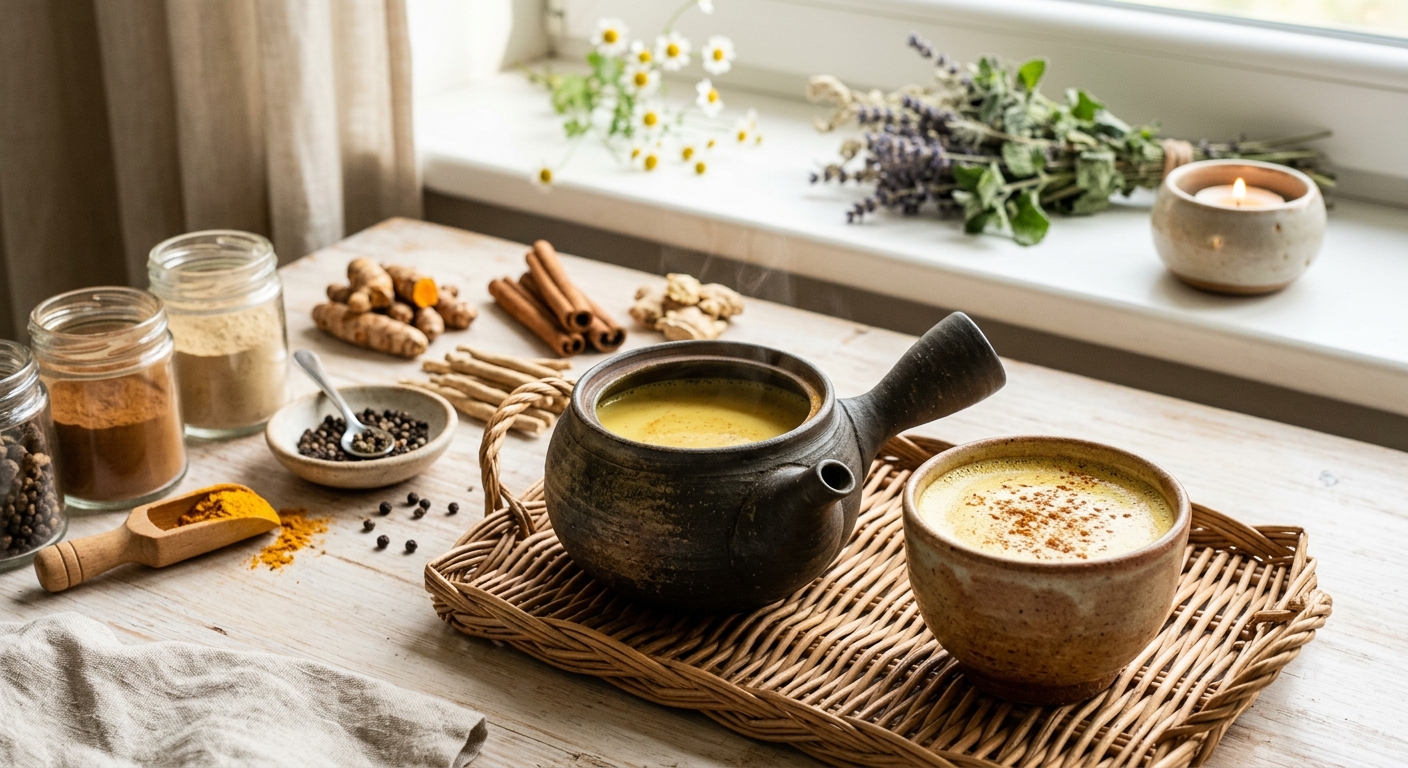
Long before golden lattes became a fixture of modern wellness culture, Ayurvedic healers in ancient India were preparing haldi doodh, a warming blend of turmeric and milk, as a nightly tonic for healing, immunity, and restorative sleep. Known today as Moon Milk, this luminous golden drink has journeyed from clay pots in Indian households to ceramic mugs in kitchens worldwide, carrying with it centuries of plant wisdom. The name Moon Milk evokes its purpose perfectly: a soft, celestial comfort designed to be consumed by moonlight, as the day winds down and the body prepares for deep renewal.
What makes this blend genuinely remarkable is the synergy of its ingredients. Turmeric, the golden root at the heart of the recipe, contains curcumin, one of the most studied anti-inflammatory compounds in the natural world. When combined with black pepper (which dramatically increases curcumin bioavailability), warming cinnamon, and adaptogenic ashwagandha, the result is a drink that works on multiple physiological pathways at once. It calms the nervous system, soothes inflammation that can disrupt sleep, and gently nudges the body toward its natural circadian rhythm.
This is not a tea in the strictest sense, but it belongs to a broader family of herbal infusions and spiced milk preparations that herbalists and folk medicine traditions have long recognized as powerful allies for rest and recovery. Whether you brew it hot on a cold winter night, prepare a chilled version for warm-season evenings, or simmer it slowly on the stovetop as a concentrate, Moon Milk Turmeric Tea offers a grounding, sensory ritual that signals to your whole system: it is time to slow down.
2
cups
Ingredients
- 2 tspground turmeric
- 1 tspground cinnamon
- 0.5 tspashwagandha root powder
- 0.25 tspfreshly ground black pepper
- 0.25 tspground ginger
- 480 mlwhole milk or unsweetened oat milk
- 60 mlwater
- —raw honey or maple syrup to taste
- —a small pinch of cardamom (optional)
How to Brew
Click on an item below to shop for the recommended items for this recipe on Amazon.
As an Amazon Associate, we earn from qualifying purchases.
- Combine ground turmeric, cinnamon, ashwagandha powder, black pepper, and ground ginger in a small bowl and whisk together so the spices are evenly distributed before they hit the liquid.
- Pour the milk and water into a small saucepan over medium-low heat. Add the spice blend and whisk continuously to prevent clumping and ensure the turmeric disperses evenly throughout the milk.
- Heat gently, stirring often, until the mixture reaches a low simmer with small bubbles forming around the edges. This should take 6 to 8 minutes. Do not allow the milk to boil vigorously.
- Reduce the heat to the lowest setting and continue to steep for a further 2 minutes, stirring occasionally, so the spice compounds have time to fully infuse into the warm milk.
- Remove from heat and strain through a fine mesh strainer into two mugs to catch any sediment or coarse spice particles. Stir in honey or maple syrup to taste, and serve immediately while fragrant and warm.
- In a glass jar, combine the ground turmeric, cinnamon, ashwagandha powder, black pepper, and ground ginger with 2 tablespoons of warm water (not cold). Stir into a smooth paste. This step is critical because it hydrates the spice powders and prevents them from floating or clumping in cold milk.
- Add the cold milk to the jar with the spice paste. Seal the lid and shake vigorously for 30 to 45 seconds until the paste is fully incorporated and the milk takes on a uniform golden hue.
- Place the jar in the refrigerator and leave to cold infuse for a minimum of 8 hours and up to 12 hours. The long, cold steep draws out fat-soluble curcumin slowly, resulting in a mellow depth of flavor without harshness.
- When ready to serve, shake the jar again as the spices will have settled. Strain through a fine mesh strainer into a glass filled with ice, pressing gently on the solids to extract maximum flavor.
- Stir in honey dissolved in a teaspoon of warm water (so it blends into the cold liquid), taste, and adjust sweetness. Garnish with a light dusting of cinnamon on top.
- Combine 4 tablespoons of ground turmeric, 2 tablespoons of ground cinnamon, 1 tablespoon of ashwagandha powder, 1 teaspoon of ground black pepper, and 1 teaspoon of ground ginger in a small saucepan.
- Add 120 ml of water and place the saucepan over medium heat. Stir continuously as the mixture heats, combining the dry spices with the water into a thick, uniform paste. This simmering process at high heat activates and concentrates the bioactive compounds, particularly curcumin and piperine.
- Continue stirring over medium heat for 15 to 20 minutes. The mixture will thicken considerably into a deep golden paste. Add a splash more water if it begins to stick to the bottom, and lower the heat as needed to prevent scorching.
- Remove from heat and stir in 2 tablespoons of coconut oil or ghee while the paste is still warm. The fat is essential for binding with curcumin and dramatically improving its absorption when the concentrate is later added to milk.
- Allow the paste to cool completely, then transfer to a sterilized glass jar and refrigerate. To prepare a single serving of Moon Milk, whisk 1 heaped teaspoon of the concentrate into 240 ml of warm milk over low heat for 2 to 3 minutes, sweeten to taste, and serve.
Health Benefits
Ashwagandha’s withanolides have been shown in randomized controlled trials to significantly improve sleep quality, sleep onset latency, and morning alertness in adults with insomnia. Curcumin further supports sleep by reducing neuroinflammation, which is increasingly linked to disrupted sleep cycles.
Ashwagandha is one of the most well-studied adaptogens for stress reduction. Multiple clinical studies have demonstrated that daily supplementation significantly reduces serum cortisol and perceived stress scores, making it particularly valuable as a nighttime winding-down ritual.
Curcumin is a powerful inhibitor of NF-kB, a molecular pathway that drives chronic inflammation. Regular consumption of curcumin with piperine has been associated with reduced inflammatory biomarkers including CRP and IL-6, which can impair sleep quality when elevated.
Cinnamon has been clinically shown to improve insulin sensitivity and slow the post-meal rise in blood glucose. Stable blood sugar during sleep prevents the adrenaline-driven waking that nocturnal hypoglycemia can trigger, allowing for uninterrupted rest.
Turmeric and ginger both have well-documented carminative and anti-spasmodic properties. Consumed as a warm drink before sleep, they calm gut motility and reduce bloating, addressing the digestive discomfort that commonly disrupts sleep in the early hours of the night.
🧪 Key Bioactive Compounds
The Science Behind Turmeric
The science behind Moon Milk Turmeric Tea is a compelling story of synergy. Curcumin, the polyphenolic compound responsible for turmeric’s vivid golden color, has been extensively studied for its inhibition of NF-kB, a transcription factor that activates genes responsible for producing pro-inflammatory cytokines. Chronic low-grade inflammation is now recognized as a key disruptor of healthy sleep architecture, suppressing slow-wave sleep and reducing REM duration. By dampening this inflammatory signaling, curcumin may help restore the deeper, more regenerative sleep stages that most adults are chronically deficient in. The critical caveat is bioavailability: curcumin is poorly absorbed by the gut on its own, which is precisely why the addition of piperine from black pepper is not merely a flavor choice but a pharmacological one. Studies have confirmed that piperine inhibits intestinal glucuronidation of curcumin, increasing its absorption by as much as 2,000 percent.
Ashwagandha’s sleep-supporting mechanisms operate through a different but complementary pathway. The withanolides in ashwagandha root act as adaptogens by modulating the hypothalamic-pituitary-adrenal (HPA) axis, the central stress response system. By reducing the overactivation of this axis, ashwagandha lowers circulating cortisol levels, particularly in the evening when cortisol should naturally be declining. A 2019 randomized, double-blind, placebo-controlled study published in Medicine found that participants taking ashwagandha extract reported significant improvements in sleep onset, total sleep time, and self-reported sleep quality compared to placebo. The fat in the milk base of Moon Milk also serves a functional purpose: curcumin and the volatile turmerones in turmeric are fat-soluble compounds, meaning they are far more effectively absorbed when consumed alongside a lipid source.
Cinnamon rounds out the formula with its ability to attenuate post-meal blood glucose spikes by improving insulin receptor sensitivity and slowing gastric emptying. Nocturnal hypoglycemia, a drop in blood sugar during sleep, triggers a cortisol and adrenaline response that causes waking, often around 2 to 4 a.m. By promoting more stable glycemia through the night, cinnamon helps close one of the most common and underappreciated windows through which restorative sleep escapes. Together, these compounds form a carefully interlocking system that supports sleep not through sedation but through the gradual removal of the physiological barriers that prevent it.
Brewing Tips
- Always pair turmeric with a fat source (whole milk, oat milk with added oil, or a pinch of coconut oil) and black pepper in every preparation. Without both, the majority of curcumin passes through the gut unabsorbed and the therapeutic benefit is significantly reduced.
- Use full-fat or barista-grade oat milk for the richest, creamiest texture. Plant milks with a higher fat content emulsify the spices more effectively and carry the fat-soluble compounds in turmeric far better than thin, watery alternatives.
- Make the Golden Spice Concentrate on Sundays and store it in the fridge so your bedtime ritual is ready to go every night of the week. Consistency is key with adaptogens like ashwagandha: the sleep and stress benefits build cumulatively over two to four weeks of daily use.