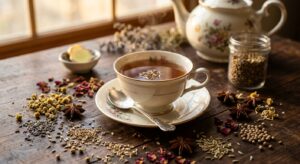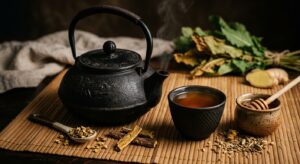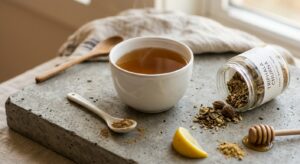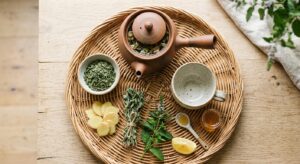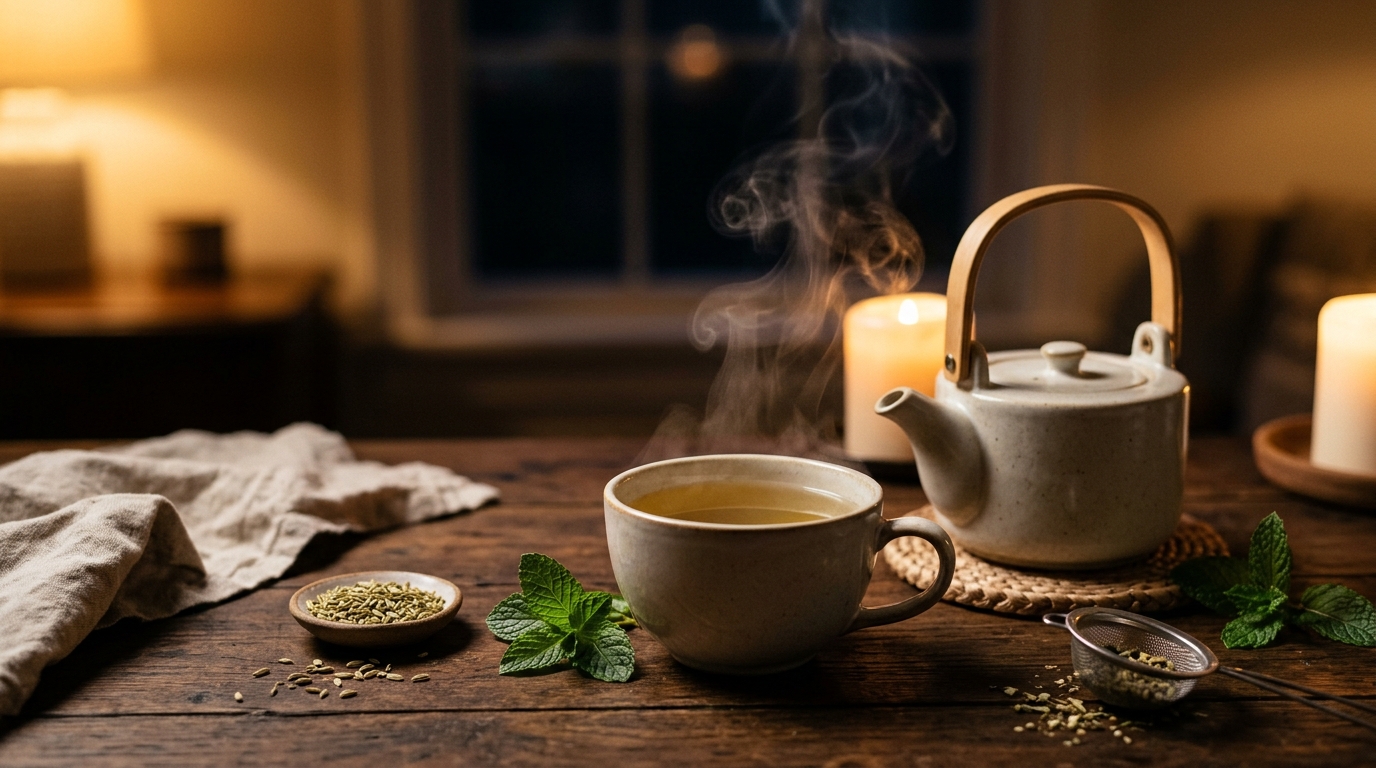
Long before the modern digestif bottle appeared on restaurant tables, cooks across the Mediterranean, India, and the Middle East ended rich meals with something green and aromatic. In Italian homes, a small glass of fennel infusion followed the Sunday feast. In Indian restaurants, a bowl of roasted fennel seeds (saunf) waits by the door, chewed to sweeten the breath and settle the stomach. Peppermint, a natural hybrid of watermint and spearmint, was prized by the ancient Greeks and Romans, who wove it into crowns and scattered it across banquet tables to aid digestion.
Brought together, the two herbs complement each other beautifully. Peppermint brings a bright, cooling menthol lift, while fennel seed contributes a soft, honeyed, licorice-like sweetness that rounds off the sharper edges of the mint. The result is a tea that tastes both refreshing and comforting, a combination that is hard to find in a single herb.
This blend is also wonderfully suited to the evening. Both herbs are naturally caffeine-free, and both have a long tradition of relaxing the gut after a large dinner. Whether you are recovering from a heavy meal, winding down before bed, or simply want a flavorful alternative to dessert, this double-herb digestif is a simple ritual worth adopting.
2
cups
Ingredients
- 2 tspdried peppermint leaves
- 2 tspfennel seeds, lightly crushed
- 480 mlwater (95°C / 203°F)
- —raw honey to taste (optional)
- —a thin strip of lemon peel (optional)
How to Brew
Click on an item below to shop for the recommended items for this recipe on Amazon.
As an Amazon Associate, we earn from qualifying purchases.
- Place the fennel seeds in a mortar or on a cutting board and crush them lightly with the back of a spoon. This cracks the hard outer shell and releases the aromatic oils inside.
- Add the crushed fennel and dried peppermint leaves to a teapot or a large mug with an infuser basket.
- Heat fresh water until just off the boil, about 95°C (203°F). Pour it over the herbs.
- Cover immediately with a lid or saucer to trap the volatile oils, and steep for 7 to 10 minutes. Closer to 10 minutes gives a stronger, more medicinal cup.
- Strain into cups. Stir in a little raw honey if you like, and add a strip of lemon peel for brightness.
- Sip slowly, ideally 15 to 30 minutes after finishing your meal.
- Lightly crush the fennel seeds, then combine 1 tablespoon of fennel and 1 tablespoon of dried peppermint in a clean glass jar.
- Pour in 500 ml of cold, filtered water and stir once to wet all the herbs.
- Seal the jar and refrigerate for 8 to 10 hours, or overnight.
- Strain through a fine mesh sieve or a coffee filter to remove all plant material, which prevents the tea from turning grassy as it sits.
- Serve over ice with a sprig of fresh mint. The cold brew keeps well in the fridge for up to 2 days.
- Crush 1 tablespoon of fennel seeds and combine with 1 tablespoon of dried peppermint in a heatproof jug.
- Pour 250 ml of hot water (95°C / 203°F) over the herbs. This is a concentrated, double-strength brew.
- Cover and steep for 5 to 6 minutes, then strain out the herbs.
- While the tea is still warm, stir in honey or simple syrup if you want a sweetened version, since sweeteners dissolve more easily when hot.
- Fill two tall glasses with ice and pour the hot concentrate over it, adding about 250 ml of cold water to dilute.
- Garnish with fresh mint leaves and a thin slice of lemon or cucumber, and serve immediately.
Health Benefits
Fennel is a classic carminative, meaning it helps the gut release trapped gas, and its anethole relaxes intestinal muscle. Small clinical trials and centuries of traditional use support its role in reducing bloating and colic.
Menthol in peppermint acts as a natural antispasmodic on the smooth muscle of the gut. Enteric-coated peppermint oil has good evidence for easing irritable bowel symptoms, and peppermint tea offers a gentler version of the same effect.
Both herbs stimulate the flow of digestive secretions and help food move smoothly through the stomach and intestines. This makes the tea a pleasant remedy for the heavy, overfull feeling that follows a large meal.
The aromatic oils in both herbs have mild antimicrobial properties and a naturally clean scent, which is why chewing fennel seeds and sipping mint tea are long-standing after-meal customs.
As a caffeine-free blend, this tea suits the hour before bed. The warmth and gentle muscle-relaxing effects can help the body settle after dinner, though the benefit is soothing rather than strongly sedative.
🧪 Key Bioactive Compounds
The Science Behind Peppermint
The digestive reputation of this blend rests on two groups of volatile oils. In peppermint, the dominant compounds are menthol and menthone. Laboratory and clinical research shows that menthol acts as a calcium channel blocker in the smooth muscle cells lining the gut, which reduces the strength of contractions and relieves spasm. This is the same mechanism behind the use of peppermint oil capsules for irritable bowel syndrome, one of the better-supported herbal interventions in gastroenterology.
Fennel works through a different but complementary route. Its principal compound, trans-anethole, gives the seed its sweet anise flavor and has been studied for its carminative and mild antispasmodic effects. Carminatives help the digestive tract expel gas, which is why fennel is traditionally given for bloating and infant colic in many cultures. Fennel seed also contains flavonoids and phenolic acids with antioxidant activity.
A note on preparation: both herbs hold their active compounds in volatile oils, which evaporate easily. This is why covering your tea while it steeps, and crushing the fennel seeds just before brewing, makes a real difference to potency and flavor. While much of the evidence comes from concentrated oils rather than tea, the infusion delivers a gentler dose of the same compounds and is a reasonable, enjoyable way to support digestion.
Brewing Tips
- Crush fennel seeds just before brewing. Whole seeds release very little flavor, while freshly cracked seeds give a fragrant, sweet cup.
- Always cover your cup or teapot while steeping to trap the volatile oils that carry both the flavor and the digestive benefits.
- Use dried peppermint leaves that still smell strongly of mint. If the aroma is faint, the leaves are old and the tea will taste flat.
- For a stronger medicinal effect, steep for the full 10 minutes. For a lighter, more refreshing cup, stop at 6 or 7 minutes.
- Drink the tea 15 to 30 minutes after a meal rather than during it, so it supports digestion without diluting your stomach acids.