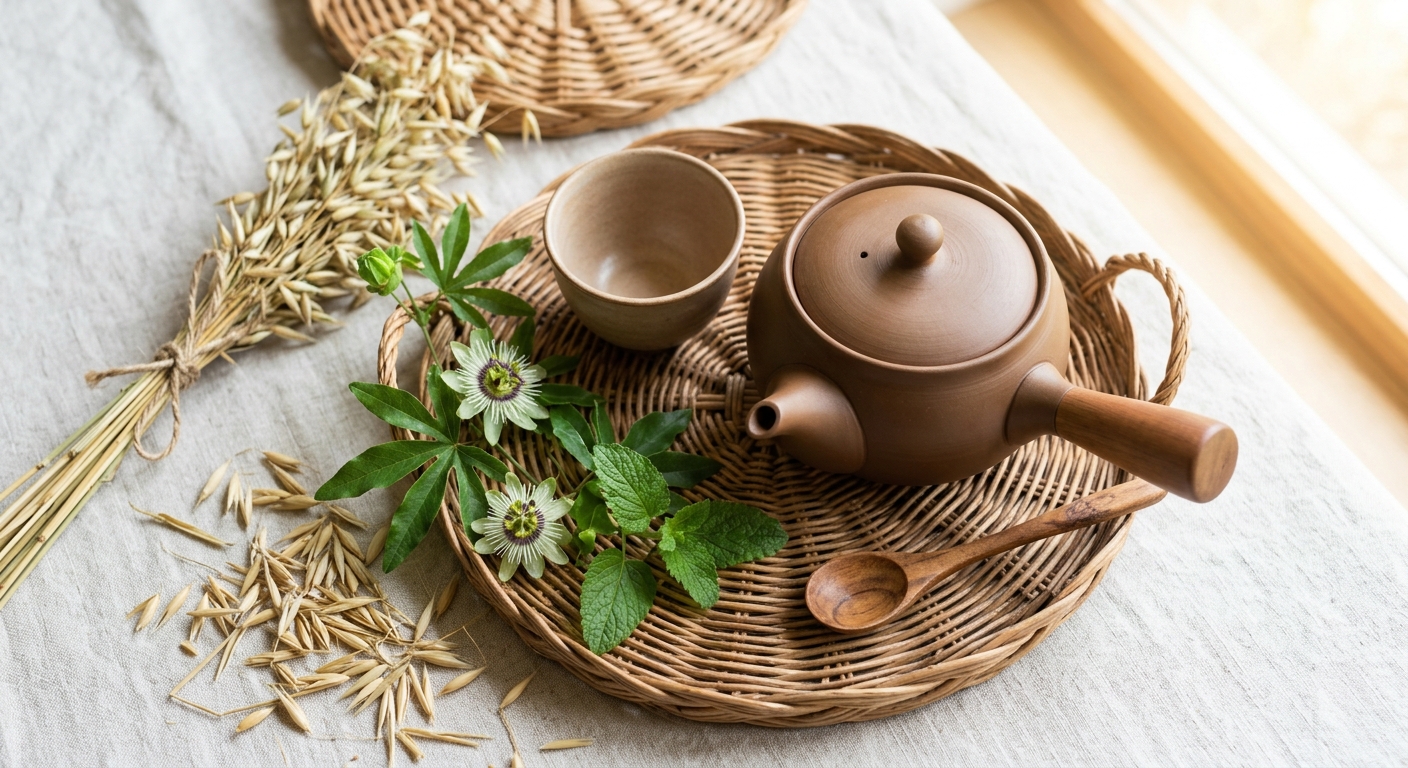
Long before oats became a breakfast staple, healers across medieval Europe were steeping the green stalks of the oat plant in hot water and prescribing the resulting tea for frazzled nerves, mental exhaustion, and restless nights. Oat straw, the name given to the dried green stems and leaves of Avena sativa harvested just as the plant begins to flower, has been a cornerstone of European herbal medicine for centuries. Nicholas Culpeper, the seventeenth-century English herbalist, praised oats for restoring vitality to the depleted, and traditional folk healers in Germany and the British Isles long used oat straw preparations to calm what they called a “weak or overworked” nervous system.
What makes oat straw genuinely remarkable among calming herbs is its nutritive depth. Unlike many nervines that act primarily through sedating compounds, oat straw works by feeding the nervous system directly. It is unusually rich in bioavailable silica, magnesium, calcium, and B vitamins, nutrients that the body consumes rapidly under stress. This means oat straw does not simply blunt anxiety or force sleep. Instead, it steadily rebuilds the body’s capacity for calm, making it particularly well suited to people who are chronically stressed, burnt out, or caught in a cycle of poor sleep. The tea has a gentle, nourishing quality that sets it apart from stronger sleep herbs like valerian or hops.
The flavor of oat straw tea is mild, grassy, and faintly sweet, reminiscent of fresh hay warmed by the sun, with a subtle creaminess that makes it one of the more approachable herbal teas for newcomers. It can be sipped every evening as a wind-down ritual, blended beautifully with calming companions like passionflower or lemon balm, and taken as a long cold infusion to maximize its mineral content. Whether you are seeking support for occasional sleeplessness, ongoing stress, or simply a quiet, nourishing evening cup, oat straw tea offers a profoundly gentle path back to rest.
2
cups
Ingredients
- 4 tspdried oat straw (cut and sifted)
- 480 mlwater (90 to 95°C / 194 to 203°F)
- —raw honey or a splash of oat milk to taste (optional)
- —dried passionflower or lemon balm (optional, for blending)
How to Brew
Click on an item below to shop for the recommended items for this recipe on Amazon.
As an Amazon Associate, we earn from qualifying purchases.
- Bring filtered water to approximately 90 to 95°C (194 to 203°F). If you do not have a temperature-controlled kettle, bring water to a full boil and allow it to rest for 60 seconds before pouring.
- Add 2 teaspoons of dried, cut-and-sifted oat straw per 240 ml of water directly into a tea infuser, muslin bag, or a heatproof pot. For 2 servings, use 4 teaspoons in 480 ml of water.
- Pour the hot water over the oat straw, making sure all of the herb is submerged. Cover the mug or pot immediately with a lid, a small saucer, or a piece of cloth to trap heat and preserve aromatic compounds.
- Steep for 20 to 30 minutes. The longer the steep, the more minerals and nervine compounds are extracted. For a deeper therapeutic effect, steep the full 30 minutes.
- Strain the tea thoroughly through a fine-mesh strainer into your mug, pressing the spent herb gently against the strainer to capture the last of the liquid.
- Sweeten lightly with raw honey if desired, or stir in a splash of oat milk to complement the grain-forward flavor. Sip slowly in the hour before bed.
- Place 4 to 6 teaspoons of dried oat straw into a clean glass jar. This higher ratio compared to hot brewing compensates for the slower, gentler extraction of the cold process.
- Pour 480 ml of cool, filtered water (room temperature, around 20 to 22°C / 68 to 72°F) over the oat straw. Stir gently with a long spoon to ensure all the herb is fully submerged and no dry pockets remain.
- Cover the jar with a lid or cloth secured with a rubber band to keep out dust and refrigerator odors. Allow the jar to sit at room temperature for the first 1 to 2 hours to begin extraction, then transfer to the refrigerator.
- Infuse in the refrigerator for a total of 8 to 12 hours, or overnight. By morning, the water will have taken on a pale golden-green hue and a noticeably softer, slightly silky texture from the dissolved minerals.
- Strain through a fine-mesh strainer or cheesecloth into a clean glass or jar, pressing the herb gently to extract all liquid. The finished infusion can be stored in the refrigerator for up to 24 hours.
- Serve cold as-is for a refreshing, mineral-rich tonic, or gently warm a portion of the infusion on the stove if you prefer it tepid. Add a few drops of honey or a slice of cucumber for a spa-like variation.
- Add 5 to 6 teaspoons of dried oat straw to a small, non-reactive saucepan (stainless steel or ceramic-coated). For a concentrate intended for 2 servings, use 500 ml of cold, filtered water.
- Place the saucepan on the stove over medium heat. Bring the water to a gentle simmer, not a rolling boil. A vigorous boil can degrade some of the more delicate nervine compounds, so watch the pot carefully and reduce the heat once small bubbles appear consistently.
- Maintain a gentle, steady simmer for 25 to 40 minutes with the lid slightly ajar to allow a small amount of steam to escape. Stir the herb occasionally to ensure even extraction. The liquid will reduce slightly and deepen in color to a warm amber.
- After simmering, remove the pan from the heat and allow the decoction to rest, covered, for an additional 10 minutes. This resting period allows any remaining compounds to continue steeping as the temperature gently drops.
- Strain through a fine-mesh strainer or cloth into a warmed mug or teapot, pressing the herb firmly to extract all of the rich liquid. You should have approximately 350 to 400 ml of concentrated tea after reduction.
- Taste the decoction before adding anything. It will be noticeably more robust and earthy than a standard hot brew. Sweeten with honey, add a cinnamon stick for warmth, or top up with a small amount of hot water if the flavor is more concentrated than you prefer.
Health Benefits
Oat straw’s combination of magnesium, nervine alkaloids, and B vitamins addresses the root nutritional deficiencies that often underlie chronic insomnia and poor sleep quality. Magnesium in particular regulates melatonin production and calms overactive NMDA receptor activity, making it easier for the brain to transition into deep sleep stages.
Traditional herbalists classify oat straw as a trophorestorative nervine, meaning it does not simply sedate but genuinely rebuilds nervous system resilience over time. Regular consumption has been associated with reduced anxiety scores and improved self-reported calmness in clinical observations, particularly in people experiencing burnout or nervous exhaustion.
A 2011 clinical study published in the Journal of Alternative and Complementary Medicine found that a single dose of green oat extract significantly improved attention, concentration, and cognitive performance in older adults. This effect is thought to stem from oat straw’s ability to inhibit the enzyme phosphodiesterase-4 (PDE4), which increases blood flow and neurotransmitter activity in the brain.
The body burns through magnesium, calcium, and B vitamins at an accelerated rate during periods of sustained stress. Oat straw tea provides a bioavailable source of these nutrients in a form that is gentle on the digestive system, making it a practical daily tonic for those in stressful seasons of life.
Avenanthramides found in oat straw promote nitric oxide synthesis in blood vessel walls, leading to mild vasodilation and improved circulation. This effect may reduce blood pressure over time and supports the relaxed, physically comfortable state that is conducive to falling and staying asleep.
🧪 Key Bioactive Compounds
The Science Behind Oat Straw
The science behind oat straw’s calming effects is rooted in its unusually rich nutritional and phytochemical profile. Among the most studied mechanisms is the herb’s action on phosphodiesterase-4 (PDE4), an enzyme that breaks down cyclic AMP (cAMP) in brain cells. By inhibiting PDE4, compounds in green oat extracts allow cAMP to accumulate, which in turn enhances dopaminergic and noradrenergic signaling in the prefrontal cortex. This mechanism explains the paradoxical observation that oat straw can both calm anxiety and improve focus simultaneously, effects that seem opposite but arise from the same underlying improvement in regulated neuronal activity.
Oat straw’s nervine properties are further supported by its mineral content. Magnesium, present in meaningful concentrations in both hot and cold preparations, acts as a natural NMDA receptor antagonist. NMDA receptors are glutamate-gated ion channels involved in excitatory neurotransmission, and their overactivation is closely linked to anxiety, hyperarousal, and fragmented sleep. Adequate magnesium keeps these receptors appropriately regulated, reducing neurological excitability and supporting the physiological shift into parasympathetic rest. Additionally, the B vitamins extracted during brewing are cofactors in the synthesis of serotonin and GABA, the brain’s primary calming neurotransmitter.
The avenanthramides unique to Avena sativa add an anti-inflammatory dimension to oat straw’s benefits that is increasingly relevant to sleep science. Chronic low-grade neuroinflammation has been identified as a significant driver of insomnia and mood dysregulation, and avenanthramides have demonstrated the ability to suppress pro-inflammatory cytokine activity and reduce oxidative stress in neural tissue. By addressing inflammation at the neurological level, oat straw may help restore normal sleep architecture over weeks of consistent use, rather than simply inducing drowsiness on any given night. This distinguishes it meaningfully from sedative herbs and makes it particularly well suited to long-term, restorative use.
Brewing Tips
- Always source cut-and-sifted oat straw rather than powdered, as the powder can be difficult to strain fully and may result in a murky, gritty cup.
- Oat straw benefits enormously from a covered steep. Whether you are hot brewing or cold brewing, keeping the vessel covered prevents heat loss and traps volatile aromatic compounds that would otherwise evaporate.
- For the strongest therapeutic effect on sleep, drink oat straw tea consistently every evening for at least two to three weeks. Its benefits are cumulative rather than immediate, building gradually as the nervous system is nourished and mineral stores are replenished.