Long before modern sleep aids filled pharmacy shelves, Roman chamomile was already a cornerstone of European herbalism. Known botanically as Anthemis nobilis (also classified as Chamaemelum nobile), this low-growing perennial has carpeted monastery gardens, cottage lawns, and apothecary plots for more than two thousand years. The Romans, who lent the plant its common name, burned it as incense during religious ceremonies and brewed it to ease fevers and digestive complaints. In medieval England, it was one of the celebrated “strewing herbs,” scattered across floors so that each footstep released its sweet, apple-like fragrance throughout the room.
Roman chamomile is often confused with its close botanical cousin German chamomile (Matricaria chamomilla), but the two are distinct in both chemistry and character. Roman chamomile flowers are larger, slightly more bitter, and carry a richer, fruitier aroma owing to a higher concentration of esters such as isobutyl angelate. Its flavor is more robust and complex than German chamomile, with a warm, honey-sweet depth beneath the signature apple note. Herbalists in the Western tradition have historically considered Roman chamomile the superior choice for nervous tension, restlessness, and what older texts called “an overactive mind at bedtime.”
Today, Roman chamomile tea sits comfortably at the intersection of folk wisdom and emerging science. Researchers have identified a suite of bioactive compounds, including the flavonoid apigenin, that act directly on the brain’s calming receptors. Whether you come to it for its storied history, its enchanting scent, or its genuine ability to soften the edges of a stressful day, a cup of Roman chamomile brewed well is one of the simplest and most rewarding rituals in the world of herbal tea.
2
cups
Ingredients
- 2 tbspdried Roman chamomile flowers
- 480 mlwater (90°C / 194°F)
- —raw honey to taste (optional)
- —thin slice of fresh lemon (optional)
How to Brew
Click on an item below to shop for the recommended items for this recipe on Amazon.
As an Amazon Associate, we earn from qualifying purchases.
- Heat fresh, filtered water to 90 to 93°C (194 to 199°F). If you do not have a temperature-controlled kettle, bring water to a full boil and let it rest uncovered for 2 minutes before using.
- Measure 1 tablespoon of dried Roman chamomile flowers per cup (240 ml) and place them in a tea infuser or directly into a warmed teapot. Pre-warming the teapot with a quick rinse of hot water helps maintain brewing temperature.
- Pour the heated water slowly and evenly over the chamomile flowers, ensuring all the flowers are fully saturated. Cover the cup or teapot immediately with a lid or small saucer to trap the volatile aromatic compounds.
- Steep for 5 minutes for a lighter, more floral cup or up to 7 minutes for a deeper, more sedative brew. Do not steep beyond 8 minutes or bitterness from plant tannins will become pronounced.
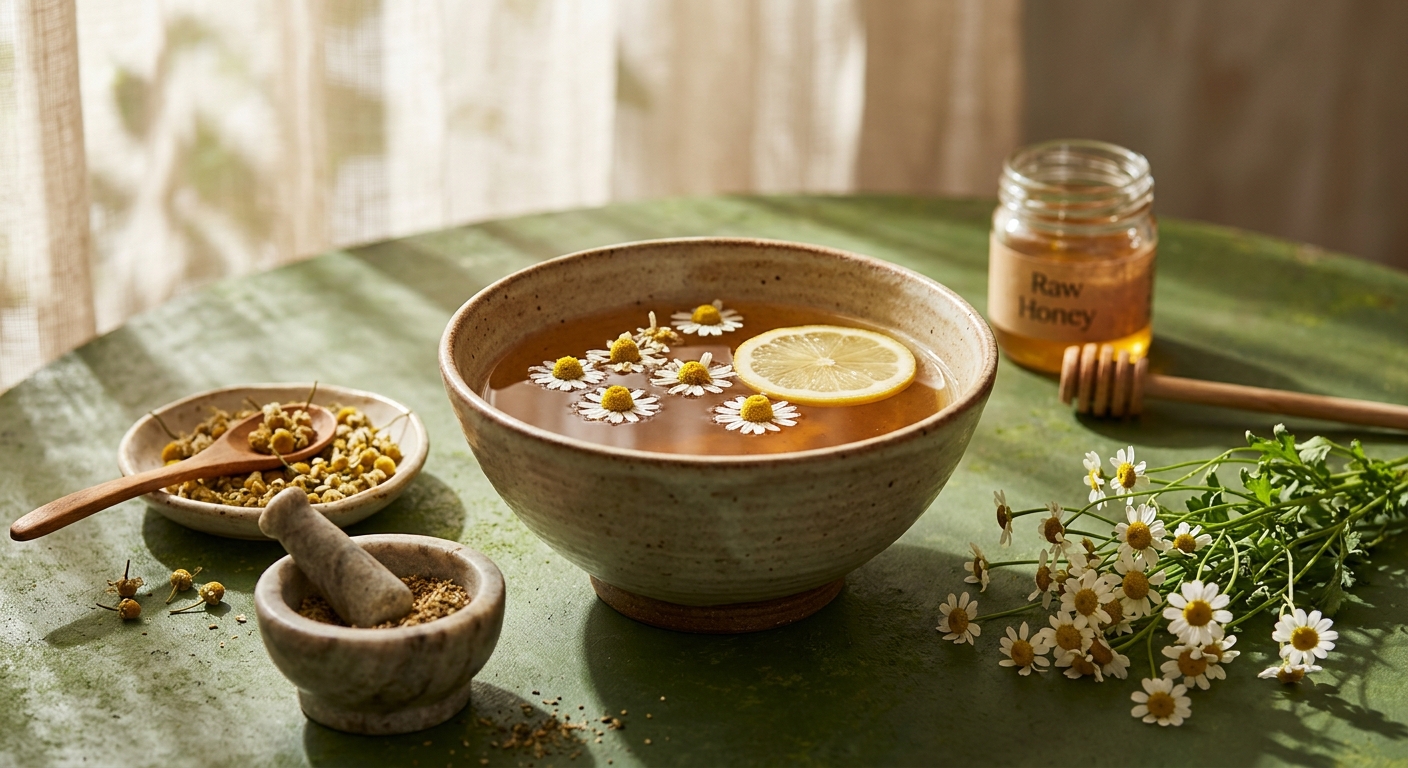
- Remove the infuser or strain the flowers through a fine-mesh strainer. Add raw honey and a thin slice of fresh lemon if desired. Sip slowly in the 30 minutes before bedtime for best effect.
- Measure 3 tablespoons of dried Roman chamomile flowers for every 480 ml of filtered water. The higher ratio compensates for the reduced extraction efficiency of cold water.
- Place the chamomile flowers in a clean glass jar. Pour cold, room-temperature filtered water over the flowers and stir gently to ensure all the flowers are submerged.
- Loosely cover the jar with a lid or wrap the top with a clean cloth secured with a rubber band. Let the jar sit at room temperature for 1 hour to allow initial aromatic extraction to begin.
- Transfer the jar to the refrigerator and continue steeping for 8 to 12 hours (overnight is ideal). The slow cold extraction produces a tea that is noticeably sweeter and more floral than hot-brewed versions.
- Strain the infusion through a fine-mesh strainer or cheesecloth into a clean pitcher or jar. Serve over ice, with a drizzle of honey or a sprig of fresh mint. Refrigerate any remainder and consume within 48 hours.
- Measure 2.5 tablespoons of dried Roman chamomile flowers for every 480 ml of cold, filtered water. Place the flowers in a large clear glass jar. Clear glass is essential so that sunlight can penetrate and warm the infusion evenly.
- Fill the jar with cold filtered water, stir gently to wet all the flowers, then seal the jar tightly with its lid to prevent evaporation and retain the volatile aromatic compounds.
- Place the sealed jar in a spot that receives direct sunlight for the full infusion period. A south-facing windowsill, patio, or garden step works well. The sun will slowly warm the water to a gentle steeping temperature.
- Steep for 2 to 4 hours, checking the color at the 2-hour mark. The tea should reach a warm golden hue. If the color is still very pale, allow another 30 to 60 minutes. Avoid steeping beyond 4 hours, which can produce an overextracted or slightly fermented off-flavor.
- Bring the jar indoors, strain the flowers through a fine-mesh strainer, and serve the tea over ice with a slice of fresh lemon or a few fresh chamomile flowers as garnish. Refrigerate any leftovers and drink within 24 hours.
Health Benefits
Roman chamomile’s primary flavonoid, apigenin, binds to benzodiazepine receptor sites on GABA-A receptors in the brain, mimicking the calming action of the brain’s own inhibitory neurotransmitter. A 2017 clinical trial published in Phytomedicine found that chamomile extract supplementation significantly improved sleep quality scores in elderly participants compared to placebo.
Beyond apigenin’s receptor-binding activity, Roman chamomile’s combination of flavonoids and aromatic esters appears to reduce cortisol-mediated stress responses. A 2009 randomized controlled trial at the University of Pennsylvania found that chamomile extract produced significantly greater reductions in generalized anxiety disorder symptoms than placebo over an eight-week period.
Roman chamomile has a centuries-long reputation as a carminative and antispasmodic, and modern research supports this. The ester isobutyl angelate and the sesquiterpene bisabolol both relax smooth muscle tissue in the gut wall, easing cramping, bloating, and the physical symptoms of stress-related digestive upset such as irritable bowel syndrome.
The compound chamazulene, along with quercetin and luteolin, inhibits key inflammatory enzymes including cyclooxygenase and lipoxygenase, reducing the production of prostaglandins and leukotrienes that drive systemic inflammation. Regular consumption of chamomile tea has been associated with lower markers of oxidative stress in small observational studies.
Chamomile has demonstrated antimicrobial activity against a range of common pathogens in laboratory settings, attributed in part to its flavonoid content and essential oil components. While human trials are limited, traditional use consistently links chamomile tea consumption with faster recovery from minor colds, sore throats, and respiratory irritation.
🧪 Key Bioactive Compounds
The Science Behind Roman Chamomile
The calming power of Roman chamomile centers on a single remarkable flavonoid: apigenin (4,5,7-trihydroxyflavone). Apigenin acts as a partial agonist at the benzodiazepine binding site of the GABA-A receptor complex, the same site targeted by pharmaceutical anxiolytics such as diazepam. Unlike pharmaceutical benzodiazepines, however, apigenin binds with lower affinity and does not produce the tolerance, dependence, or cognitive impairment associated with drug-class sedatives. This makes it an appealing candidate for mild, everyday sleep and anxiety support, particularly in populations sensitive to pharmaceutical side effects.
Roman chamomile’s ester fraction, dominated by isobutyl angelate and isoamyl angelate, contributes a distinct pharmacological dimension that sets it apart from German chamomile. These esters interact with smooth muscle tissue in the gastrointestinal tract, reducing spasm and motility in a manner consistent with traditional use for colic, cramping, and stress-induced digestive distress. Separately, alpha-bisabolol, a sesquiterpene alcohol found in the flower’s essential oil, has demonstrated anti-inflammatory effects in cell culture studies, acting in part by downregulating NF-kB signaling pathways and reducing the expression of pro-inflammatory cytokines including TNF-alpha and interleukin-6.
The flavonoids luteolin and quercetin add meaningful antioxidant and anti-inflammatory depth to Roman chamomile’s bioactive profile. Quercetin in particular functions as a natural mast cell stabilizer, inhibiting the degranulation that releases histamine during allergic responses. This mechanism may explain why some herbal practitioners historically prescribed chamomile tea for hay fever and mild seasonal allergies. Importantly, most clinical research to date has used standardized chamomile extracts at doses higher than a typical tea provides, meaning that tea drinkers experience a gentler, cumulative effect rather than a dramatic pharmacological intervention. Consistent, daily use over several weeks appears to produce the most meaningful benefits, particularly for sleep quality and generalized anxiety.
Brewing Tips
- Store dried Roman chamomile flowers in an airtight, opaque glass jar away from heat and sunlight. Properly stored flowers retain their volatile aromatic esters and therapeutic potency for up to 12 months.
- Always cover your cup or teapot while steeping Roman chamomile. The steam carries a significant portion of the aromatic esters responsible for both flavor and calming effect, and an uncovered steep can lose up to 30 percent of these volatile compounds.
- For the highest quality tea, source whole dried flower heads from a reputable supplier rather than pre-ground chamomile tea bags, which often contain stem fragments and powdered material that brews bitter and lacks the full aromatic complexity of intact flowers.