Ginkgo biloba is not merely an herb – it is a living fossil. The sole surviving member of the Ginkgoaceae family, this remarkable tree has remained virtually unchanged for over 270 million years, predating the dinosaurs and outlasting mass extinctions. Revered in Traditional Chinese Medicine for more than 5,000 years, the ginkgo tree, known as Bai Guo Ye in Chinese herbalism, was prized for its ability to support respiratory health, enhance memory, and promote longevity. Buddhist monks cultivated ginkgo trees around temples, believing the tree embodied resilience, wisdom, and enduring vitality. Today, ginkgo remains one of the most studied and widely used botanical medicines in the world.
The leaves of the ginkgo tree are where the real medicinal power resides. Unlike the seeds, which carry mild toxicity and are handled separately in traditional practice, the dried leaves yield a tea that is surprisingly approachable, with a light green-to-amber color and a flavor that is subtly bitter, grassy, and faintly astringent. This bitterness is not a flaw but a signature of the bioactive compounds within: powerful flavonoids and unique terpene lactones called ginkgolides and bilobalide, which work together to improve blood flow to the brain and peripheral tissues.
In contemporary wellness culture, ginkgo biloba tea has earned a devoted following among students, professionals, and anyone seeking a natural edge in mental performance. Unlike caffeine-driven energy boosters that spike and crash, ginkgo works gradually and gently, improving cerebral microcirculation so that the brain receives more oxygen and nutrients over time. Brewing ginkgo tea at home from quality dried leaves gives you direct access to this ancient intelligence in its most natural and holistic form, without the standardization and additives often found in capsule supplements.
2
cups
Ingredients
- 2 tspdried ginkgo biloba leaves
- 480 mlwater (85°C / 185°F)
- —raw honey or lemon slice to taste (optional)
How to Brew
Click on an item below to shop for the recommended items for this recipe on Amazon.
As an Amazon Associate, we earn from qualifying purchases.
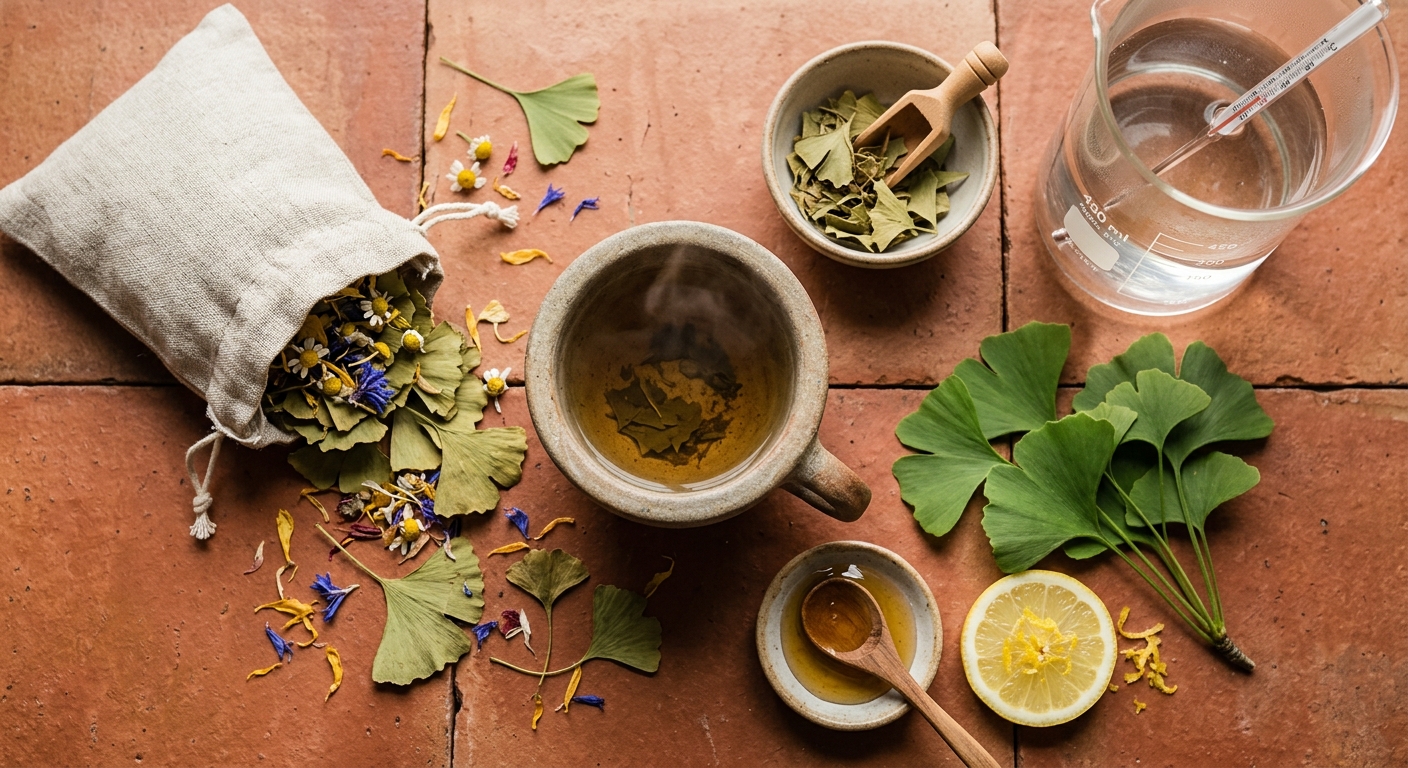
- Heat filtered water to 85°C (185°F). If you do not have a temperature-controlled kettle, bring water to a full boil and let it rest uncovered for 3 to 4 minutes before using.
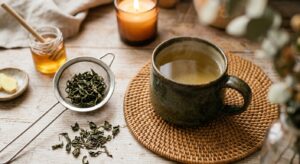
- Measure 1 teaspoon of dried ginkgo biloba leaves per 240 ml (one cup) of water. Place the leaves into a tea infuser, strainer basket, or teapot fitted with a built-in filter.
- Pour the hot water directly over the ginkgo leaves and cover the vessel immediately with a lid or small plate. Covering traps the volatile aromatic compounds and retains heat for a more complete extraction.
- Steep for 5 to 7 minutes for a lighter, more delicate cup, or up to 10 minutes for a fuller, slightly more bitter infusion. Start at 5 minutes if you are new to ginkgo tea.
- Remove the infuser or strain the leaves fully. Ginkgo leaves left to sit in water beyond 10 minutes will produce an unpleasantly bitter brew. Add a thin slice of lemon or a small drizzle of raw honey to balance the natural astringency if desired.
- Sip slowly and mindfully. Ginkgo tea is best consumed in the morning or early afternoon to align with its circulation-enhancing and focus-supporting properties.
- Measure 1.5 teaspoons of dried ginkgo biloba leaves per 240 ml of cold, filtered water. Slightly more leaf is used compared to hot brew because cold water extracts compounds more slowly and less aggressively.
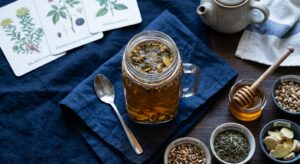
- Combine the ginkgo leaves and cold filtered water in a clean glass jar or pitcher. Stir gently to ensure all leaves are fully submerged and in contact with the water.
- Seal the jar or cover the pitcher with a lid or plastic wrap. Leave the mixture at room temperature for the first 30 minutes to begin extraction, then transfer to the refrigerator.
- Allow the tea to cold brew in the refrigerator for 8 to 12 hours. Overnight cold brewing is a convenient approach, allowing you to have a fresh, ready-to-drink jar of ginkgo tea each morning.
- When the steeping is complete, strain the leaves through a fine mesh strainer or cheesecloth into a clean serving vessel. Press the leaves gently with the back of a spoon to extract the last of the liquid.
- Serve over ice in a tall glass or enjoy chilled straight from the jar. The cold-brewed ginkgo tea will keep refrigerated for up to 48 hours. Add a squeeze of fresh lemon or a sprig of fresh mint to brighten the flavor.
- Measure 3 teaspoons of dried ginkgo biloba leaves per 240 ml of filtered water. This triple-strength ratio is what distinguishes the concentrate from a standard brew.
- Heat filtered water to 80 to 85°C (176 to 185°F) using a temperature-controlled kettle. Maintaining this lower temperature range over the extended steep is important to protect heat-sensitive flavonoids.
- Place the ginkgo leaves in a small saucepan or heatproof glass jar. Pour the heated water over the leaves, cover tightly, and allow to steep for 15 to 20 minutes. Check the temperature periodically if using a saucepan, keeping it on the lowest heat setting to maintain warmth without simmering.
- Strain the concentrate through a fine mesh strainer lined with cheesecloth into a small glass jar or bottle with a tight-fitting lid. Press the spent leaves to extract every drop.
- Allow the concentrate to cool to room temperature before refrigerating. Store in the refrigerator for up to 5 days.
- To serve, dilute one part ginkgo concentrate with two to three parts hot or cold water depending on your preferred strength. For a cognitive focus blend, stir a shot of ginkgo concentrate into a cup of lemon balm or peppermint tea for a synergistic brain-supporting combination.
Health Benefits
Multiple randomized controlled trials have found that ginkgo biloba supplementation significantly improves working memory, processing speed, and attention in both healthy adults and those experiencing age-related cognitive decline. The mechanism is largely attributed to increased cerebral blood flow and reduced oxidative stress in neural tissue.
Ginkgolides inhibit platelet-activating factor, a compound that promotes blood clot formation and vasoconstriction. By blocking PAF, ginkgo promotes smoother, more efficient blood flow through the fine capillaries of the brain, delivering more oxygen and glucose to active neurons.
A double-blind clinical study published in the Journal of Psychiatric Research found that ginkgo biloba extract significantly reduced anxiety symptoms in adults with generalized anxiety disorder. Its adaptogen-like properties help the body manage mental stress without sedation, making it a valuable daytime herb.
By improving microcirculation in peripheral tissues, ginkgo has been studied for its potential benefits in glaucoma, age-related macular degeneration, and diabetic retinopathy, conditions all associated with reduced blood supply to ocular tissues. Early research shows promising results in intraocular pressure reduction and retinal perfusion.
The combined action of ginkgo’s flavonoid complex, including quercetin, kaempferol, and isorhamnetin, delivers broad-spectrum antioxidant protection to brain tissue. These compounds scavenge reactive oxygen species and upregulate the body’s own antioxidant enzyme systems, helping to protect neurons from the cumulative damage associated with aging.
🧪 Key Bioactive Compounds
The Science Behind Ginkgo Biloba
The therapeutic reputation of ginkgo biloba is supported by one of the most extensive bodies of clinical research for any botanical medicine. The leaf’s bioactivity is driven primarily by two distinct chemical classes: flavonoid glycosides and terpene lactones. The flavonoids – chiefly quercetin, kaempferol, and isorhamnetin – are powerful free-radical scavengers that protect cellular membranes from oxidative damage. In neurons, this protection is especially significant because brain cells are exceptionally vulnerable to lipid peroxidation due to their high polyunsaturated fatty acid content and intense metabolic activity. By reducing this oxidative burden, ginkgo’s flavonoids help preserve the structural integrity and signaling capacity of neurons over time.
The terpene lactones, particularly ginkgolide A, ginkgolide B, and bilobalide, represent compounds unique to the ginkgo tree and not found in any other plant species. Ginkgolide B is the most pharmacologically active of these, functioning as a potent antagonist of platelet-activating factor. PAF is a phospholipid mediator involved in platelet aggregation, inflammation, and vasoconstriction. When ginkgolide B blocks PAF receptors, it results in measurable vasodilation and reduced blood viscosity, particularly in the microvasculature of the brain. This is the primary mechanism behind ginkgo’s well-established ability to improve cerebral blood flow. Bilobalide, meanwhile, has demonstrated direct neuroprotective effects in preclinical models, appearing to stabilize mitochondrial membrane potential and reduce neuronal apoptosis under conditions of ischemic stress.
Human clinical trials using standardized ginkgo biloba extract (most commonly EGb 761, a 50:1 extract standardized to 24% flavone glycosides and 6% terpene lactones) have consistently shown improvements in cognitive performance metrics, including episodic memory recall, attention span, and processing speed, particularly in older adults and those with early-stage dementia. While tea preparations are less concentrated than standardized extracts, the whole-leaf infusion still delivers a meaningful dose of these active compounds with the added benefit of synergistic phytochemical interactions that isolated extracts may not fully replicate. Brewing ginkgo at sub-boiling temperatures, around 80 to 85°C, is scientifically important because several flavonoid glycosides in ginkgo are thermally labile and begin to degrade at full boiling temperatures, reducing the therapeutic value of the brew.
Brewing Tips
- Source your dried ginkgo biloba leaves from a reputable supplier that tests for ginkgolic acid content. High-quality dried leaf products should contain less than 5 ppm of ginkgolic acids, ensuring both safety and efficacy.
- Do not exceed two cups of ginkgo biloba tea per day. Unlike many herbal teas that can be consumed freely, ginkgo has measurable pharmacological effects and daily intake should be moderated, especially when beginning supplementation.
- Allow your body two to four weeks of consistent daily consumption before evaluating cognitive effects. Ginkgo’s benefits build gradually through cumulative improvements in cerebral circulation rather than producing immediate effects like caffeine.