Long before olive oil became a culinary staple, the leaves of the olive tree (Olea europaea) were prized as medicine. Ancient Egyptians regarded the olive tree as a symbol of divine power and used its leaves in mummification rituals, believing the plant held sacred protective energy. By the time of classical Greece and Rome, physicians were prescribing olive leaf preparations to treat fevers, wounds, and infections. The tree itself, capable of living for thousands of years, seemed to embody the very concept of endurance and resilience.
In traditional Mediterranean herbalism, olive leaf tea was a trusted household remedy passed down through generations. Mothers throughout Greece, Italy, and North Africa brewed strong infusions of the leaves to bring down fevers in sick children, soothe sore throats, and restore energy after illness. The tea was also consumed regularly as a tonic, much the way people today take daily vitamins, as a preventative measure against the colds and infections that came with each changing season. This deep cultural relationship with the olive leaf reflects an intuitive understanding of its protective qualities, an understanding that modern science has since moved to validate.
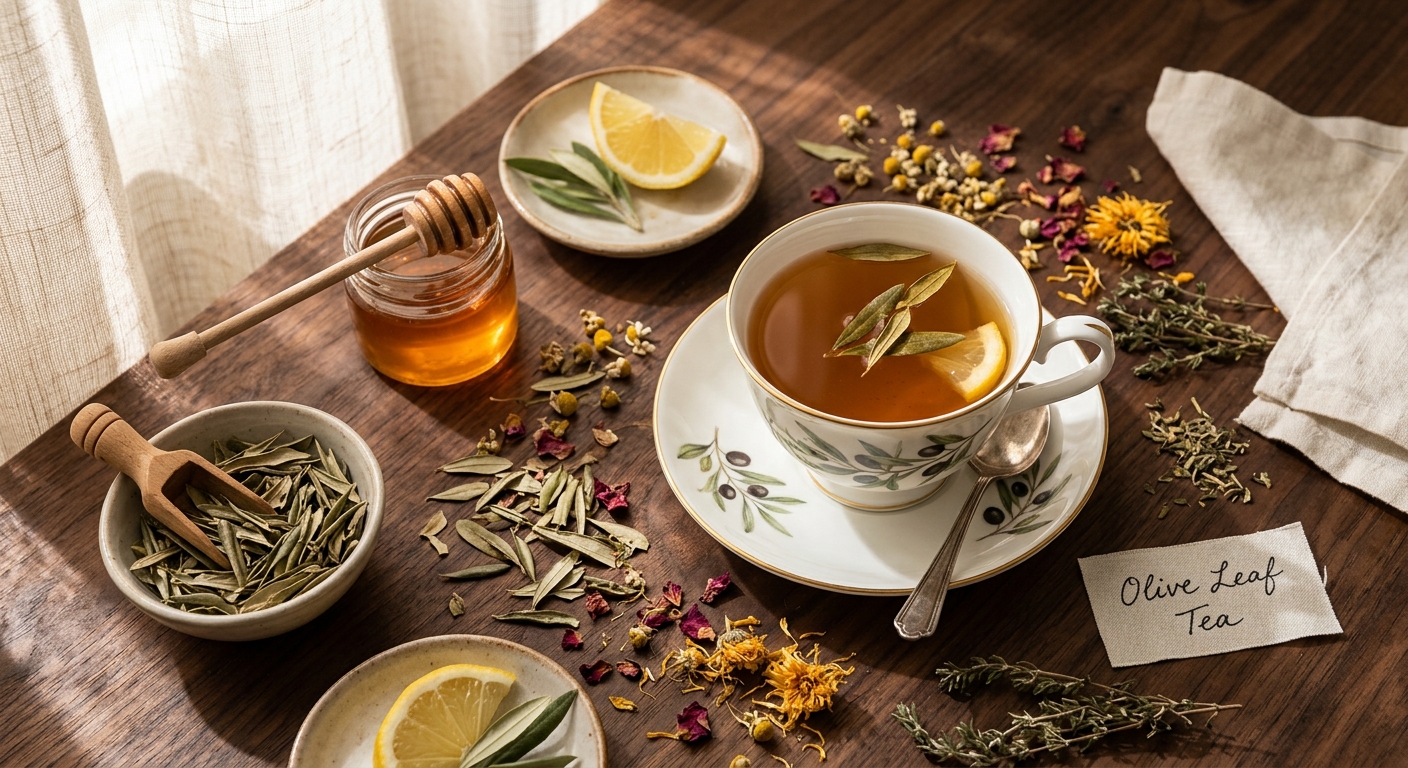
What makes olive leaf tea so remarkable is its exceptional concentration of polyphenols, particularly a compound called oleuropein, which is responsible for both its characteristic bitter edge and many of its therapeutic properties. The brewed tea carries a flavor that is distinctly herbal and earthy, with a gentle bitterness reminiscent of green tea but with a drier, more savory finish and subtle notes of dried herbs and hay. It is not a tea for those seeking sweetness, but for those who appreciate complexity, it offers a deeply satisfying and nourishing cup.
2
cups
Ingredients
- 2 tspdried olive leaves (loosely packed)
- 480 mlwater (90°C / 194°F)
- —raw honey or lemon to taste (optional)
How to Brew
Click on an item below to shop for the recommended items for this recipe on Amazon.
As an Amazon Associate, we earn from qualifying purchases.
- Measure 1 teaspoon of dried olive leaves per 240 ml of water and place them into a tea infuser or directly into your teapot.
- Heat filtered water to 90 to 95°C (194 to 203°F). Avoid a full rolling boil, as excessive heat can degrade delicate polyphenols. If using a kettle without temperature control, allow boiling water to rest for 90 seconds before pouring.
- Pour the hot water directly over the leaves, ensuring all the leaf material is submerged. Cover the teapot or mug with a lid or small saucer to trap volatile aromatic compounds and retain heat.
- Steep for 10 to 15 minutes depending on your preferred strength. The tea will deepen in color from pale gold to a rich amber as steeping progresses.
- Remove the infuser or strain the leaves through a fine mesh strainer into your mug. Taste the tea before adding anything to it. If the bitterness feels sharp, add a squeeze of fresh lemon juice or a small drizzle of raw honey to round out the flavor.
- Use a slightly higher ratio than hot brew: 1.5 teaspoons of dried olive leaves per 240 ml of cold filtered water, to compensate for the slower cold extraction.
- Combine the leaves and cold water in a clean glass jar. Stir gently to ensure all the leaves are fully submerged and in contact with the water.
- Seal the jar with a lid and leave it at room temperature for the first 30 minutes to allow initial extraction to begin, then transfer it to the refrigerator.
- Cold brew for 8 to 12 hours, or overnight. The longer the steep, the more pronounced the polyphenol content and the deeper the golden color, but the flavor stays notably smoother and less tannic than hot brew.
- When ready, strain the tea through a fine mesh strainer or cheesecloth into a glass. Serve over ice and garnish with a slice of lemon or a sprig of fresh mint for a refreshing wellness drink.
- Add 2 teaspoons of dried olive leaves per 300 ml of cold filtered water directly into a small saucepan. Starting with cold water and bringing it up gradually helps extract a broader range of compounds.
- Place the saucepan on the stovetop over medium-low heat. Slowly bring the water up to a gentle simmer, around 85 to 90°C (185 to 194°F). Do not allow it to reach a full boil, as sustained boiling can break down heat-sensitive polyphenols.
- Once a gentle simmer is reached, reduce the heat to low and allow the leaves to simmer uncovered for 20 to 25 minutes. The liquid will reduce slightly and darken to a deep amber-olive color.
- After simmering, remove the pan from the heat and allow it to rest for 5 minutes before straining through a fine mesh strainer into a mug. This resting period allows any remaining compounds to settle and the flavor to mellow slightly.
- The resulting decoction will be noticeably stronger and more concentrated than a standard infusion. Drink it in smaller servings of 120 to 150 ml, sipped slowly. A squeeze of fresh lemon juice brightens the flavor and adds complementary vitamin C for enhanced immune support.
Health Benefits
Oleuropein and elenolic acid have been shown in multiple laboratory and clinical studies to inhibit the replication of viruses including influenza, herpes, and respiratory syncytial virus. Regular consumption of olive leaf tea may help prime the immune system for a faster response to incoming pathogens.
Olive leaf extracts have demonstrated antibacterial effects against a wide range of organisms including Staphylococcus aureus and E. coli in laboratory settings. The mechanism involves disruption of bacterial cell membrane integrity and inhibition of amino acid production.
Clinical trials have found that olive leaf extract can meaningfully reduce both systolic and diastolic blood pressure, with one double-blind study showing comparable effects to a standard antihypertensive medication. Oleuropein promotes vasodilation by relaxing smooth muscle in arterial walls.
Hydroxytyrosol and oleuropein together give olive leaf one of the highest antioxidant capacities of any plant studied. This helps neutralize oxidative stress, a key driver of cellular aging, inflammation, and chronic disease.
Luteolin and oleanolic acid work together to modulate inflammatory pathways including NF-kB signaling, reducing the production of pro-inflammatory cytokines. This makes olive leaf tea potentially supportive for those managing chronic low-grade inflammation.
🧪 Key Bioactive Compounds
The Science Behind Olive Leaf
The therapeutic reputation of olive leaf tea rests primarily on one compound: oleuropein, a secoiridoid glycoside that can make up as much as 6 to 9 percent of the dry weight of fresh olive leaves. Oleuropein functions as a broad-spectrum antimicrobial agent through a fascinating mechanism. Research published in peer-reviewed journals has shown that it interferes with viral replication by disrupting the protein structures viruses use to enter and infect cells. Against bacteria, it works by interfering with the production of specific amino acids essential to bacterial survival, and by compromising the integrity of cell membranes. When oleuropein is hydrolyzed in the body, it yields elenolic acid and hydroxytyrosol, both of which carry their own significant biological activity and amplify the overall effect.
Hydroxytyrosol deserves particular attention as one of the most bioavailable and potent antioxidants found in any plant. It neutralizes reactive oxygen species (free radicals) at a rate that rivals well-known antioxidants such as resveratrol and curcumin. Its small molecular size allows it to cross cell membranes easily, providing intracellular antioxidant protection that many plant compounds cannot reach. Studies have also demonstrated hydroxytyrosol’s ability to inhibit platelet aggregation and reduce the oxidation of LDL cholesterol, two processes central to cardiovascular disease development. A 2014 review in the journal Nutrients highlighted the cardiovascular protective potential of olive polyphenols as a whole food source, with olive leaf preparations showing particularly high bioactive compound concentrations.
The anti-inflammatory activity of olive leaf compounds centers on their modulation of the NF-kB signaling pathway, a master regulator of the inflammatory response in the body. Both luteolin and oleanolic acid have been shown to suppress NF-kB activation, reducing the downstream production of inflammatory cytokines such as TNF-alpha, IL-6, and IL-1-beta. This is significant because chronic low-grade activation of these pathways underlies many modern diseases including cardiovascular disease, metabolic syndrome, and autoimmune conditions. A 2019 review in the journal Molecules summarized evidence suggesting that olive leaf polyphenols act as natural immunomodulators, helping to calibrate rather than simply suppress or stimulate immune function, which may explain why traditional herbalists valued olive leaf as a tonic for overall resilience rather than simply a remedy for acute illness.
Brewing Tips
- Source your olive leaves from certified organic suppliers to avoid pesticide residues, as the olive tree is sometimes sprayed heavily in commercial agriculture. Look for leaves that are a consistent silvery-grey-green with no black spots or musty odor.
- Store dried olive leaves in an airtight glass container away from direct light and heat. Properly stored leaves retain their potency for up to 12 months. Discard any leaves that have lost their characteristic herbal scent, as faded aroma indicates degraded polyphenol content.
- If you find the bitterness of olive leaf tea too intense at first, blend it with a complementary herbal tea such as peppermint, lemon verbena, or a mild green rooibos. These additions soften the astringency without compromising the immune benefits of the olive leaf.