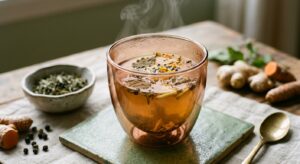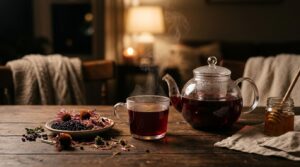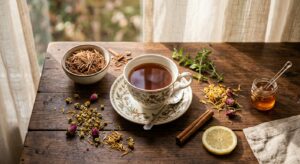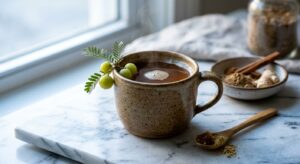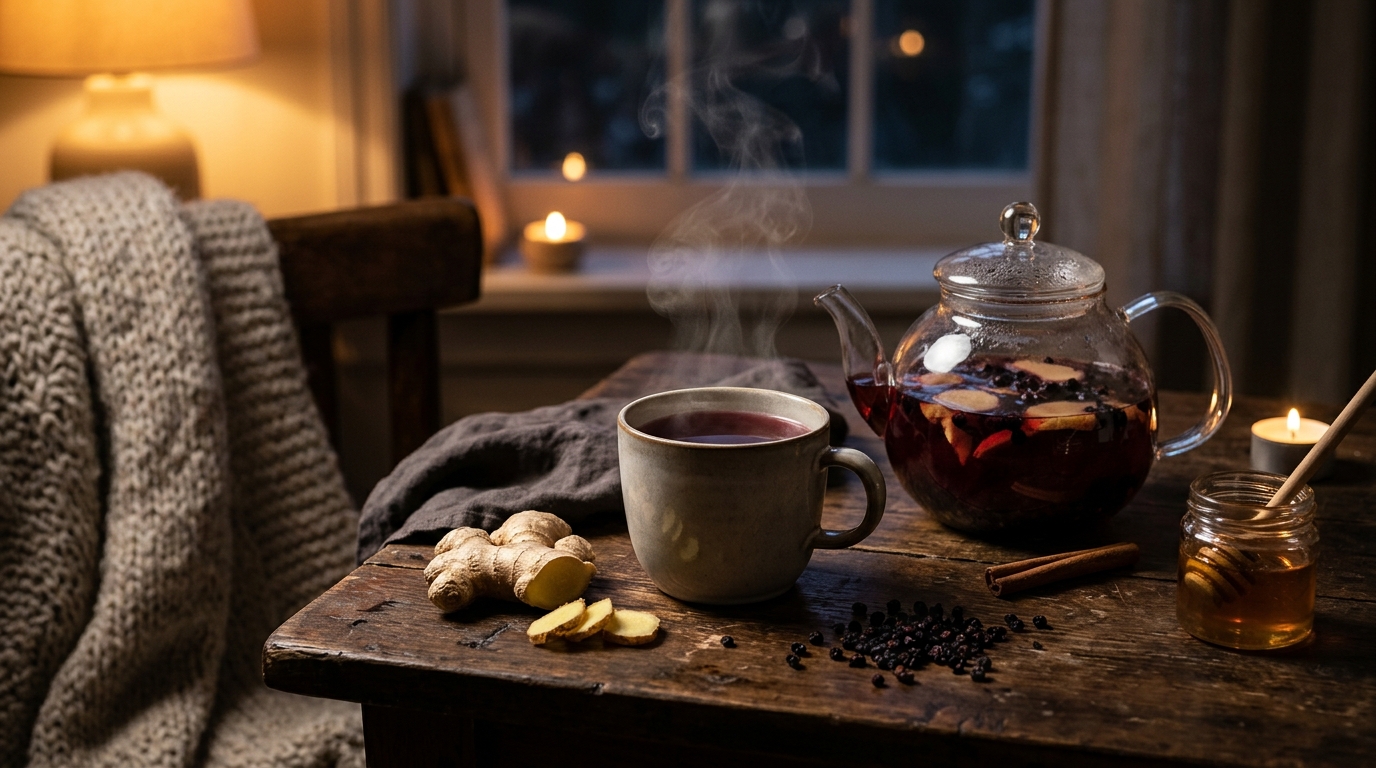
For centuries, the elder tree has held a near-mythic place in European folk medicine. Hippocrates reportedly called it his ‘medicine chest,’ and from Anglo-Saxon England to the Balkans, households kept elderberry syrups, wines, and teas close at hand each winter. The dark purple berries of Sambucus nigra were simmered into cordials to ward off coughs, fevers, and the seasonal sniffles, while the flowers were saved for summer infusions. Folklore even held that an elder tree planted by the door would protect the home.
Ginger has an equally long résumé. Prized in Ayurveda, Traditional Chinese Medicine, and Greek herbal practice, the knobby rhizome of Zingiber officinale has been used to stimulate circulation, settle the stomach, and drive out the damp chill that settles into the body in winter. Its pungent, citrusy heat is a perfect counterweight to the earthy, wine-dark tartness of elderberry.
Brewed together, the two make a tea that is as comforting as it is purposeful. The cup glows a deep garnet, smells of dark fruit and fresh spice, and warms you from the throat outward. It is an ideal evening ritual when the days shorten and the air turns sharp, a way to slow down while giving your body some traditional support.
2
cups
Ingredients
- 2 tbspdried elderberries
- 1 tbspfresh ginger root, thinly sliced
- 480 mlfiltered water
- 1 piececinnamon stick (about 5 cm / 2 inches)
- —raw honey to taste (add once the tea has cooled slightly)
- —fresh lemon juice to taste (optional)
How to Brew
Click on an item below to shop for the recommended items for this recipe on Amazon.
As an Amazon Associate, we earn from qualifying purchases.
- Rinse the dried elderberries under cool running water and pick out any stray stems. Slice the fresh ginger into thin coins, leaving the skin on if the root is organic and clean.
- Add the elderberries, ginger slices, cinnamon stick, and 480 ml of water to a small saucepan. Bring to a boil over medium-high heat.
- As soon as the water boils, reduce the heat to low and cover partially. Let the mixture simmer gently for 15 minutes, until the water turns a deep purple and the berries have softened.
- Remove the pan from the heat and let it rest, covered, for 5 minutes so the flavors can meld.
- Pour the tea through a fine-mesh strainer into two mugs, pressing lightly on the berries with the back of a spoon to release their juice.
- Let the tea cool for a minute or two, then stir in honey and a squeeze of lemon to taste. Sip slowly while warm.
- Simmer 2 tablespoons of dried elderberries in 240 ml of water for 10 minutes, then strain and let the resulting liquid cool completely. This safely prepares the berries before the cold infusion.
- Thinly slice or lightly crush the fresh ginger so more of its surface area is exposed, since cold water extracts flavor slowly.
- Combine the cooled elderberry liquid, the ginger, the cinnamon stick, and an additional 240 ml of cold filtered water in a glass jar. Stir once and seal with a lid.
- Refrigerate for 10 to 12 hours or overnight, giving the jar a gentle shake once or twice if convenient.
- Strain through a fine-mesh strainer or cheesecloth into a clean jar or pitcher, discarding the ginger and cinnamon.
- Serve over ice with a drizzle of honey and a lemon wheel. The cold brew keeps in the refrigerator for up to 3 days.
- Combine 4 tablespoons of dried elderberries, 2 tablespoons of sliced fresh ginger, 1 cinnamon stick, and 720 ml of water in a medium saucepan.
- Bring to a boil, then immediately reduce to the lowest heat that maintains a gentle simmer. Cover with the lid slightly ajar.
- Simmer for 30 to 45 minutes, stirring occasionally, until the liquid has reduced by roughly one third and appears thick and inky purple.
- Mash the softened berries gently with a spoon or potato masher against the side of the pot to release their remaining juice.
- Strain through a fine-mesh strainer, pressing firmly to extract every drop, and let the concentrate cool for 10 minutes.
- Stir in honey while the concentrate is still warm, not boiling hot. Store in a sealed jar in the refrigerator for up to 5 days.
- To serve, dilute 60 to 90 ml of concentrate with 180 ml of hot water per mug, adjusting to your preferred strength.
Health Benefits
Elderberry anthocyanins and flavonoids have shown immunomodulating activity in laboratory studies, and some clinical trials suggest elderberry extract may shorten the duration of cold and flu symptoms.
Ginger’s gingerols and shogaols have anti-inflammatory and mild analgesic effects that may relieve sore throats and body aches, while the warm liquid itself soothes irritated tissues.
Ginger is a traditional warming herb that stimulates peripheral circulation, which is why it is so often reached for on cold, damp evenings.
Ginger has well-documented carminative and antinausea effects, making this tea gentle on the digestion when you are feeling run down.
Elderberries are among the richest dietary sources of anthocyanins, which help protect cells from oxidative stress.
🧪 Key Bioactive Compounds
The Science Behind Elderberry
The elderberry’s reputation rests largely on its anthocyanins, especially cyanidin-3-glucoside and cyanidin-3-sambubioside, which give the fruit its inky color. These pigments are powerful antioxidants, and laboratory research suggests they may interfere with the ability of certain viruses to attach to and enter host cells. Small human trials have reported that elderberry extract can reduce the length and severity of influenza and cold symptoms, though larger, higher-quality studies are still needed before firm conclusions can be drawn.
Ginger’s activity comes from a different family of compounds. Fresh ginger is rich in gingerols, which transform into shogaols when the root is heated or dried. Both groups inhibit inflammatory pathways in the body, including the enzymes involved in prostaglandin production, which may explain why ginger has been used to ease sore throats, achy joints, and general malaise. Ginger also acts as a warming vasodilator in traditional practice, encouraging blood flow to the extremities.
Brewing the two together is more than a matter of taste. Simmering extracts the water-soluble anthocyanins from the berries while also converting gingerols into the more pungent shogaols, deepening both the flavor and the activity of the cup. It is a clear example of how traditional preparation methods often align with what modern phytochemistry observes.
Brewing Tips
- Always simmer dried elderberries rather than steeping them briefly, since heat makes them safe and brings out their full color and flavor.
- Use fresh ginger rather than powdered whenever you can, because the bright, citrusy heat of fresh root is central to this tea.
- Add honey only after the tea has cooled for a minute or two to protect its beneficial enzymes and delicate flavor.
- Make a double batch of the decoction concentrate on Sunday and dilute it through the week for a fast, warming cup on busy evenings.
- Buy organic dried elderberries from a reputable supplier and check that they are free of stems and debris before brewing.