Long before sleep supplements lined pharmacy shelves, people in central and eastern Europe were reaching for sour cherry preparations to ease restless nights. Tart cherries, particularly the Montmorency variety (Prunus cerasus), have been cultivated for over 2,000 years across Turkey, Poland, and the Balkans, where they were prized not only for their bold flavor but also for their calming and restorative properties. Folk healers brewed sour cherry concentrates as tonics for insomnia, joint pain, and fevers, a tradition that modern science has since begun to validate in earnest.
What sets tart cherry apart from other herbal teas is its remarkable biochemical profile. Unlike most plant-based sleep aids that work by sedating the nervous system, tart cherry contains naturally occurring melatonin, the very hormone your brain produces to signal nighttime. It also delivers a significant load of anthocyanins, the deep-red pigments responsible for both its stunning color and its potent antioxidant activity. This combination makes tart cherry tea feel less like a sedative and more like a gentle, natural nudge toward sleep, one that works with your body’s own rhythms rather than overriding them.
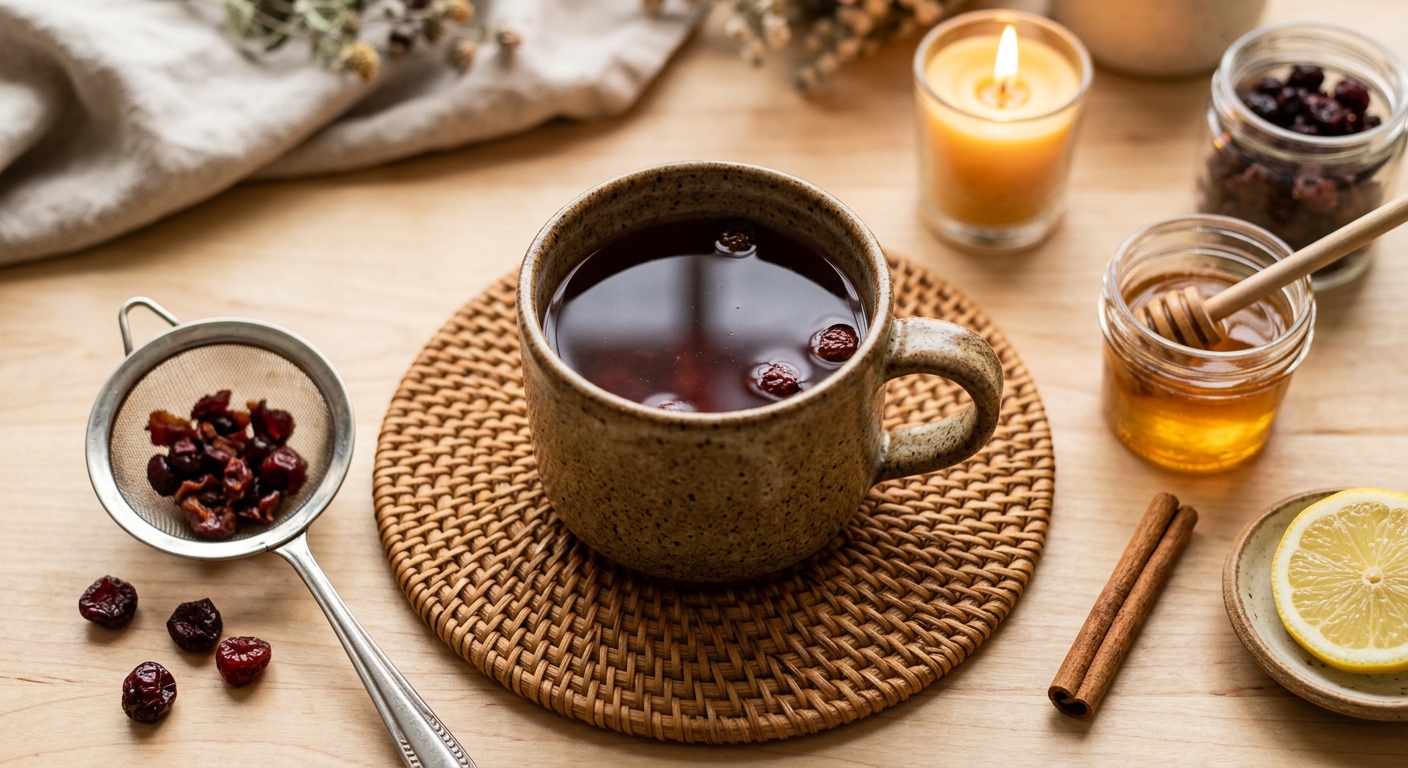
As a tea, tart cherry is surprisingly versatile and deeply satisfying. Brewed hot, it yields a warming, ruby-dark cup with flavors reminiscent of cherry pie filling with a pleasantly tart finish. Cold-brewed overnight, it softens into a smooth, jewel-toned elixir that pairs beautifully with a splash of sparkling water. Whether you are sipping it as part of a bedtime ritual or exploring its anti-inflammatory benefits after exercise, tart cherry tea earns a permanent place on the herbal shelf.
2
cups
Ingredients
- 4 tbspdried tart Montmorency cherries (roughly chopped or whole)
- 480 mlwater (95°C / 203°F)
- 1 tspraw honey per cup (optional)
- —cinnamon stick (optional, for added warmth)
- —fresh lemon slice (optional, to brighten flavor)
How to Brew
Click on an item below to shop for the recommended items for this recipe on Amazon.
As an Amazon Associate, we earn from qualifying purchases.
- Roughly chop or lightly crush 4 tablespoons of dried tart Montmorency cherries to increase their surface area and improve extraction. Place them directly into a small saucepan or heatproof teapot.
- Heat 480 ml of filtered water to 95°C (203°F). Avoid a full rolling boil, which can degrade some heat-sensitive melatonin and anthocyanin compounds. Pour the hot water directly over the cherries.
- Cover the saucepan or teapot with a lid to trap volatile aromatic compounds and steep for 10 to 15 minutes. The longer end of this range produces a deeper, more medicinal brew.
- Strain the liquid through a fine-mesh strainer into your mugs, pressing the soaked cherries firmly with the back of a spoon to extract the remaining juice and compounds.
- Add a cinnamon stick for warmth, a squeeze of fresh lemon to brighten the tartness, or a teaspoon of raw honey to round out the flavor. Sip 30 to 60 minutes before bedtime for best sleep-supporting results.
- Add 5 tablespoons of dried tart cherries to a clean glass jar. Lightly crush them with a muddler or the back of a spoon to open up the fruit and encourage slow extraction.
- Pour 600 ml of cold, filtered water over the cherries. Stir gently to ensure all the fruit is submerged. Do not add sweeteners at this stage, as they can interfere with even extraction.
- Seal the jar with a lid and leave it at room temperature for 1 hour, then transfer it to the refrigerator. Let it cold brew for a further 8 to 12 hours, or overnight. Longer steeping produces a darker, more concentrated result.
- Strain the cold brew through a fine-mesh strainer or cheesecloth into a clean pitcher or glasses, pressing the cherries well to extract all liquid.
- Serve over ice with a slice of lemon or a splash of sparkling water. Sweeten lightly with honey syrup if desired. This method is excellent enjoyed in the early evening to begin winding down.
- Combine 120 g of dried tart cherries with 500 ml of filtered water in a small saucepan. Add an optional cinnamon stick and two whole cloves for a warming, spiced depth.
- Bring the mixture to just below a boil, then reduce the heat to a gentle simmer at approximately 85 to 90°C (185 to 194°F). Cover partially with a lid to allow some evaporation while preventing scorching.
- Simmer gently for 25 to 30 minutes, stirring occasionally, until the liquid has reduced by roughly one third and the cherries have swelled and softened. The liquid should be deep garnet and syrupy in consistency.
- Remove from heat and allow to cool for 10 minutes. Strain through a fine-mesh strainer into a clean glass jar, pressing the softened cherries firmly to capture all of the concentrated liquid.
- To serve, dilute 60 to 80 ml of concentrate with 180 ml of hot or cold water per cup, adjusting to taste. Stir in honey if desired. Store the sealed jar in the refrigerator for up to 5 days and shake gently before each use.
Health Benefits
Multiple randomized controlled trials, including work published in the European Journal of Nutrition, have shown that tart cherry juice significantly increases sleep time and sleep efficiency. The naturally occurring melatonin and tryptophan content work synergistically to regulate circadian rhythms without the grogginess associated with synthetic supplements.
Studies on endurance athletes found that tart cherry concentrate significantly reduced markers of muscle damage and inflammation, including creatine kinase and interleukin-6. The anthocyanins cyanidin-3-glucoside and cyanidin-3-rutinoside are the primary drivers of this effect through COX enzyme inhibition.
Tart cherry’s dense anthocyanin profile produces measurable reductions in C-reactive protein (CRP), a key biomarker of chronic inflammation linked to heart disease, metabolic syndrome, and arthritis. Regular consumption has been associated with lower inflammatory load across multiple pilot studies.
A study published in Arthritis and Rheumatism found that cherry consumption was associated with a 35% lower risk of gout attacks. Quercetin and other phenolics in tart cherry inhibit xanthine oxidase, the enzyme responsible for uric acid production, making this tea a traditional and scientifically plausible support for gout sufferers.
Tart cherries rank among the highest-scoring fruits on the ORAC (Oxygen Radical Absorbance Capacity) scale. Their combined anthocyanin, quercetin, and chlorogenic acid content neutralizes free radicals, reducing oxidative damage to cells and supporting long-term cardiovascular and cognitive health.
🧪 Key Bioactive Compounds
The Science Behind Tart Cherry
The sleep-supporting reputation of tart cherry is one of the better-substantiated claims in the world of herbal medicine. Researchers at Northumbria University and Louisiana State University have independently confirmed that tart cherry juice increases urinary melatonin levels significantly, correlating with measurable improvements in sleep duration and efficiency in both healthy adults and older insomnia sufferers. Unlike exogenous melatonin supplements, which deliver a single hormone in isolation, tart cherry provides a matrix of melatonin, its biochemical precursor tryptophan, and serotonin intermediates, allowing the body to utilize what it needs through its own synthesis pathways.
The anthocyanin complex in tart cherry, dominated by cyanidin-3-glucoside and cyanidin-3-rutinoside, is among the most potent plant-derived anti-inflammatory agents studied to date. These pigments inhibit both COX-1 and COX-2 enzymes with a mechanism broadly comparable to non-steroidal anti-inflammatory drugs (NSAIDs), but without the gastrointestinal side effects associated with long-term NSAID use. This action translates clinically into reduced muscle damage markers in athletes and lower systemic CRP in populations with metabolic inflammation. The anthocyanins also cross-talk with NFkB signaling pathways, reducing the transcription of pro-inflammatory cytokines at a cellular level.
Quercetin, another significant compound in tart cherry, adds a further dimension by inhibiting xanthine oxidase, the enzyme that catalyzes the final step in uric acid biosynthesis. This mechanism directly supports the longstanding folk use of sour cherry preparations for joint pain and gout. Chlorogenic acid, meanwhile, contributes to glycemic regulation by slowing glucose absorption in the gut and improving insulin sensitivity, making tart cherry tea a thoughtful choice even beyond its more celebrated sleep applications. Together, these compounds form a pharmacologically coherent profile that explains why this humble fruit has been a fixture in traditional medicine across multiple continents for centuries.
Brewing Tips
- Use whole dried Montmorency cherries rather than sweetened dried cherries or cherry-flavored tea blends. Sweetened varieties contain added sugars that dilute the therapeutic compounds and alter the flavor profile significantly.
- Do not discard the steeped cherries after brewing. The softened fruit can be stirred into oatmeal, blended into a smoothie, or spooned over yogurt to recover the remaining fiber and antioxidants.
- For the most reliable sleep benefit, drink your tart cherry tea consistently at the same time each evening, ideally 45 to 60 minutes before your target bedtime. The melatonin-regulating effect is cumulative and works best when it reinforces a stable circadian routine rather than acting as a one-off intervention.